Introduction
Steam temperature control looks simple on paper: inject water, cool the steam, move on. In practice, many plant teams struggle with wet-steam carryover, cracked piping, and temperature sensors fouled by droplets that never fully evaporated.
A Combined Cycle Journal review of 11 combined-cycle plants found that only 18% routinely inspected or maintained their attemperators. Overspray and spray-water leakage were already linked to tube failures and cracking in thick-walled components.
Where you inject that spray water matters just as much as how you inject it. Interstage and final-stage attemperation solve related problems in different locations, with different response times, risks, and failure modes. This article breaks down both, so you can match the right configuration to your boiler or HRSG before a forced outage makes the decision for you.
Key Takeaways
- Interstage attemperation sits between superheater or reheater sections to manage temperature before final heat-transfer surfaces
- Final-stage attemperation sits downstream of the final superheater or reheater for precise outlet-temperature adjustment
- Neither location wins by default; load range, cycling duty, and evaporation distance decide the right fit
- Complete atomization and evaporation prevent overspray, pipe damage, and turbine water carryover
- Review spray-water conditions, pipe geometry, and controls before any replacement or retrofit
Spray Attemperation: Quick Comparison
Both configurations inject water into superheated steam to pull down temperature. The difference is location, and location changes everything downstream.
| Factor | Interstage | Final-Stage |
|---|---|---|
| Placement | Between primary and secondary superheater/reheater sections | After the final superheater or reheater, near the outlet or turbine inlet |
| Primary purpose | Protects downstream heat-transfer surfaces and shapes final steam conditions | Fine-tunes outlet temperature during startup or specific transients |
| Control response | Slower, due to distance between spray point and sensor | More direct, but less room for complete evaporation |
| Main risk | Overspray, drainage issues, thermal fatigue, water reaching downstream tubing | Unvaporized water, pipe impingement, sensor wetting, turbine carryover |
| Best fit | Multi-stage boiler or HRSG arrangements with sufficient downstream surface | Systems with proven evaporation distance and strong downstream protection |
The "main risk" row deserves a second look. Interstage problems tend to show up as metal fatigue in tubing further along the steam path. Final-stage problems show up faster and closer to the turbine, where there's less tolerance for error.
What Is Spray Attemperation? Interstage vs Final-Stage
Spray attemperation is the controlled injection of treated water into superheated steam to reduce its temperature or hold it at a target setpoint. Industry usage treats "attemperator" and "desuperheater" as largely interchangeable, though attemperation tends to emphasize hitting a precise target temperature, while desuperheating emphasizes pulling steam down toward saturation.
Every spray event follows the same basic sequence:
- Primary atomization breaks water into droplets
- Secondary breakup and mixing distribute them across the steam flow
- Evaporation absorbs heat from the steam
Droplet size, steam velocity, spray-water pressure, and available pipe length all determine whether that sequence finishes before the steam reaches the next piece of equipment.

Interstage Attemperation
Interstage units sit between superheater or reheater sections, which gives the system a second chance to correct temperature before steam reaches its final surfaces. This placement:
- Reduces metal temperatures on downstream heat-transfer surfaces
- Helps manage final steam temperature across changing boiler or HRSG loads
- Supports operation at multiple load points, not just design-point baseload
The tradeoff is response lag. The distance between the spray point and the temperature sensor means the control system takes longer to see the effect of a spray adjustment. That lag demands careful control tuning and adequate residence time.
Interstage designs also carry their own failure points:
- Spray-water leakage
- Insufficient evaporation distance
- Poor distribution across the pipe
- Undersized drains
- Worn thermal liners
Cycling and low-load operation expose weaknesses that baseload design never tested. EPRI's 2009 report lists minimum-load operation, variable-pressure operation, and attemperator operation among the factors driving boiler-component damage during cycling. A unit designed for steady full-load service doesn't automatically behave the same way during a cold start or a deep turndown.
Final-Stage Attemperation
Final-stage units sit downstream of the final superheater or reheater, closer to the steam outlet or turbine inlet. Plants typically use this location for a specific job: adjusting outlet temperature during startup or another defined transient condition where interstage control alone isn't fast enough.
The advantage is direct influence. A spray injected here affects the outlet temperature almost immediately. The problem is that "immediately" cuts both ways; there's simply less pipe length left for atomization, mixing, and evaporation to finish before the steam moves on.
Final-stage risks include:
- Unvaporized water reaching the pipe wall or liner
- Impingement damage on piping or thermal liners
- Inaccurate temperature readings from a wetted sensor
- Thermal shock at the injection point
- Liquid carryover toward the turbine or downstream process equipment
Final-stage attemperation should be evaluated against your plant's normal and transient operating envelope. It isn't a general-purpose substitute for interstage control; it's a targeted tool for a specific condition.
Equipment and Design Forms
Two common hardware approaches handle the actual spray event: probe-type assemblies with a variable nozzle, and circumferential spray-ring designs with fixed nozzles. Probe-type units typically offer better turndown and distribution control across varying loads, while spray-ring designs tend to have fewer moving parts, which can simplify cycling service.
Neither design works in isolation. The control valve, nozzles, isolation valves, thermal liner, drains, temperature sensors, and control logic function as one system. When a plant diagnoses a failure, the nozzle is rarely the whole story. Leakage past a worn isolation valve or a mistuned control loop can produce symptoms that look identical to a bad nozzle.
Spray Attemperation: What Is Better for a Boiler or HRSG?
Interstage and final-stage attemperation solve related but different problems. The better option depends on where temperature actually needs correcting and what sits downstream of that point.
Selection Factors to Weigh
Run both options against the same checklist before deciding:
- Steam flow range and turndown: Use minimum, normal, maximum, startup, and low-load data, not just steady-state numbers
- Steam and spray-water conditions: Collect pressure, temperature, available differential pressure, and water quality at the injection point
- Evaporation and mixing distance: Confirm straight-run length, liner requirements, spray pattern, droplet size, and sensor placement against applicable engineering guidance
- Cycling and transient duty: Account for startups, shutdowns, load-following, trips, and how repeated thermal cycles affect probes, valve trim, nozzles, welds, and piping
- Drainage and leakage protection: Verify low points drain properly and block valves keep unwanted spray water out of hot harps or turbine equipment
- Controls and measurement: Review sensor placement, response time, control logic, valve shutoff, alarms, and overspray protection
Situational Recommendations
Choose interstage attemperation when the priority is controlling temperature before additional superheater or reheater surface, protecting downstream heat-transfer sections, and supporting a multi-stage design.
Consider final-stage attemperation only when a defined operating condition needs final outlet-temperature adjustment, and the design already provides adequate evaporation, drainage, and downstream protection.
Reconsider your existing arrangement if operators are seeing:
- Unstable temperature control that resists tuning
- Persistent overspray or visible spray-water leakage
- Wet sensors or inaccurate readings
- Pipe or liner distress near the injection point
- Tube failures or turbine water-ingestion concerns
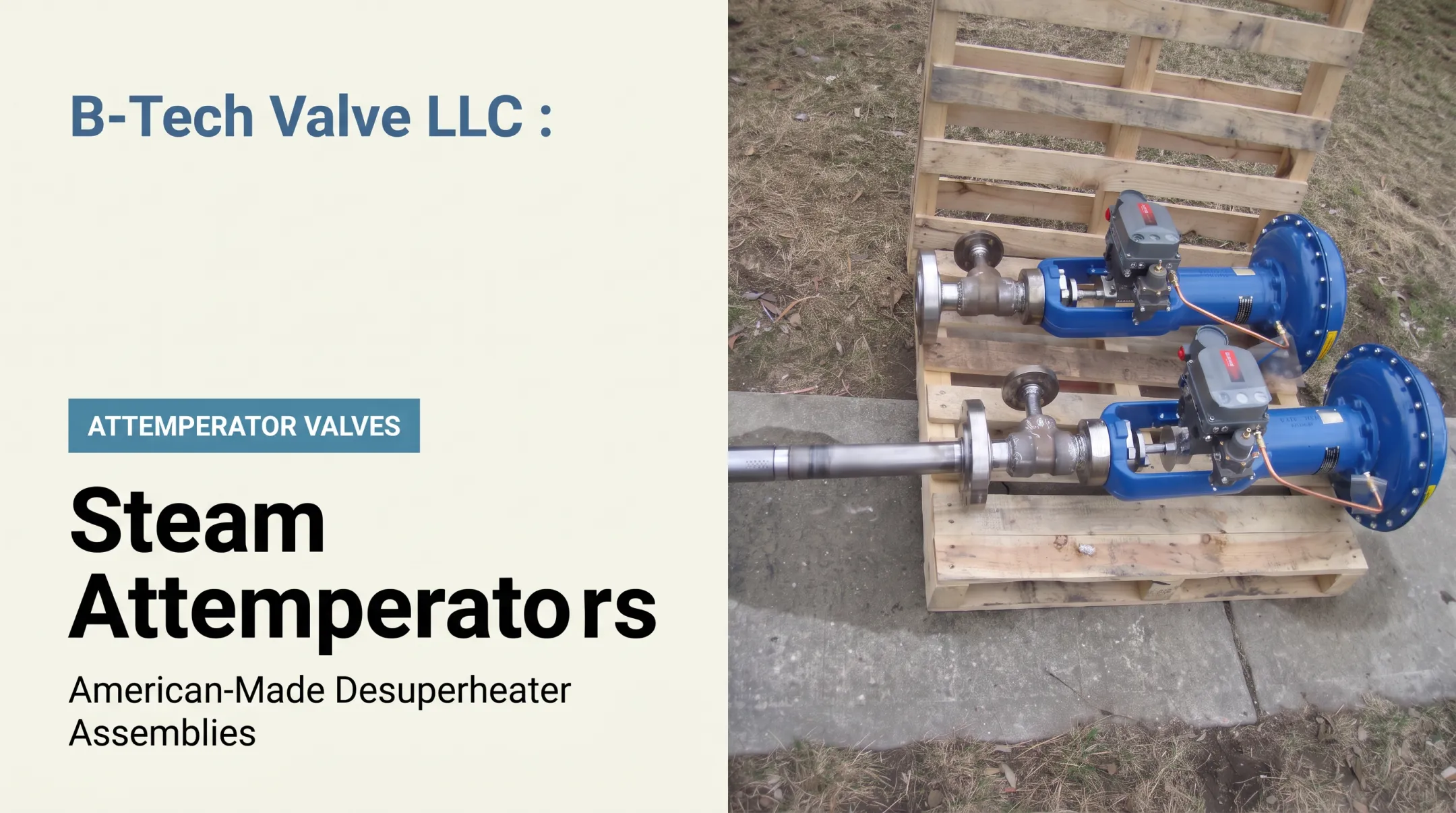
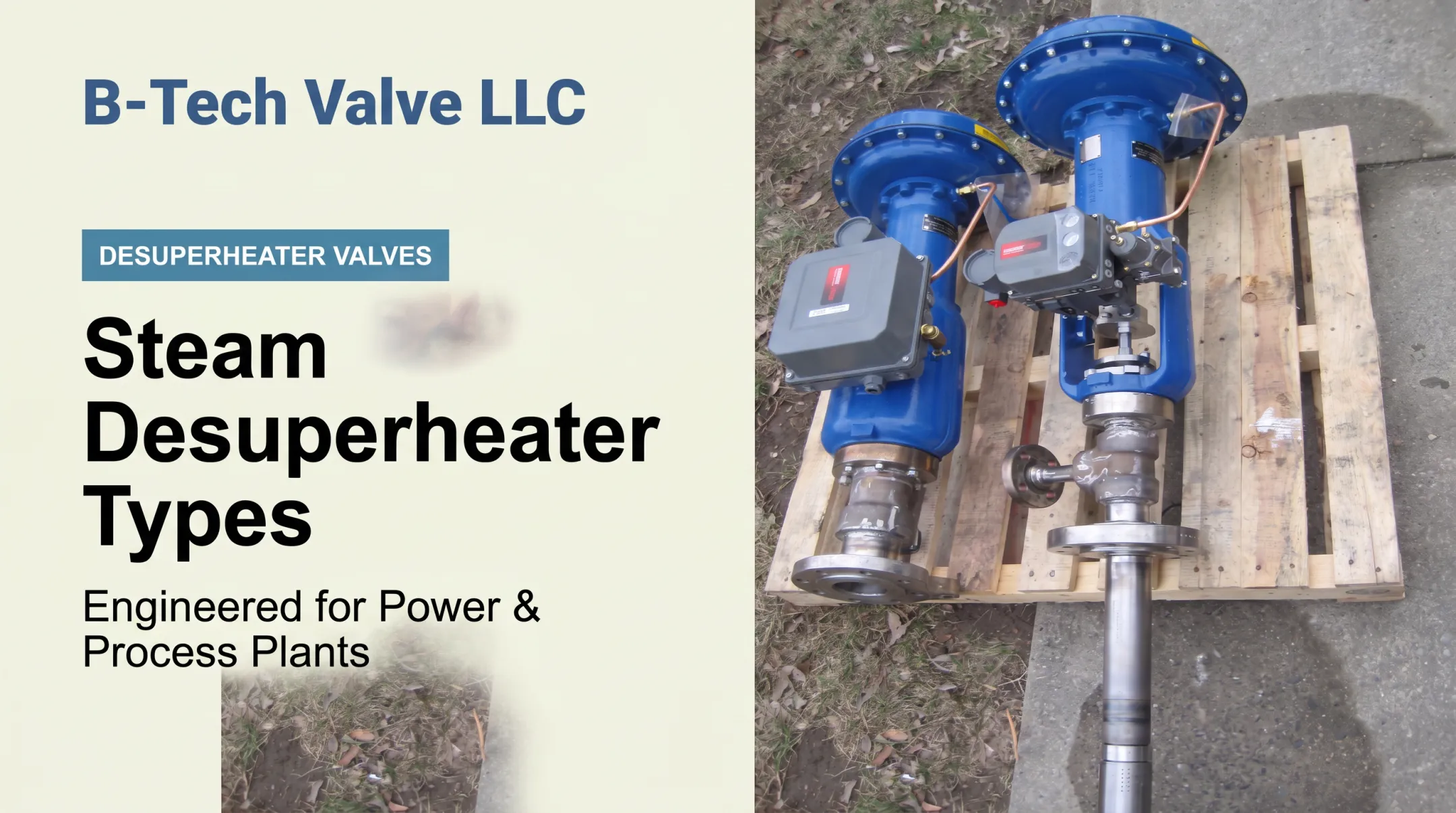
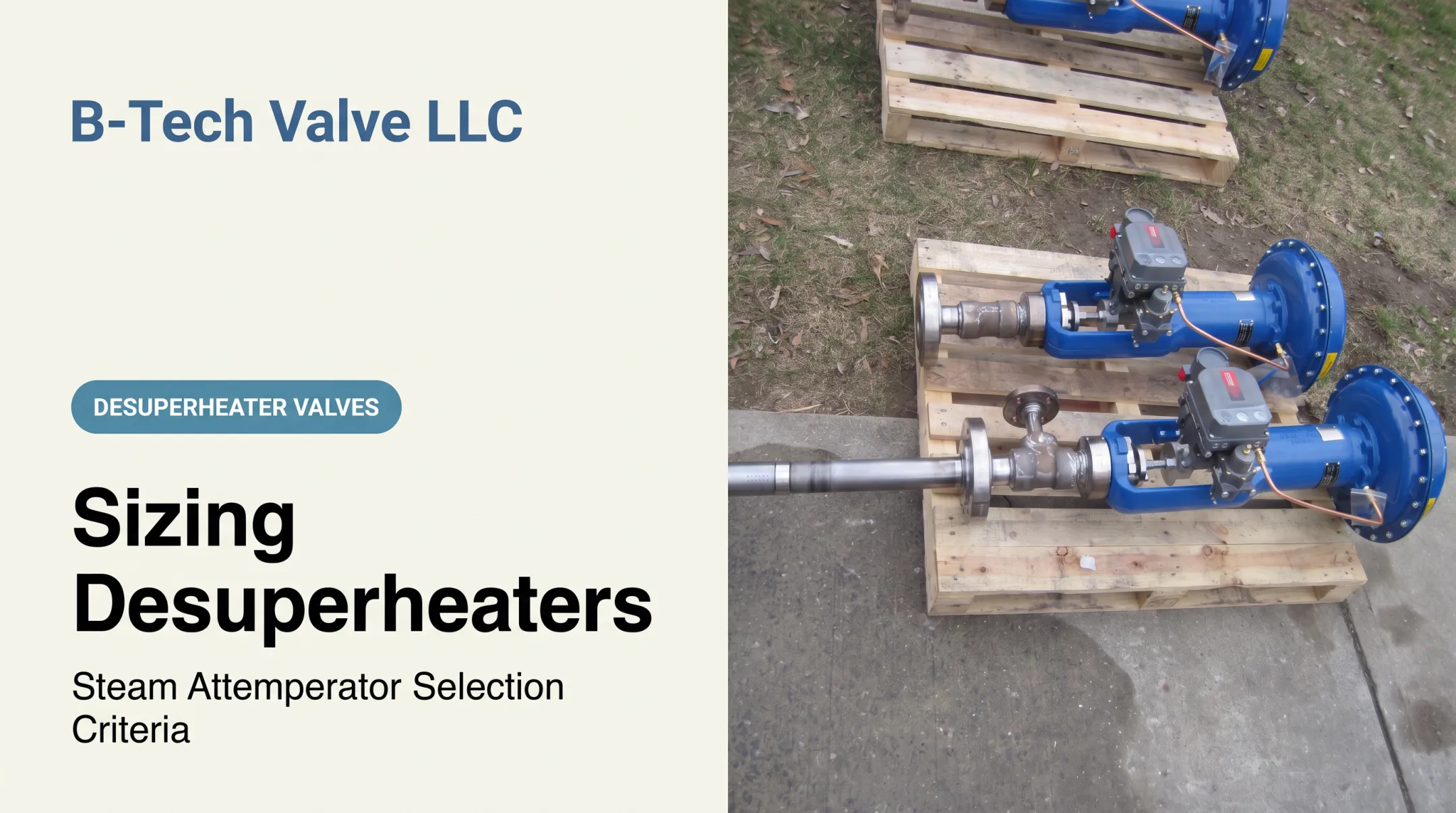
Many retrofit evaluations at this stage review application-sized equipment from B-Tech Valve. The LPD variable-nozzle assembly combines a probe-type nozzle with a fully actuated control valve for steam pipes 6 inches and larger. The SPAD spray-ring design pairs with a separate control valve for pipes 4 inches and smaller.

Both use locally sourced components with in-house final assembly and cover ASME B16.34 pressure classes 150 through 2700 at temperatures up to 1200°F. Confirm fit through project-specific sizing before committing to either.
Information Checklist for an Engineering Review
Before requesting a sizing review, gather:
- Line size and pressure class
- Steam pressure and temperature at the injection point
- Minimum and maximum steam flow
- Spray-water pressure and temperature
- Materials of construction
- Control-valve data and existing nozzle or probe design
- Straight-run length, drain locations, and sensor placement
- Operating history, including cycling frequency
Real-World Operating Lessons and Case Examples
A 2019 NDE India conference paper examined cracking at HRSG attemperator injection nozzles across multiple units. Crack origins were traced to the main injection hole and, in one unit, a nozzle that dislodged after a weld failure.
The NDE India study pointed to rapid load variations, frequent starts, and thermal cycling as likely contributors. It didn't document a corrective fix or follow-up outcome, but the diagnostic pattern is familiar: hardware designed for steady operation struggling under cycling duty it was never fully rated for.
A separate operating lesson comes from attemperator isolation valves worn by cycling service. When those valves fail to seat tightly, water can leak past them during low-flow conditions like feed-pump startup.
With little steam flow moving through the pipe, that leaked water has nowhere to go and no energy to evaporate it. It pools and can migrate toward superheater tubing if drainage isn't adequate.

The fix in these cases usually isn't a new nozzle. Typical remedies include:
- Tighter-shutoff isolation valves
- Revised control logic
- Keeping isolation closed whenever spray isn't actively needed
The common thread in both examples: the attemperator rarely fails as a single component. It fails as a system, and the system includes the valves and drains around it.
If your plant is weighing a replacement or retrofit desuperheater, send your steam and spray-water operating conditions to B-Tech Valve's team for an application-focused review before you buy.
Conclusion
Interstage attemperation manages temperature between heat-transfer stages, giving the boiler or HRSG downstream surface to help finish the job. Final-stage attemperation operates much closer to the outlet, which makes it more responsive but far less forgiving of incomplete evaporation. Neither is the universally better choice; the right answer depends on your steam circuit, load range, and what's protecting the equipment downstream.
Reliable spray attemperation comes from the whole system working together:
- Correct application sizing
- Sound nozzle and valve design
- Acceptable water quality
- Adequate pipe geometry
- Working drains
- Accurate temperature measurement
- Consistent inspection
Before selecting replacement equipment, validate the design against your plant's actual operating conditions, not just its original specification sheet.
Frequently Asked Questions
What does attemperation mean?
Attemperation is controlled steam-temperature reduction, typically achieved by injecting atomized water into superheated steam. It's distinct from reducing pressure or removing heat through a separate heat exchanger.
What is the main difference between a desuperheater and an attemperator in terms of how they cool steam?
Both commonly inject water to cool steam. "Attemperator" often refers to precise temperature control within a boiler or HRSG, while "desuperheater" emphasizes reducing superheat; industry usage frequently overlaps the two terms.
Is interstage or final-stage attemperation better for an HRSG?
Neither is universally better. The right choice depends on your required control location, heat-transfer arrangement, load range, evaporation distance, cycling duty, and downstream equipment protection.
What causes overspray in a boiler or HRSG attemperator?
Overspray typically comes from poor atomization, insufficient steam velocity or evaporation distance, excessive spray flow, or mistuned controls. Incorrect sensor placement and spray-water leakage can also trigger or mask it.
How can spray attemperation damage HRSG piping or turbine equipment?
Unvaporized water, spray impingement, and leakage can create thermal shock and fatigue at the injection point, leading to cracking or tube damage over time. Unstable control can also push liquid water further downstream, risking carryover toward the turbine.