That inconsistency has real consequences. Specify the wrong device for a given duty, and you risk poor temperature control, water carryover into downstream piping, thermal stress on turbine components, or an unplanned outage.
This article breaks down where "attemperator" and "desuperheater" typically apply, what separates boiler/HRSG temperature control from downstream process conditioning, and how to choose correctly based on your system's pressure, flow, and outlet-temperature requirements.
Key Takeaways
- Both devices cool superheated steam by controlled water injection and evaporation
- "Attemperator" usually means boiler or HRSG control; "desuperheater" means process conditioning (terms often overlap)
- Selection depends on steam pressure, flow range, turndown, outlet temperature, and pipe size
- Proper sizing protects piping, steam traps, and seals from thermal stress and water carryover
Attemperator vs Desuperheater: Quick Comparison
The two terms describe the same cooling mechanism applied in different parts of a steam system.
| Aspect | Attemperator | Desuperheater |
|---|---|---|
| Function | Steam-temperature-control device tied to boiler, HRSG, superheater, or reheater service | Equipment that strips excess superheat from steam, usually bringing it near saturation for process or distribution use |
| System location | Between superheater or reheater stages, or just ahead of a turbine | Downstream — process-steam lines, pressure-reducing stations, distribution headers |
| Temperature objective | Hold a safe temperature for boiler metal, reheater tubes, or turbine inlet limits | Meet a process or equipment temperature spec without producing wet steam |
Industry usage overlaps considerably. POWER's 2006 report on HRSG design notes that desuperheaters are frequently called attemperators in the field.
Design and Control Considerations
Configuration names like spray-ring, probe-type, variable-nozzle, and fixed-nozzle describe physical arrangements, not performance guarantees. What actually governs performance:
- Water atomization quality and droplet size
- Mixing and residence time before the steam reaches the next sensor or surface
- Downstream straight-pipe length available for full evaporation
- Control-valve response time relative to load changes
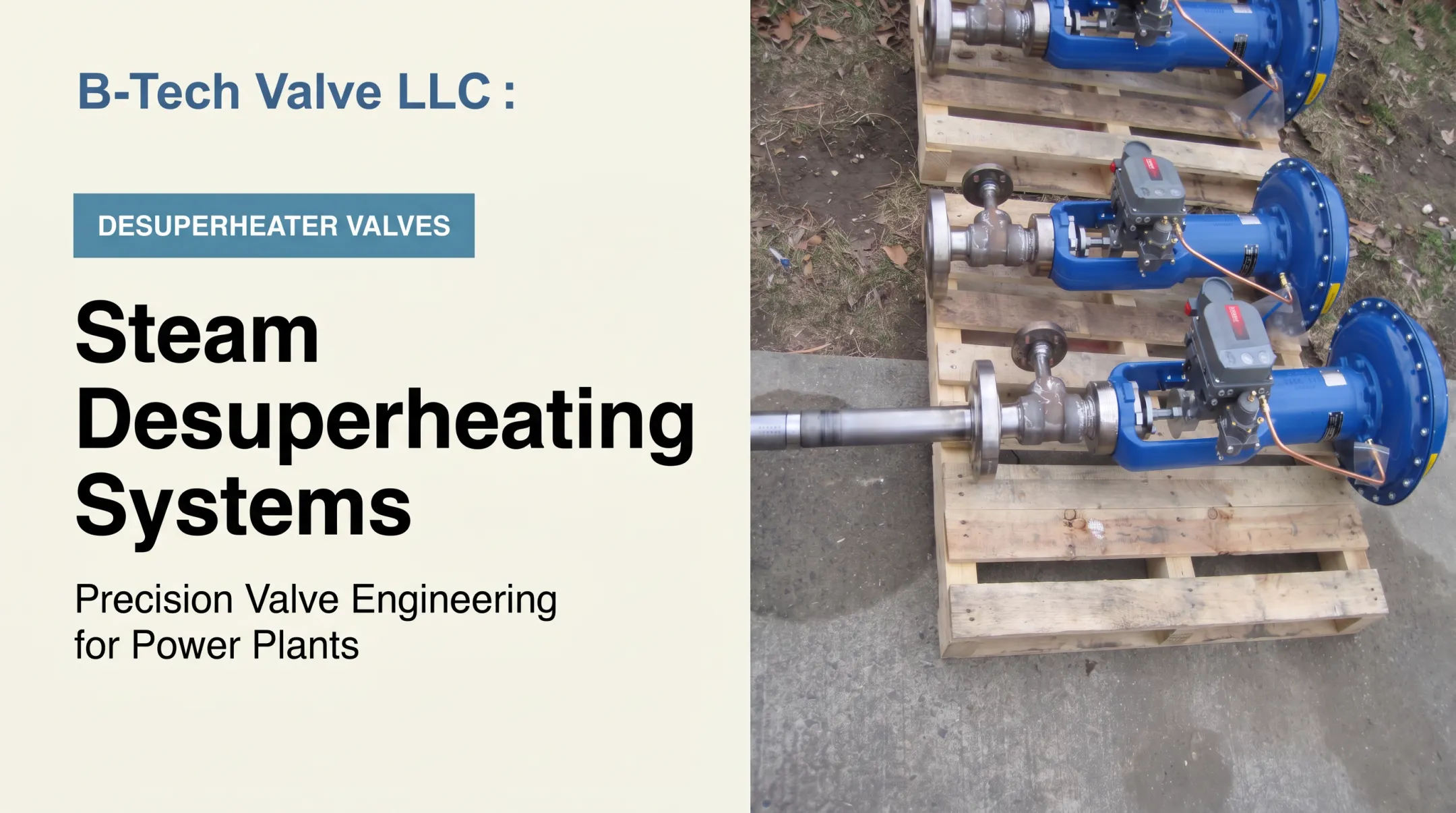
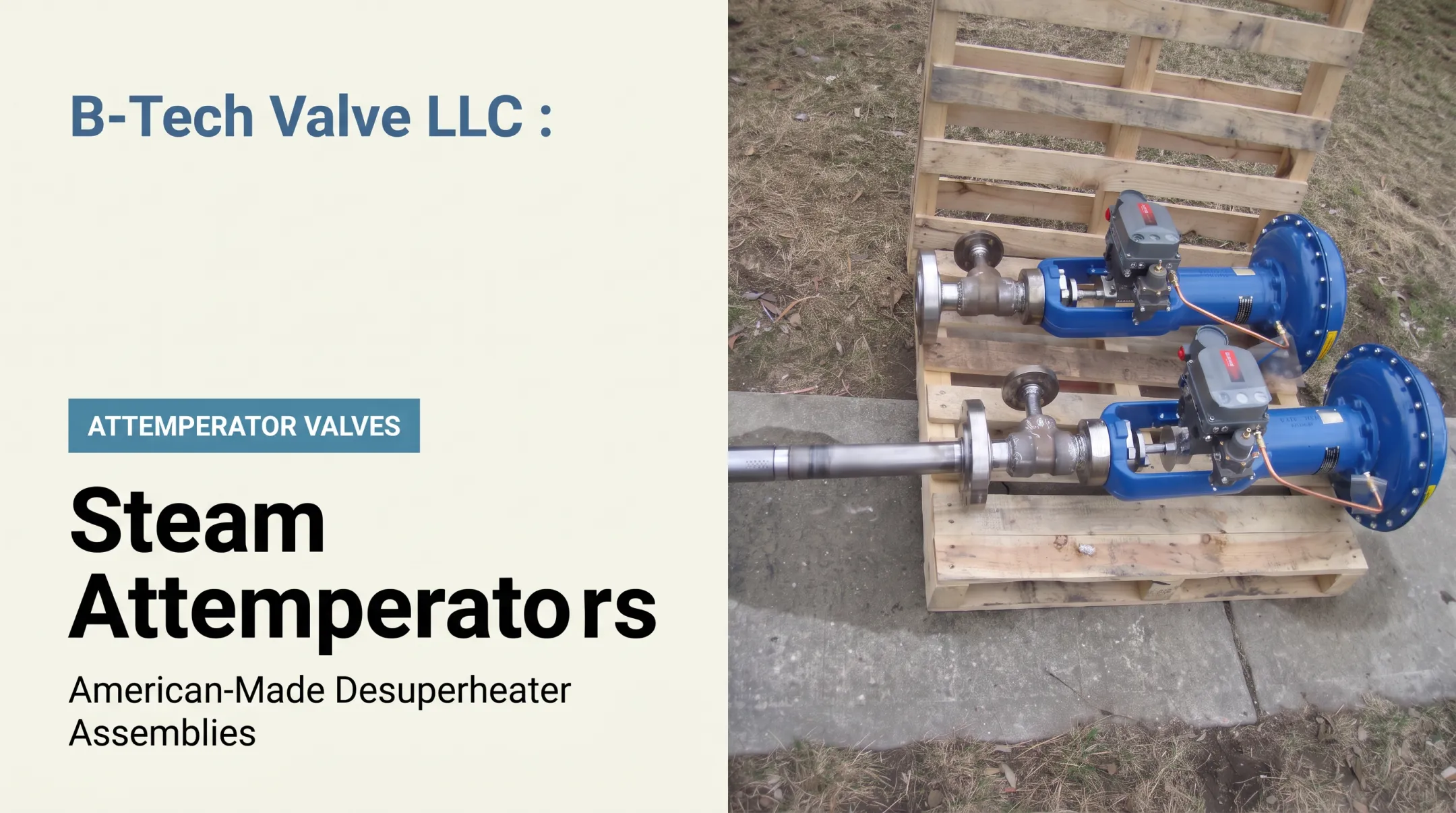
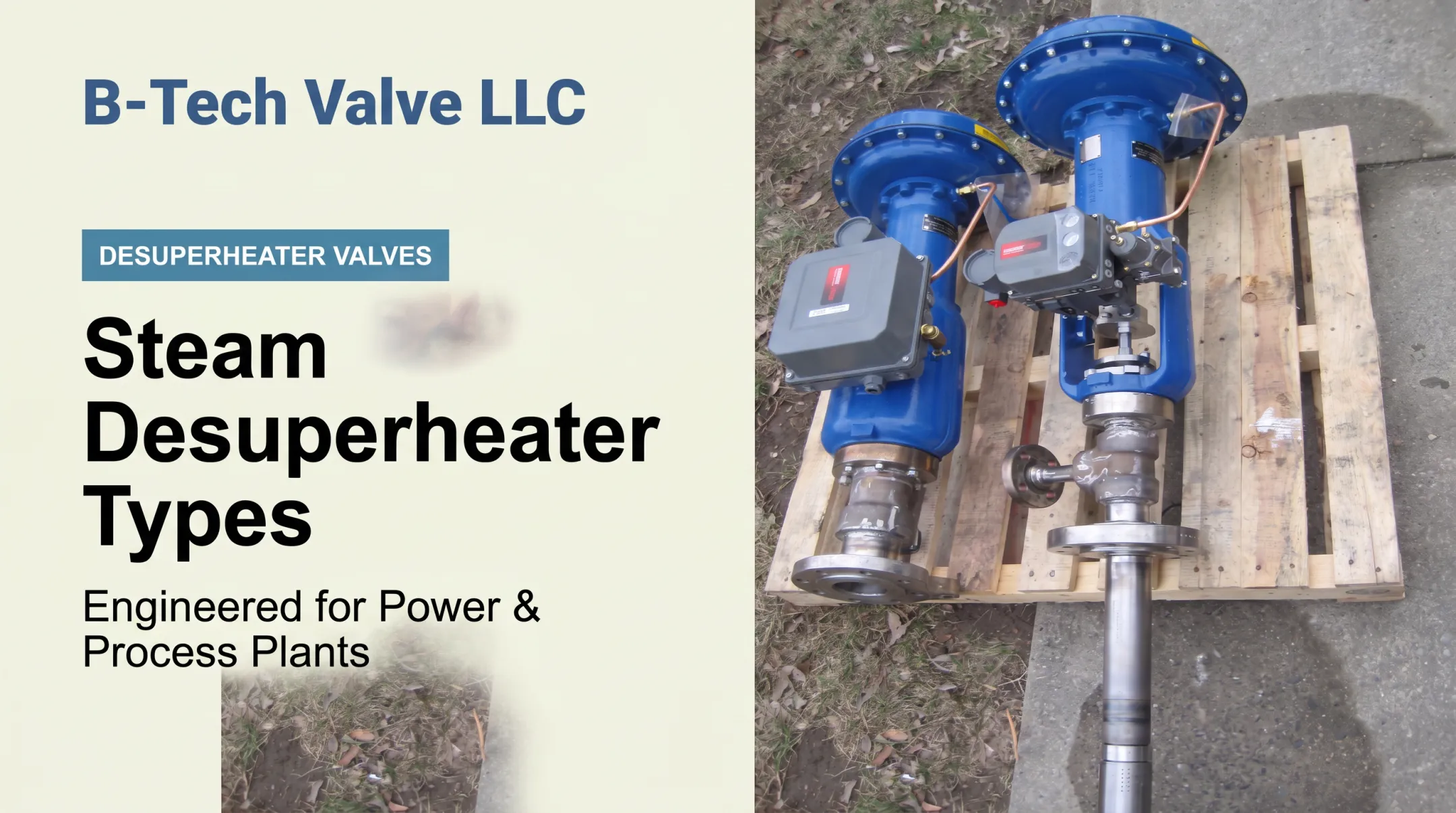
B-Tech Valve's own lineup reflects this split: the SPAD is a spray-ring, fixed-nozzle design, while the LPD pairs a probe-type, variable-nozzle assembly with a fully actuated control valve.

Selection Takeaway
The label alone isn't enough to specify equipment. Give the manufacturer or application engineer your full steam, cooling-water, piping, and control data before you order a replacement.
What Is an Attemperator?
An attemperator regulates steam temperature by spraying a controlled amount of cooling water directly into superheated steam. The water flashes to vapor, absorbing heat and bringing the steam closer to, but not below, saturation.
A downstream temperature sensor feeds a control system that adjusts spray-water flow. Nozzles atomize the water into fine droplets; the steam needs enough mixing and residence time for that water to fully evaporate before reaching the next heat-transfer surface or measurement point.
Attemperators typically sit:
- Between primary and secondary superheater or reheater sections in a boiler or HRSG
- Just ahead of a turbine, where final temperature trim is required
- In startup or load-transition service, where steam conditions swing quickly
Key performance terms:
- Turndown: ratio between maximum and minimum controllable spray-water flow
- Response time: how quickly the unit reacts to a sensor signal
- Outlet-temperature margin: how close the steam gets to saturation without crossing it
- Sensor placement: distance from the injection point, allowing full evaporation before measurement
B-Tech Valve's Steam Attemperator, a spray-ring, fixed-nozzle design rated to 1200°F (650°C), is built for this exact duty: controlling temperature while protecting downstream piping, steam traps, and rotating seals.
What goes wrong without careful design:
- Overspray or incomplete evaporation that lets unvaporized water strike pipe walls
- Nozzle erosion or plugging from repeated cycling
- Liner damage with debris carried downstream
- Control instability at low loads
Use Cases of an Attemperator
Attemperators are common in fossil-fuel and HRSG power plants, cogeneration facilities, and industrial boilers. They hold steam temperature steady through load swings, startups, and transitions between heating stages.
Interstage service demands careful attention to spray-water isolation, drain points, pipe geometry, and the distance available for evaporation before the next tube bank.
A Power Engineering account of a Duke Energy combined-cycle plant illustrates the risk. Frequent low-load operation outpaced the existing attemperators' spray-water control, and investigators found temperature differences of up to 400°F across a downstream elbow, with unevaporated spray detected 15 feet past that point.

Duke worked with its supplier to install a steam-atomizing design sized for low-load conditions, which improved outlet-temperature control and reduced carryover indicators in field trials.
What Is a Desuperheater?
A desuperheater removes excess superheat from steam, usually through the same water-injection and evaporative-cooling process as an attemperator, to deliver steam at a specified downstream temperature.
Many industrial sources use "desuperheater" and "attemperator" interchangeably. Others reserve "attemperator" for boiler or HRSG duty and "desuperheater" for downstream process-steam conditioning. Both descriptions are accurate depending on who's writing the spec sheet.
Common configurations (suitability depends on the application, not the name):
- Spray-ring units, distributing water through a manifold of nozzles around the pipe
- Probe or lance designs, inserted into the steam line
- Variable-nozzle units, adjusting spray pattern as water pressure changes
- Fixed-nozzle units, sized for a narrower, steadier flow range
- Venturi-assisted designs, accelerating steam to help atomize the water
Desuperheaters show up in refineries, chemical plants, pulp and paper facilities, district and campus heating systems, waste-to-energy plants, and steam lines just downstream of pressure-reducing stations.
In each case, the goal is the same: deliver steam at a usable temperature for a heat exchanger, process user, or distribution header while protecting steam traps and seals from excessive thermal load.
Limits that must be controlled:
- Minimum steam velocity, so droplets stay suspended long enough to evaporate
- Cooling-water pressure and cleanliness, since particulates plug nozzles
- Droplet size and mixing quality, which govern evaporation speed
- Outlet-temperature margin above saturation, to avoid condensation and wet steam
B-Tech Valve's lineup spans this range: the SPAD is a spray-ring, fixed-nozzle desuperheater for pipes 4 inches and smaller, while the LPD pairs a probe-type, variable-nozzle design with a fully actuated control valve for pipes 6 inches and larger.
Use Cases of a Desuperheater
Line size and operating range shape equipment architecture more than any label does. A desuperheater ahead of a heat exchanger or pressure-reducing station needs enough straight pipe downstream for complete evaporation before the next sensor or component.
That requirement varies by nozzle design and steam velocity rather than a single rule of thumb.
An IMI CCI case from a European paper mill shows why sizing matters. After years running probe-style desuperheaters, the mill replaced them with a flow-profiling liner design that improved low-flow mixing. It also added a second, independent spray-water control for redundancy.

The supplier reported more reliable, near-saturation process steam. Mixing geometry often drives performance more than nozzle style alone.
Attemperator vs Desuperheater: What Is Better?
Neither term identifies a universally better device. The right choice depends on where the equipment sits in your steam system, what temperature it needs to hit, and what happens downstream if it fails.
Lean toward an attemperator-oriented solution when:
- The primary need is temperature control within a boiler, HRSG, superheater, or reheater section
- Cycling, startup transients, or turbine protection drive the design
- You need to protect heat-transfer surfaces from exceeding metal-temperature limits
Lean toward a desuperheater-oriented solution when:
- Steam needs to reach a process user, distribution header, or heat exchanger at a defined temperature
- The target is close to, but not below, saturation
- The unit sits downstream of a pressure-reducing station or boiler plant
Specification checklist for your manufacturer or application engineer:
- Steam pressure, temperature, and normal/min/max flow
- Desired outlet temperature and allowable margin above saturation
- Cooling-water pressure and chemistry
- Pipe size, material, and available straight-pipe length
- Turndown, control signal, and response-time requirements
- Drains, liners, isolation valves, and inspection access
Think lifecycle risk, not just purchase price. Nozzle and valve wear, erosion, plugging, water carryover, and thermal fatigue all affect how long a unit lasts between inspections. Factor in spare-parts availability and replacement lead time, too. A unit that's cheap to buy but takes months to replace during an outage rarely turns out to be the better deal.
B-Tech Valve LLC builds both ends of this spectrum domestically: the LPD large-pipe assembly for 6-inch-and-larger lines and the SPAD small-pipe spray-ring design for 4-inch-and-smaller lines, both offered across ASME B16.34 pressure classes 150 through 2700 and rated to 1200°F. Evaluate each against your actual line size and steam conditions, not the product name. Before specifying a replacement or retrofit, especially ahead of an outage, request an application sizing review from a qualified manufacturer or engineer.

Real-World Examples: Lessons from the Field
Attemperator failure modes, documented. Babcock & Wilcox's bulletin on industrial boiler attemperators catalogs field failures:
- Cracks near dissimilar-material welds
- Nozzle cracking from thermal cycling
- Steam-line cracking where liners were missing
- Detached nozzle or liner fragments lodged downstream in the piping
Most failures trace back to repeated thermal cycling between hot steam and cooler spray water. A well-designed liner and drain system are meant to manage exactly that stress.
Process-steam reliability, improved. The IMI CCI paper-mill replacement described earlier shows what a better configuration can deliver. Swapping aging probe-style units for a flow-profiling liner design with redundant spray-water control improved low-flow mixing and delivered more consistent near-saturation steam without a major piping rework.
The practical takeaway: match the device configuration and controls to your actual steam conditions first. Then confirm these items before commissioning, not after a liner fragment shows up in a downstream strainer:
- Atomization quality and evaporation distance
- Drainage and temperature-sensor placement
- Maintenance access
If you're a plant engineer, outage planner, distributor, or EPC team weighing a replacement, B-Tech Valve can review your steam pressure, temperature, flow, pipe size, cooling-water details, and target outlet conditions and recommend an LPD or SPAD configuration sized to your system. Reach the team at Sales@B-TechValves.com or 609-321-2205.
Conclusion
Attemperators and desuperheaters rely on the same cooling principle: inject water, let it evaporate, pull heat out of the steam. The terms overlap across much of the industry, and no single naming convention applies everywhere.
What matters is how the equipment is applied: temperature control inside a boiler or HRSG versus conditioning steam for a downstream process or distribution system.
Getting the selection and installation right protects piping, steam traps, and rotating equipment from thermal stress and water carryover. It also cuts down on maintenance surprises and outage risk.
Whether you're replacing a worn interstage spray unit or sizing a desuperheater for a new process line, start with your actual steam and water data, not the part name, and work from there.
Frequently Asked Questions
What are the three types of superheaters?
Boiler and HRSG literature commonly describes radiant, convection, and separately fired superheaters, according to Industrial Boilers America. An attemperator often sits between these stages to control steam temperature.
What is a deaerator and how does it work?
A deaerator removes dissolved oxygen and other gases from boiler feedwater, typically by heating it with steam and venting the released gases. It's a feedwater-treatment component, not a steam-temperature-control device like an attemperator or desuperheater.
What is the main difference between an attemperator and a desuperheater?
Both cool superheated steam through evaporative water injection. "Attemperator" usually refers to boiler or HRSG temperature control, while "desuperheater" usually refers to downstream process-steam conditioning, though the terms are often used interchangeably.
Are attemperators and desuperheaters the same equipment?
They can be. In some industries, the terms describe identical spray-water equipment. The correct interpretation depends on where the unit sits in the system, its temperature objective, and the manufacturer's own terminology.
Why is complete water evaporation important in a desuperheater?
Unvaporized water droplets create wet-steam conditions that cause thermal shock, erosion, and liner or piping damage. They can also destabilize temperature control and damage downstream equipment like steam traps and seals.
What information is needed to size an attemperator or desuperheater?
Manufacturers need steam pressure, temperature, and flow range; target outlet temperature; cooling-water pressure and quality; pipe size and material; turndown and control requirements; and available straight-pipe length downstream.