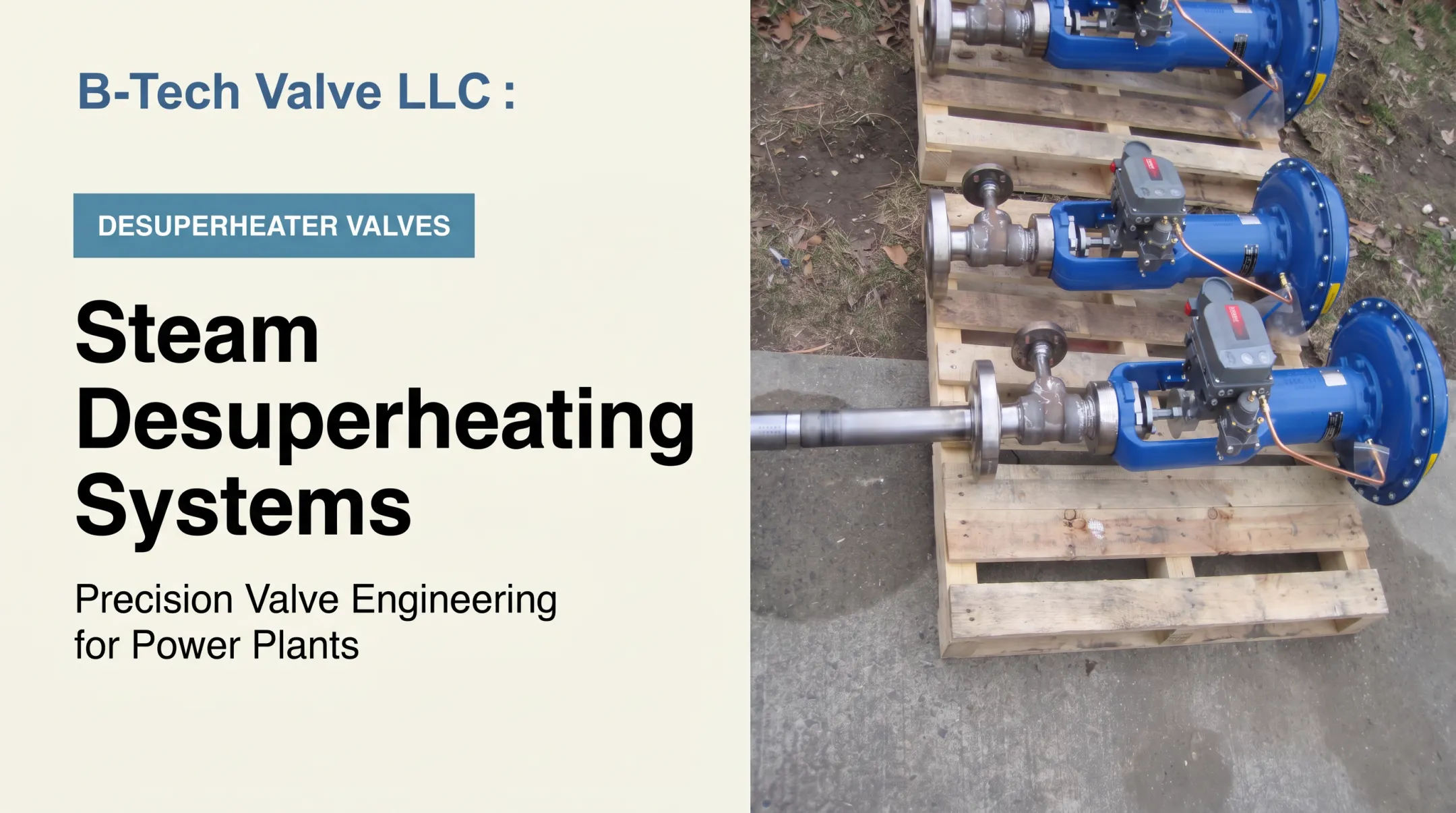
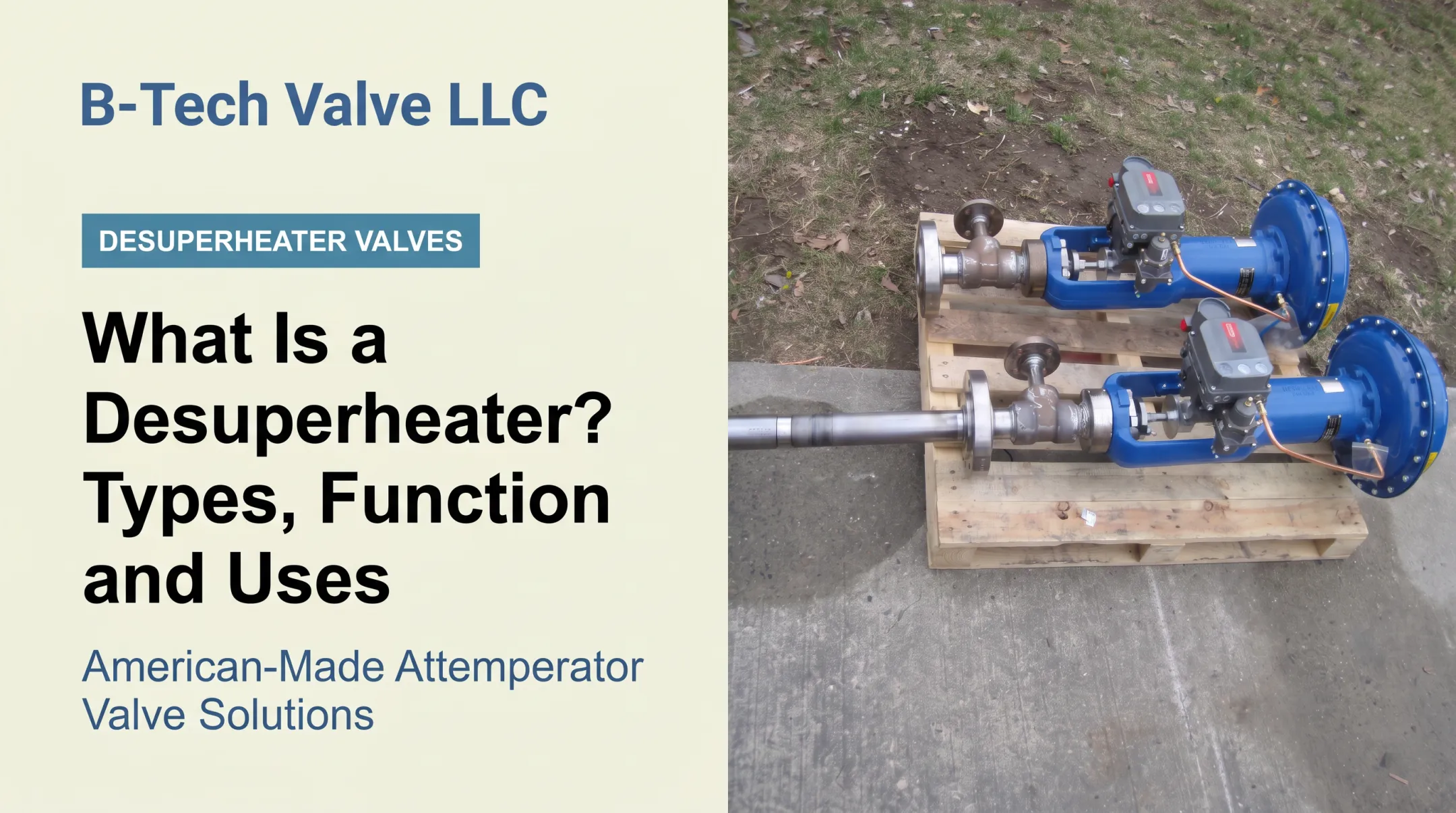
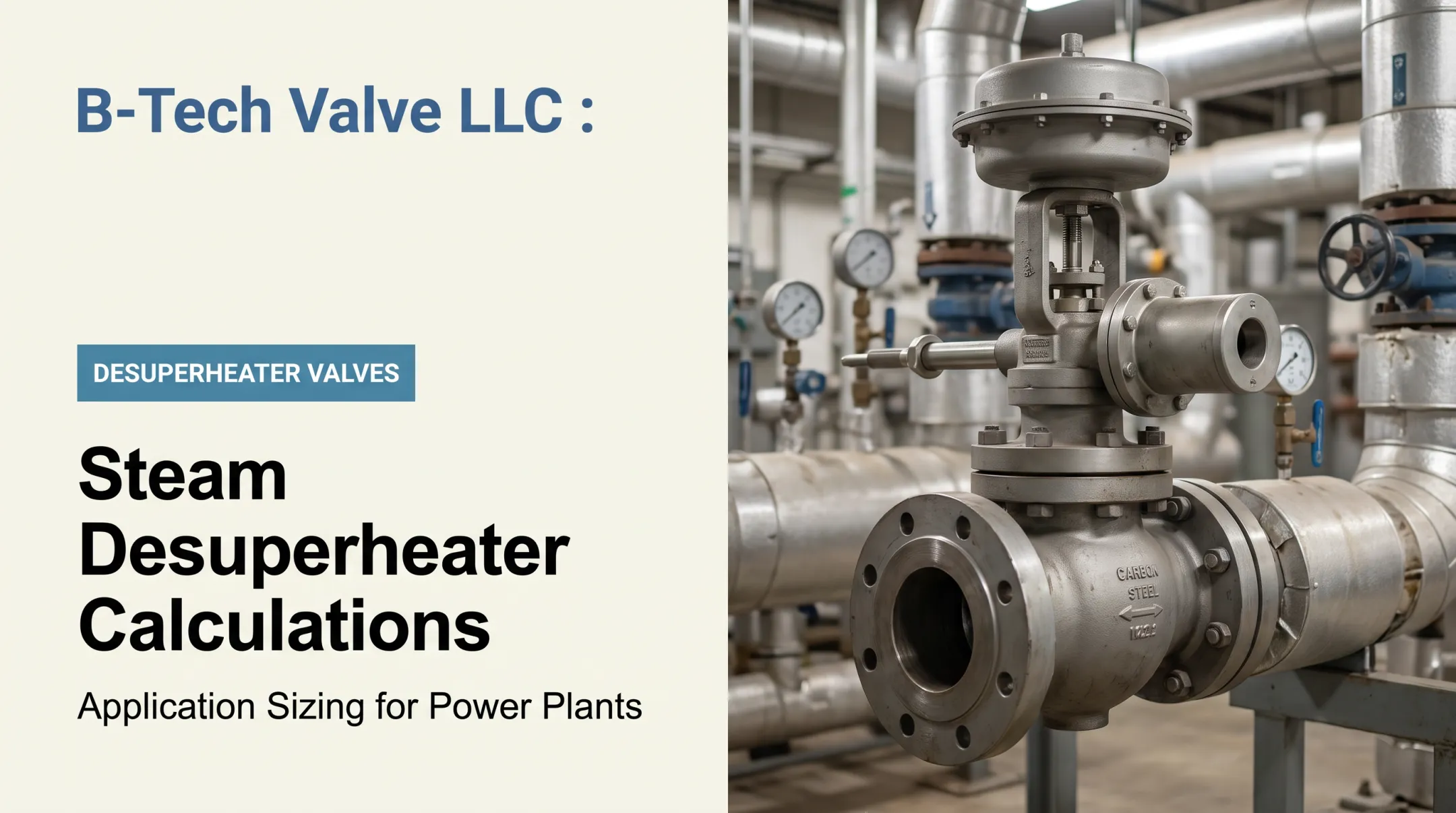
A steam desuperheater solves that mismatch. It strips excess heat from superheated steam, usually by injecting cooling water or by running steam past a heat-exchange surface, bringing the outlet condition closer to saturation without creating damaging wet steam.
Picking the wrong design has real consequences in US power and process plants: thermal shock, eroded piping, unstable temperature control, and unplanned outages. This article breaks down the main desuperheater types, how each one handles cooling and mixing, and the operating data engineers need before specifying one.
Key Takeaways
- Desuperheaters lower superheated steam temperature via direct water injection or indirect heat exchange
- Design differences center on atomization, mixing turbulence, turndown range, and absorption length
- Direct-contact spray, venturi, steam-atomizing, and indirect designs each suit different load and water conditions
- Correct selection demands verified steam/water data, pipe geometry, and control requirements : not guesswork
What Is a Steam Desuperheater?
A steam desuperheater removes part of the heat from superheated steam, pulling its temperature down toward the condition a downstream process or piece of equipment actually requires. It often targets a point near saturation, not deliberately wet steam.
Superheated steam is steam heated above its saturation temperature at a given pressure. A superheater adds that extra heat; a desuperheater takes some of it back out. Think of them as opposite ends of the same temperature-control problem.
In a typical direct-contact setup, the process works like this:
- Cooling water is injected into the steam line through nozzles
- The water breaks into fine droplets
- The droplets mix with the surrounding steam flow
- The steam's heat evaporates the droplets and drops the bulk temperature

An industrial desuperheating station is more than the injection device itself. A complete installation typically includes:
- A water-control valve and actuator
- A downstream temperature sensor
- Control logic tied to the plant's DCS
- Properly sized piping with adequate straight-run length
- Drains or traps to handle any unevaporated water
Skipping any of these pieces undermines the whole system, regardless of how good the injection nozzle is.
Why Is a Steam Desuperheater Important in Industrial Steam Systems?
Controlled steam temperature protects hardware and keeps heat transfer where a process actually needs it.
Equipment protection comes first. Piping, steam traps, rotating seals, and heat exchangers all have temperature limits. Push steam past those limits repeatedly, and you shorten equipment life considerably. B-Tech Valve's desuperheaters are built around this exact problem: protecting piping, traps, and rotating seals while increasing steam's usable heat-transfer capability.
Beyond protection, many process users simply don't want maximum superheat. A paper mill dryer or a chemical reactor often performs better with steam closer to saturation, where heat-transfer coefficients are higher.
Poor desuperheating creates its own failure modes:
- Incomplete evaporation: unevaporated droplets strike pipe walls and elbows, causing erosion
- Thermal shock: rapid temperature swings stress metal and welds
- Unstable outlet temperature: poor mixing makes sensor readings unreliable
- Corrosion: residual moisture in the wrong places accelerates wear
Babcock & Wilcox documented this directly in industrial boiler attemperators, finding cracked thermal liners and broken spray nozzles tied largely to thermal cycling at intermittent and low loads, according to a Babcock & Wilcox bulletin. Debris from failed internals can then obstruct flow and destabilize temperature control further.
Where you'll find desuperheaters working hardest:
- Turbine bypass systems
- Boiler and HRSG interstage/final-stage attemperation
- Pressure-reducing stations
- Refineries, chemical plants, and pulp and paper facilities
- Cogeneration and district/campus steam systems
Types of Steam Desuperheaters
Desuperheaters fall into groups based on three questions: Does cooling water touch the steam directly? How is the water atomized and distributed? Does cooling happen across a heat-exchange surface instead?
No single design wins across every application. The right choice depends on steam load variation, required outlet-temperature accuracy, available water pressure and quality, line size, and how much pressure drop the system can tolerate.
Direct-Contact Spray Desuperheaters
These are the most common starting point: fixed-orifice, single-nozzle, radial-injection, axial-injection, or spray-ring arrangements that inject water directly into the steam path.
Whether that water fully evaporates before reaching sensitive downstream equipment depends on:
- Droplet size from the nozzle
- Spray distribution across the pipe cross-section
- Steam velocity and turbulence
- Available water pressure
Circumferential spray rings inject water around the full steam flow, while axial probes inject along the flow direction: a geometry difference, not a different heat-transfer principle, as described in POWER magazine's analysis of attemperation design.
Fixed-orifice spray designs suit relatively stable steam loads and retrofit situations where a simple, low-pressure-drop arrangement makes sense. The trade-offs are real, though:
- Longer absorption distance may be needed before water fully evaporates
- Performance is sensitive to water pressure and quality
- Erosion or thermal stress can demand a thermal sleeve or liner
Multi-nozzle and spray-ring configurations spread water more evenly than a single injection point, but pipe geometry and downstream distance still need verification for each application. Don't assume a turndown figure without checking the manufacturer's documented data.
Venturi and Variable-Nozzle Desuperheaters
A venturi or diffuser section accelerates the steam through a throat, creating turbulence that mixes and atomizes the injected water faster than a basic spray arrangement.
Plants reach for this design when they need:
- Tighter outlet-temperature control
- Performance across a broader load range
- More reliable atomization than fixed spray can deliver
Single- and double-venturi concepts differ mainly in mixing intensity and pressure-drop behavior. A double venturi generally improves mixing further but adds steam-side pressure loss. Water-pressure requirements and application range should be confirmed against the specific product, not assumed from the general concept.
Variable-nozzle designs take this further by changing the effective spray area as demand shifts, keeping water injection matched to changing steam conditions rather than locked to one fixed geometry.
B-Tech Valve's LPD Large Pipe Desuperheater fits this category for larger steam lines. It combines a probe-type, variable-nozzle, fully actuated control valve and desuperheater in a single assembly, installed through a 3-inch flanged insertion at 90 degrees on the pipe.
It's built for steam pipes 6 inches and larger, in ASME B16.34 pressure classes 150 through 2700, rated to 1,200°F. Confirm current specifications for your exact line size and pressure class before finalizing a design.
Steam-Atomizing Desuperheaters
Steam-atomizing designs use an auxiliary high-pressure steam supply to break cooling water into finer droplets before or during injection into the main flow.
Finer droplets mean more surface area per unit of water mass, which can shorten the absorption distance and tighten temperature control where load or operating conditions swing substantially.
These designs tend to show up in demanding power-plant service and in refinery and process-steam applications with wide load changes.
The catch is complexity. Steam-atomizing units need an auxiliary steam supply with its own cost, additional control integration, and generally higher installed cost than a basic spray nozzle. Don't treat every water-injection desuperheater as equivalent. A steam-atomizing unit is a different animal from an ordinary spray nozzle, with different utility and maintenance demands.
Indirect-Contact and Surface Desuperheaters
Instead of injecting water into the steam, indirect-contact designs transfer heat through a surface (typically a shell-and-tube arrangement), keeping the cooling medium completely separate from the steam.
This matters when:
- Water chemistry concerns rule out direct injection
- Steam purity requirements are strict
- Contamination risk from cooling water is unacceptable
- Moisture entering the downstream process must be tightly controlled
The trade-offs run the other direction from direct-contact units: larger equipment footprint, potentially slower response, fouling or scaling risk on the heat-transfer surface, and more demanding installation space and maintenance access. Compare the full installed system, not just component cost, and confirm turndown and footprint claims against actual manufacturer data rather than general assumptions.

Small- and Large-Pipe Configurations
Pipe size drives the mechanical arrangement more than most engineers expect. Nozzle count, spray distribution, actuator sizing, and required absorption distance all shift with line diameter.
- Larger steam lines often call for a probe-type, variable-nozzle unit like B-Tech Valve's LPD, built for pipes 6 inches and larger
- Smaller steam lines suit a different mechanical approach — B-Tech Valve's SPAD Small Pipe Attemperator Desuperheater uses a spray-ring, fixed-nozzle design for pipes 4 inches and smaller, clamping between two steam-pipe flanges and receiving water from a separate temperature-control valve
Both are useful starting references for sizing by application, but neither replaces a full calculation based on your plant's actual steam and water conditions.
How to Choose the Right Steam Desuperheater Type
The right choice depends on the full desuperheating station and its operating envelope, not the lowest purchase price, the newest design, or simply matching nominal pipe size.
Steam Operating Conditions
Collect, at minimum:
- Inlet and outlet pressure
- Inlet and outlet temperature
- Minimum, maximum, and normal steam flow
- Steam quality expectations
- Degree of superheat that must be removed
Also determine expected turndown and how often the system cycles between minimum, normal, and maximum load. A unit sized only for normal load will struggle the first time flow drops sharply.
Cooling-Water Conditions
Verify water pressure relative to steam pressure, along with minimum/maximum water flow, temperature, chemistry, and filtration. Check whether a pump or pressure-boosting system is needed to get water pressure above steam pressure.
Contaminated or poorly filtered water fouls spray nozzles fast, distorting the spray pattern and undermining temperature control. That becomes a maintenance headache months after commissioning, not on day one.
Piping and Installation Constraints
Confirm:
- Pipe size, flow direction, and orientation
- Available straight-run length before the first elbow
- Downstream temperature-sensor location
- Drains, traps, thermal sleeves, and liners
- Access for inspection and maintenance
- Allowable pressure drop
Absorption length (the distance injected water needs to fully evaporate and the temperature to stabilize) deserves particular attention. Install a sensor too close to the injection point, and you'll read a temperature that hasn't stabilized yet.
Control and Performance Requirements
Match the design to required outlet-temperature accuracy, response time, and the actuator/control-valve arrangement your plant control system expects. Define instrumentation needs and fail-safe position up front.
A design built for stable loads can perform poorly once steam flow, pressure, or temperature starts moving quickly. Fisher documented this in a combined-cycle case where custom conditioning equipment cut maintenance events from several per year to just two by matching the design to cycling service rather than steady-state assumptions.
Application, Materials, and Lifecycle Considerations
Review corrosion and erosion exposure, thermal cycling frequency, pressure class, temperature rating, and material compatibility. Factor in inspection access, spare-parts availability, and planned outage timing.
A US manufacturer like B-Tech Valve can support this stage with application review, sizing information based on your steam and water data, domestic component sourcing, and stocked product availability for faster turnaround. Specific lead times and fit should always be confirmed against your project's exact conditions, not assumed from a catalog spec.

What to Check Before Finalising a Steam Desuperheater Type
What to Check Before Finalizing a Steam Desuperheater Type
A few habits separate a sound selection from an expensive mistake:
- Don't oversize "just in case." Oversizing for an uncertain future load reduces controllability and creates unstable spray-water behavior at low demand, the opposite of what most plants actually need.
- Don't evaluate the desuperheater in isolation. The water-control valve, actuator, sensors, piping, downstream distance, drains, traps, liners, and control logic all function as one system.
- Don't choose on familiarity alone. Supplier name or nominal pipe size aren't substitutes for documented calculations, verified operating data, material and pressure ratings, and clear installation drawings.
- Confirm the full operating range. The proposed design needs to handle actual minimum and maximum conditions, including water quality, pressure variation, and temperature targets, not just the nameplate rating.
Codes matter here too. ASME's B31.1 standard covers power piping in generating stations and district heating systems, while process piping in refineries and chemical plants typically falls under ASME B31.3. Know which one governs your project before specifying materials and ratings.
Conclusion
Steam desuperheater types differ mainly in how they introduce or transfer cooling, how effectively they mix and evaporate that cooling medium, and how much control accuracy they deliver as operating conditions shift.
A sound selection starts with verified steam and water data, matches piping geometry and absorption length, and accounts for load range, maintenance access, and the real cost of poor desuperheating down the line. Whether that points toward a spray-ring SPAD on a small line or a variable-nozzle LPD on a larger one, sizing calculations should drive the decision rather than a catalog page alone.
Frequently Asked Questions
How does a desuperheater work?
Most desuperheaters inject cooling water directly into superheated steam, where it evaporates and absorbs excess heat. Indirect designs instead remove heat through a heat-exchanger surface, keeping the cooling medium separate from the steam.
What is a desuperheater?
A desuperheater is a device that conditions superheated steam, lowering its temperature to match downstream process or equipment requirements. It's standard equipment in power plants, refineries, and process facilities running steam systems.
What is the difference between a superheater and a desuperheater?
A superheater adds heat to raise steam temperature above saturation. A desuperheater removes excess heat, lowering the temperature back toward the condition downstream equipment actually needs.
What is the difference between an attemperator and a desuperheater?
The terms are often used interchangeably in steam systems. Usage can vary by industry or manufacturer : "attemperator" is common for boiler interstage temperature control, while "desuperheater" often describes process-steam conditioning equipment.
How much does a desuperheater cost?
Cost depends on type, size, pressure and temperature rating, materials, controls, water conditions, and customization. Because these variables shift so much by application, a project-specific quotation is more useful than a general price range.
What does it mean to superheat steam?
Superheating raises steam temperature above its saturation point at a given pressure. Many downstream processes and equipment can't handle that excess heat safely, which is exactly why desuperheating equipment exists.