Introduction
Steam leaving a boiler is often hotter than any downstream process actually needs. Turbines, heat exchangers, and process equipment are frequently designed for steam closer to saturation, not the high-superheat condition required to protect the boiler and main steam lines.
Many plants struggle with this mismatch, especially during turbine bypass events or when steam is let down to a lower-pressure header.
A steam desuperheating system is the equipment, cooling-water circuit, control loop, piping, and protection components used to bring that excess superheat down to a specified outlet condition. The full station includes valves, sensors, and piping that work together to control outlet temperature.
This article covers how desuperheating actually works, the main equipment types, how to select and specify a system, installation requirements, and what application engineering support should look like when you're sourcing equipment.
Key Takeaways
- A desuperheater injects atomized cooling water into superheated steam, cooling it toward saturation temperature
- Performance hinges on atomization quality, mixing distance, control response, and cooling-water pressure
- Sizing depends on steam flow range, target outlet temperature, line size, and pressure-temperature ratings
- A complete station includes control valves, sensors, strainers, drains, and isolation and safety components
What Is a Steam Desuperheater and Why Is It Used?
Steam exists in three practical states:
- Superheated steam sits above its saturation temperature at a given pressure and behaves more like a hot gas
- Saturated steam is at the boiling point for that pressure, with no excess heat to spare
- Wet steam carries entrained liquid droplets mixed in with the vapor
Each condition transfers heat differently. Saturated steam gives up heat efficiently through condensation, so most heat-transfer processes want steam close to saturation rather than dry and superheated.
A desuperheater reduces excess temperature by transferring heat from the steam to a cooling medium, almost always treated water, until the steam reaches the desired outlet condition.
Why Plants Need Desuperheaters
- Process plants often want steam close to saturation for heat-transfer duties like reboilers, dryers, and jacketed vessels
- Power plants use desuperheating in turbine-bypass and auxiliary steam systems when bypass steam is hotter than downstream equipment can handle
- Controlled desuperheating protects piping, steam traps, rotating seals, and heat exchangers from conditions they weren't rated for
Temperature Control vs. Pressure Control
These are two separate jobs. A desuperheater controls temperature. A pressure-reducing valve controls pressure. Some stations combine both functions into one pressure-reducing/desuperheating assembly, but don't assume one component does both unless it's specifically designed that way.
How Does a Steam Desuperheating System Work?
The basic sequence is straightforward:
- A temperature sensor measures steam temperature downstream of the injection point
- A controller compares that reading against the setpoint
- The controller adjusts a control valve regulating cooling-water flow to the injection device
- Atomized water absorbs sensible heat from the steam and evaporates
- The loop continuously fine-tunes water injection as steam conditions change
Direct-Contact Heat Transfer and Absorption Length
In direct-contact designs, finely atomized water droplets absorb heat from the surrounding superheated steam and evaporate into the flow. How well this works depends on:
- Droplet size and spray distribution from the injection nozzles
- Steam velocity and turbulence in the pipe
- Cooling-water pressure at the point of injection
- Available mixing distance, known as absorption length
Absorption length is the distance the injected water needs to fully mix and evaporate before it reaches the temperature sensor or any downstream equipment. Too short a distance, and you get misleading temperature readings or liquid carryover past the measurement point.

What Happens When Desuperheating Goes Wrong
Unevaporated water doesn't just disappear. It collects in piping, especially at elbows, where it can cause thermal shock, erosion, and wet steam downstream. EPRI's research on water induction in steam turbines notes that overspraying at low loads or leaking attemperator spray valves can let water accumulate in superheater or reheater elements. A sudden increase in steam flow can then carry that water toward the turbine, according to EPRI's turbine research.
Installation and Sensor Placement
The sensor needs to sit far enough downstream for mixing to complete, but close enough that the control loop still responds promptly. There's no universal number here. Manufacturer application data should dictate the final distance, since it varies by design and duty.
Piping layout matters just as much. Adequate straight run before and after the injection point gives droplets room to evaporate before hitting a bend. Common installation problems include:
- Incorrect flow direction
- Poor drainage
- Low cooling-water pressure
- Downstream components rated only for saturated-steam service
Types of Steam Desuperheaters and Where They Are Used
Several desuperheater designs exist, each suited to different flow and control demands.
| Design | Operating Principle |
|---|---|
| Fixed spray nozzle | Injects a fine water spray through one or more fixed nozzles into the steam path |
| Variable-area/nozzle | An actuated mechanism progressively exposes nozzle area as cooling demand changes |
| Venturi/mixing chamber | A flow restriction creates turbulence that atomizes and mixes injected water |
| Steam-atomizing | A separate high-pressure steam stream atomizes the cooling water before mixing |
| Water bath | Steam gives up heat directly into a water bath rather than a spray |
| Indirect-contact (tube bundle) | Heat crosses a tube wall; steam never directly contacts the cooling medium |
Fixed spray designs tend to suit relatively stable loads. Variable-area and steam-atomizing designs handle wide swings in steam flow and cooling demand.
Any specific turndown figure should come from the manufacturer's documented data for that model, not a generic industry number.
Large-Pipe vs. Small-Pipe Configurations
Internal geometry, nozzle arrangement, and available straight run all shape which design fits a given line. B-Tech Valve's product line illustrates this split directly:
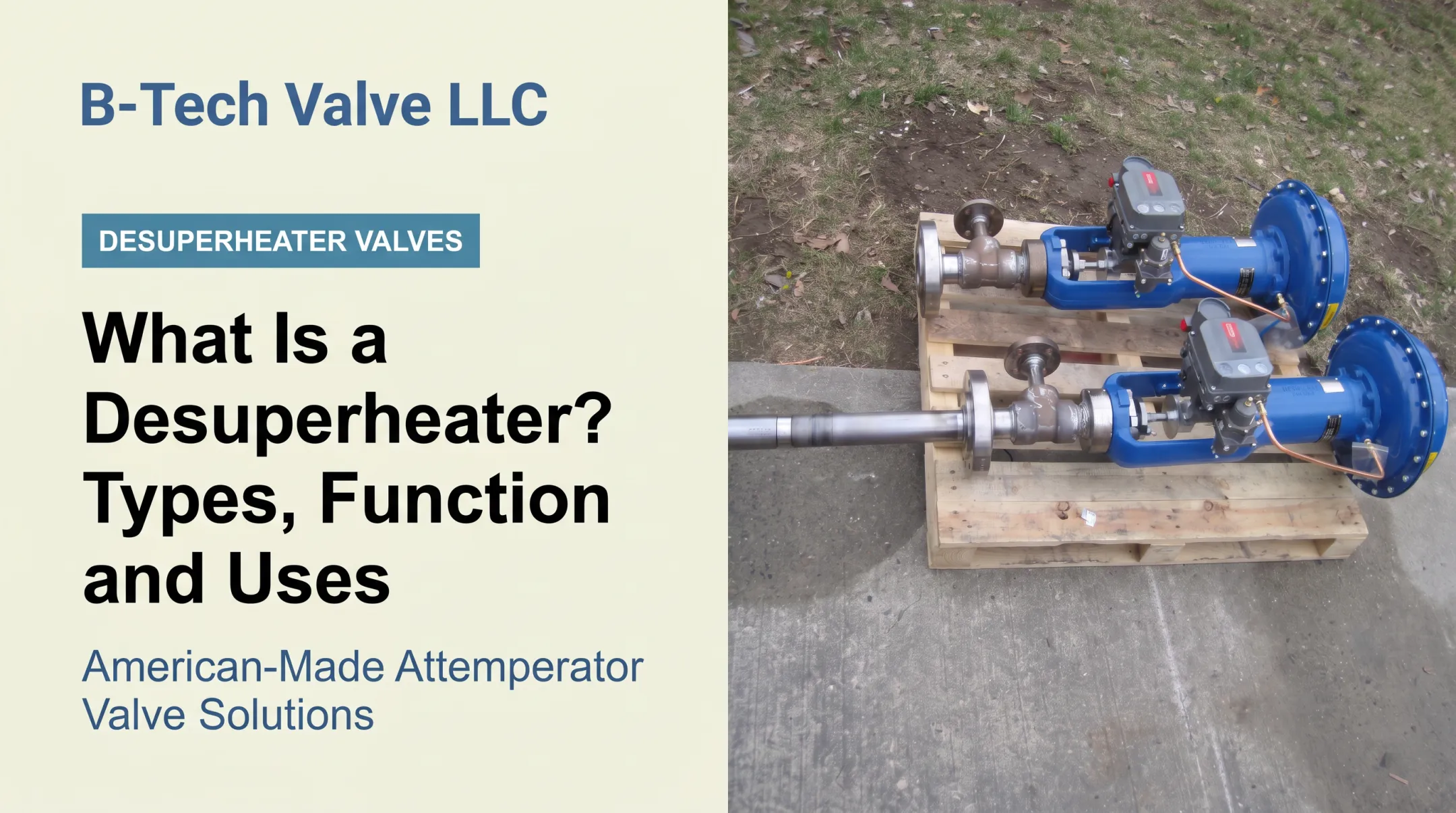
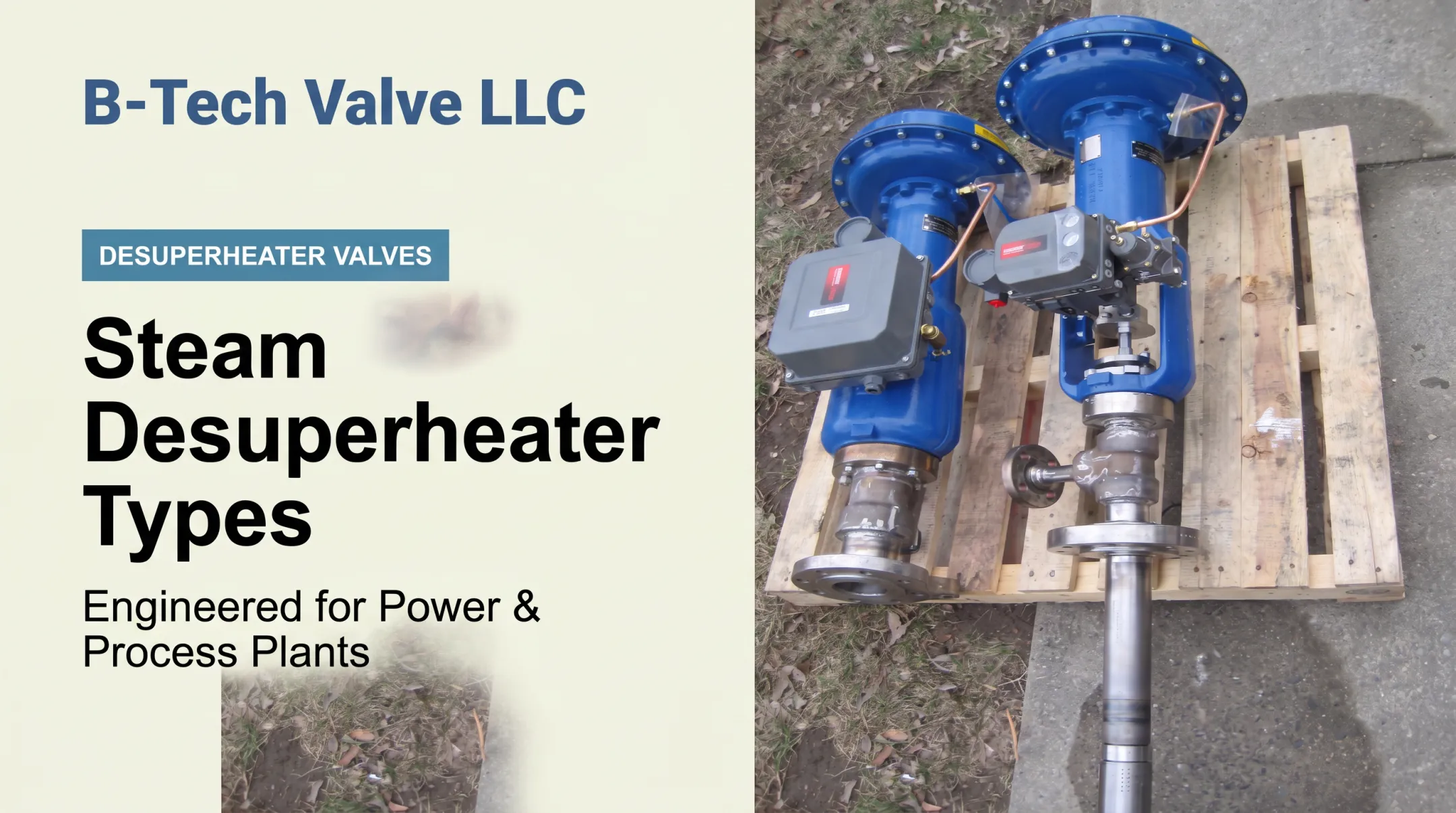
- The LPD Large Pipe Desuperheater is a probe-type, variable-nozzle, fully actuated control valve and desuperheater combined in one assembly, built for steam pipes 6 inches and larger
- The SPAD Small Pipe Attemperator Desuperheater is a fixed-nozzle spray-ring unit for pipes 4 inches and smaller, fed by a separate temperature-control valve
Standalone vs. Integrated Stations
A standalone desuperheater only handles temperature. Where a plant also needs to drop pressure, either a separate pressure-reducing valve goes upstream, or an integrated pressure-reducing/desuperheating assembly handles both in one footprint.
Common applications include:
- Turbine bypass and auxiliary steam in power plants
- Process steam conditioning in refineries and chemical plants
- Pulp and paper, rubber manufacturing, and cogeneration systems
How to Select and Specify a Steam Desuperheating System
Specifying a desuperheater correctly starts with real operating data, not nominal pipe size alone.
Required process data:
- Pipe size and schedule
- Upstream and downstream pressure
- Minimum, normal, and maximum steam temperature
- Minimum, normal, and maximum steam flow
- Desired outlet temperature and steam quality requirement
- Allowable pressure drop
Load variation drives the choice between a simple spray arrangement, a variable-area design, multiple units, or a specialized atomizing system. Steam turndown and cooling-water turndown are two separate numbers, and neither should be assumed from a generic figure without checking the manufacturer's data for the specific unit under consideration.
Cooling-Water Requirements
The injection water needs to be compatible with the steam system and clean enough to avoid nozzle fouling. Specify:
- Water source and pressure available at the injection point
- Temperature and flow availability
- Dissolved solids, filtration, and deaeration status
Manufacturer guidance for spray desuperheaters, including units such as Emerson's AT-25 VenTemp, calls for a clean, filtered water supply such as boiler feedwater. Supply it at the pressure specified for the installation, and fit an individual strainer on each water line.
Setting a Realistic Target Outlet Temperature
Specify the target outlet temperature realistically above saturation when the process allows it. An unnecessarily tight approach to saturation increases cost, makes control more sensitive, and raises wet-steam risk for little practical benefit.
Also confirm material, code, and rating requirements:
- Pressure class and maximum temperature
- Flange or weld-end configuration
- Actuator and control-signal type
- Ratings for gaskets, fasteners, sensors, and downstream components
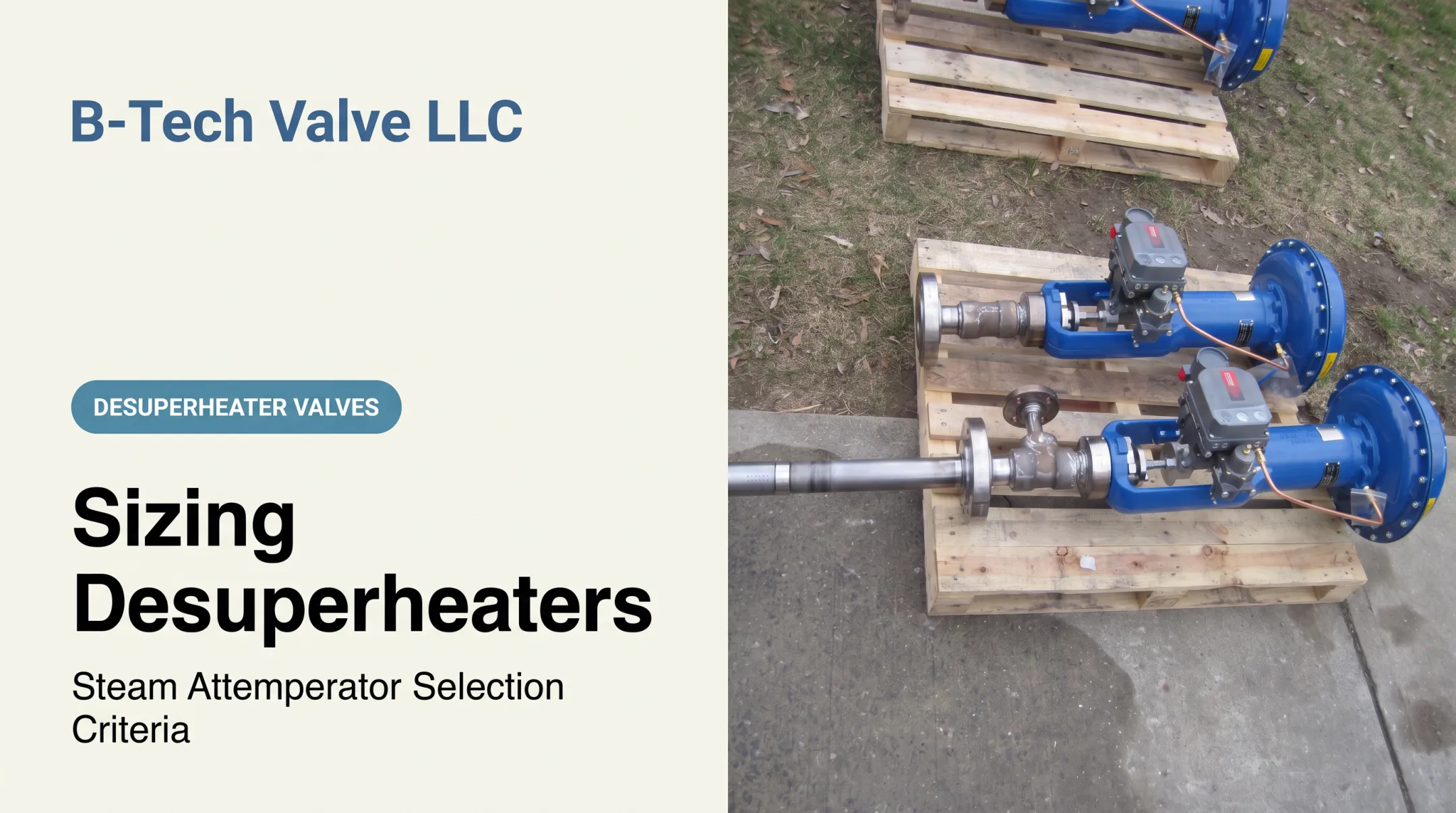
For sizing help: B-Tech Valve's LPD covers steam pipes 6 inches and larger, and its SPAD covers 4 inches and smaller. Submit actual operating conditions for a suitability review rather than selecting by nominal pipe size alone.

Benefits and Applications for US Power and Process Plants
When applied correctly, desuperheating delivers plant-level outcomes that go beyond a single component spec:
- More suitable steam conditions for heat-transfer duties
- Protection of piping, steam traps, and rotating seals from excessive temperature
- Tighter, more responsive temperature control
- Reduced risk of forced outages tied to steam-conditioning failures
- More consistent downstream process conditions
Desuperheating supports steam conditioning across common US power and process settings:
- Turbine-bypass systems
- Boiler and cogeneration plants
- Refineries, chemical, and petrochemical facilities
- Pulp and paper plants and rubber manufacturing
- Waste-to-energy systems
- District or campus heating plants
Combined-cycle and HRSG plants in particular rely on spray attemperators for interstage steam conditioning. That design approach is covered in POWER's HRSG guidance.
A practical case is a plant replacing a worn desuperheater during a scheduled outage. Another is conditioning steam downstream of a pressure-reducing station that has run without adequate temperature control. Energy or fuel savings are application-dependent and should only be claimed when backed by an engineering calculation or a verified case study.
Choosing an Application-Engineered Desuperheater Supplier
A supplier worth sourcing from should review your actual steam and cooling-water conditions, load range, piping layout, target outlet temperature, material requirements, and control scheme before recommending anything. Equipment selected off a spec sheet without that review tends to underperform.
B-Tech Valve LLC designs and builds American-made steam and gas desuperheater and attemperator valves for power and process plants. Components come from U.S. machine and fabrication shops, with final assembly and testing done in-house. Products are stocked for faster turnaround. When the company launched in 2007, the founder already had over 20 years of desuperheater and valve engineering experience.

Published specifications:
- LPD for 6-inch and larger lines; SPAD for 4-inch and smaller lines
- Pressure classes 150 through 2700 per ASME B16.34
- Temperatures up to 1,200°F
Confirm the exact configuration and rating for your service before ordering.
If you're an engineer, plant operator, distributor, or outage contractor evaluating a desuperheating system, include these details when you request an application review:
- Line size and installation constraints
- Steam conditions and flow range
- Target outlet temperature
- Cooling-water details
That data is what separates a correctly sized unit from one that just happens to fit the pipe.
Frequently Asked Questions
What does a desuperheater do?
A desuperheater reduces the temperature of superheated steam by injecting controlled cooling water and transferring heat until the steam reaches its required outlet condition. It's a temperature-control device, not a pressure-control device.
How does a steam desuperheater work?
Atomized water is injected into the steam, where it absorbs heat and evaporates. A downstream temperature sensor feeds a controller, which automatically adjusts the cooling-water valve to hold the target temperature.
What is the difference between a desuperheater and an attemperator?
The terms are often used interchangeably for steam temperature-conditioning equipment. "Attemperator" can refer more broadly to temperature-control arrangements, depending on the industry and the plant using the term.
What cooling water is used in a steam desuperheater?
The water must be compatible with the steam system and clean enough to avoid fouling the nozzles, typically filtered and supplied at a pressure matched to the injection point. The exact source, often boiler feedwater, depends on plant design.
What information is needed to size a steam desuperheater?
Pipe size, steam pressure and temperature range, minimum/normal/maximum flow, target outlet temperature, cooling-water pressure and temperature, water quality, allowable pressure drop, and installation geometry all factor into proper sizing.