Many engineers size a replacement unit by matching the old nominal pipe diameter or picking the nearest catalog size. That approach skips the variables that actually determine performance: water quality, available pressure differential, turndown, and the distance steam needs to fully evaporate the spray.
Sizing a desuperheater means matching steam conditions, cooling-water conditions, the required outlet temperature, and equipment geometry so injected water evaporates completely and controls superheat without damaging anything downstream. Line size alone won't get you there. This guide walks through the full sizing workflow, the data you need before you start, the parameters that move the result, and where a manufacturer should verify your final selection.
Key Takeaways
- Sizing starts with a full operating envelope across minimum, normal, and maximum steam flow, not a single design point.
- Spray-water duty comes from a heat and mass balance, then gets checked against nozzle capacity, valve Cv, and turndown.
- Oversized units cause poor atomization and hunting at low load; undersized units can't hit the target outlet temperature.
- Pipe layout, straight-run length, water quality, and materials all belong in the final selection, not just thermal duty.
How to Size Desuperheaters
Step 1: Define the Process Duty and Operating Envelope
Before comparing any products, collect data for minimum, normal, and maximum operating cases, not just one design point. Steam flow, pressure, temperature, and velocity all shift across the load range, and a unit sized for peak flow alone often struggles at turndown.
You also need to pin down:
- The required outlet steam temperature and the acceptable superheat margin above saturation
- Whether the goal is process-temperature control, equipment protection, turbine requirements, or some combination
- Spray-water source details: temperature, pressure, cleanliness, flow range, and suitability for direct contact with the steam
- Design pressure, temperature, materials, connection class, and applicable plant and piping codes
Skipping any of these means guessing later, usually at the worst possible time during commissioning.
Step 2: Determine the Spray-Water Requirement
This step runs on a heat and mass balance. Steam enters at a known mass flow, pressure, and temperature; water enters at its own pressure and temperature; the mixture leaves at the target outlet condition. Enthalpy values should come from steam tables or validated property software, not rough approximations.
The water flow needed works out algebraically to:
Water mass flow = inlet-steam mass flow × (inlet-steam enthalpy − target-outlet enthalpy) ÷ (target-outlet enthalpy − inlet-water enthalpy)
Spirax Sarco's guidance walks through a representative example: 10,000 kg/h of steam at 10 bar(a) and 300°C, cooled with water at an enthalpy of 630 kJ/kg, targeting 185°C (5°C above the 180°C saturation point). That calculation yields roughly 1,208 kg/h of spray water and 11,208 kg/h of outlet steam.

Treat that as a method to repeat for your own numbers, not a design allowance to borrow.
Run this calculation at every operating case, then confirm the water supply can actually deliver it:
- Check pressure losses through piping, filters, control valves, and nozzles at each flow point
- Confirm the differential between steam and water pressure holds up at minimum load, not just maximum
- Flag any case where required water pressure exceeds what the supply can provide
Step 3: Match the Desuperheater Design to the Application
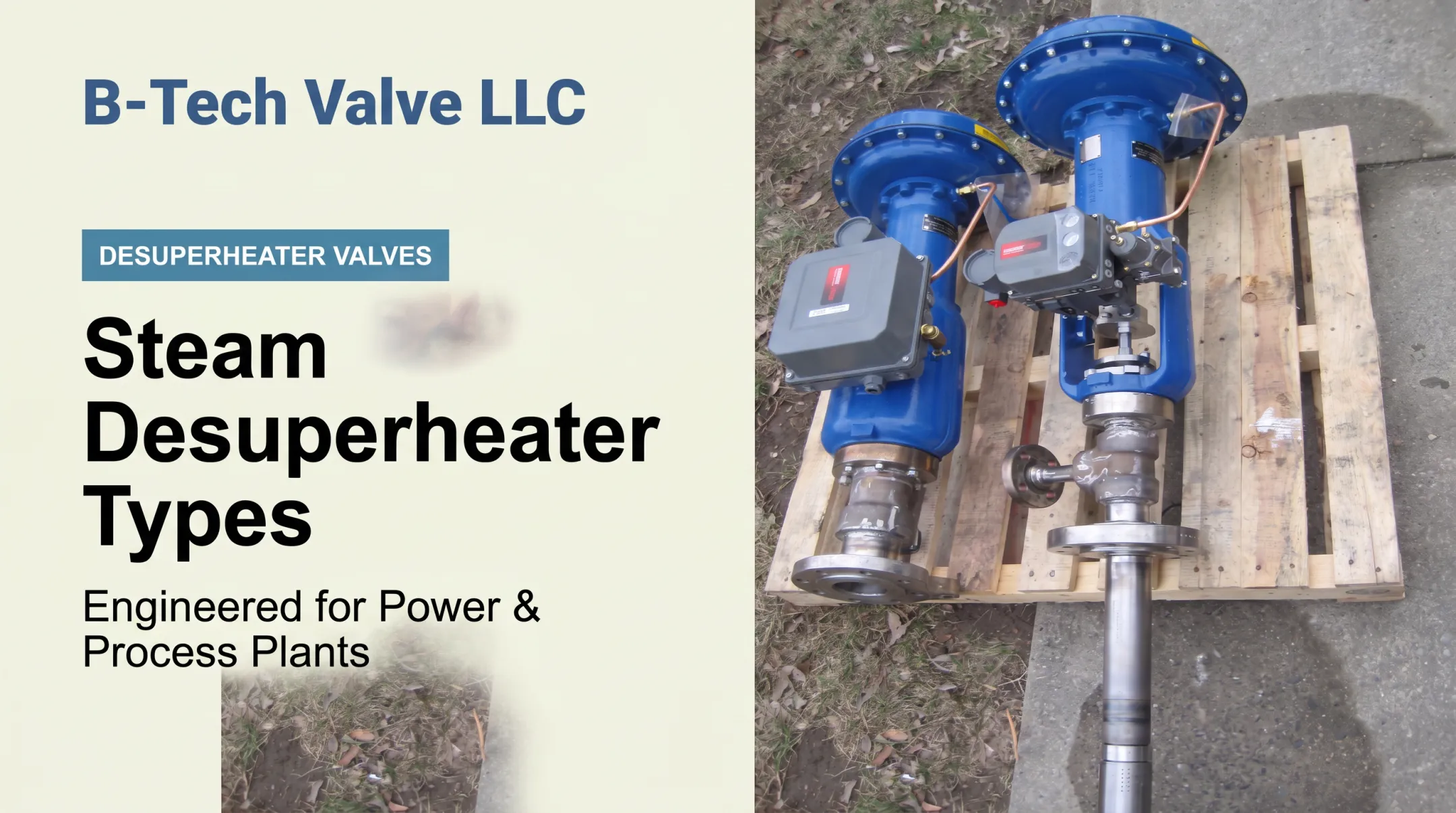
Different direct-contact designs handle flow range, mixing quality, and installation space differently. The table below summarizes the general distinctions:
| Design | Best Fit | Key Trade-Off |
|---|---|---|
| Probe / variable nozzle | Wide turndown, larger pipe runs | More actuation complexity |
| Spray-ring / multi-nozzle | Small to mid-size pipe, steadier loads | Fixed geometry limits turndown |
| Venturi | Applications needing high mixing energy | Added steam-side pressure drop |
A nozzle has to produce droplets fine enough to evaporate before they reach the temperature sensor or any downstream equipment. That depends on steam velocity, turbulence, spray angle, and the evaporation distance actually available in your pipe run.
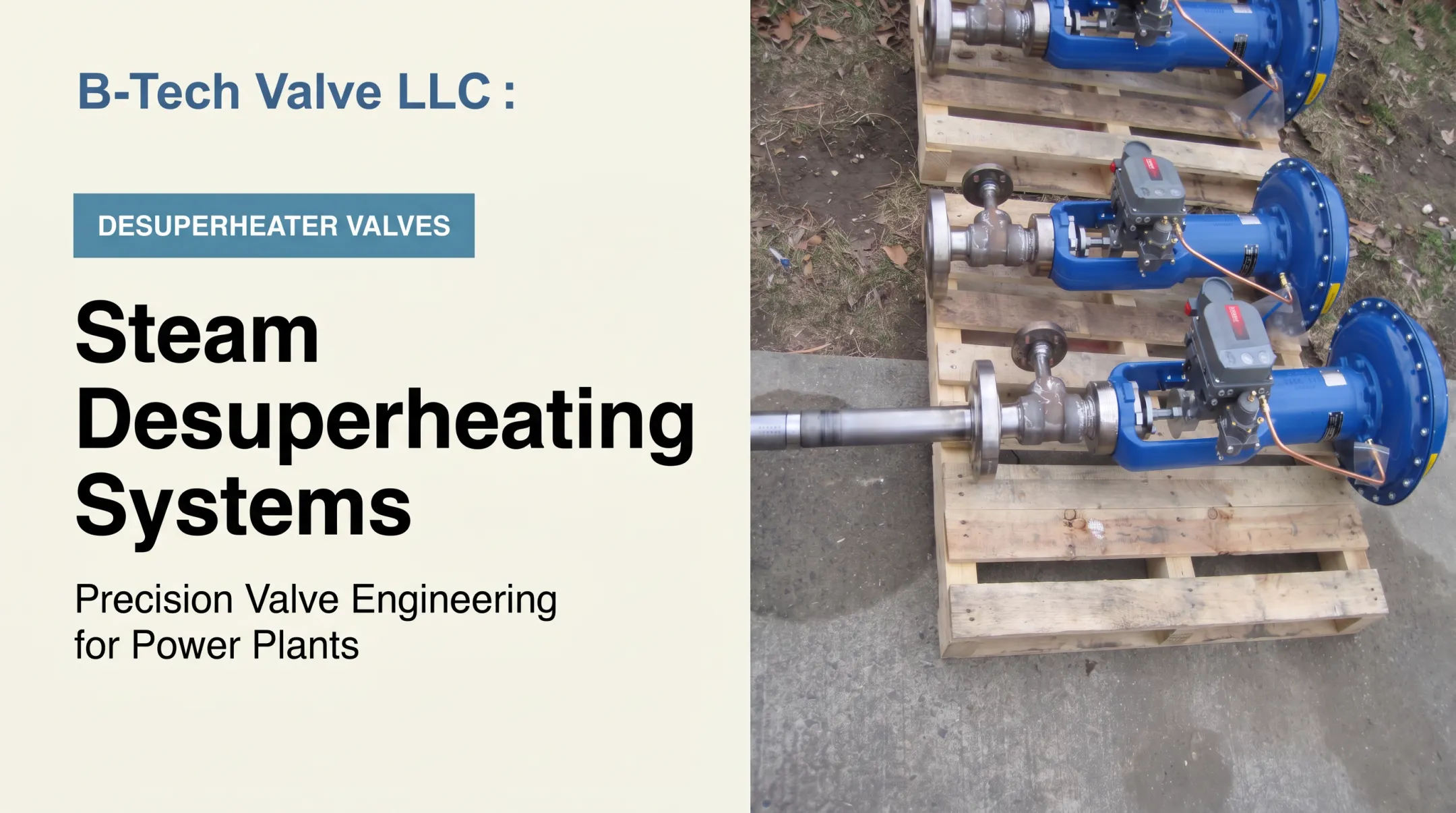
B-Tech Valve's LPD design targets steam pipes 6 inches and larger, combining a probe-type variable-nozzle control valve and desuperheater in one actuated assembly. Its SPAD spray-ring unit, fed by a separate temperature-control valve, is built for steam pipes 4 inches and smaller.
These are application examples, not universal sizing rules. Your own flow range and geometry still drive the final choice.
Step 4: Size the Control and Verify the Installation
Size the spray-water control valve alongside the desuperheater whenever possible. Check Cv, pressure drop, rangeability, shutoff behavior, and actuator response across the entire operating envelope, not just the design point.
A few things to confirm before you finalize anything:
- Minimum water flow control - the valve must pass minimum required flow without hunting
- Maximum water flow capacity - it must also reach peak demand without starving the system
- Turndown data - pull this from manufacturer documentation for your specific valve and nozzle combination, since inherent rangeability numbers vary by design
- Downstream geometry - review straight-pipe length, sensor location, orientation, drains, traps, and liner requirements
Insufficient evaporation distance is one of the most common installation errors. It produces wet steam, temperature stratification, erosion, or a sensor reading that doesn't reflect actual steam temperature.
Once the datasheet, drawings, and process calculations are complete, send them to the desuperheater manufacturer for final confirmation before procurement.
When Should You Size a Desuperheater and What You Need First
Sizing work applies when you are building or changing steam systems, including:
- New steam systems
- Boiler or HRSG modifications
- Pressure-reducing stations
- Process-temperature upgrades
- Replacement units
- Outage or retrofit projects
Copying the old unit's nominal size for a replacement skips every variable that may have changed since the original installation.
System and Piping Data
Before comparing products, gather:
- A current piping and instrumentation diagram
- Line size, schedule, and upstream/downstream pressures
- Steam flow range, temperature range, and control philosophy
- Available straight-run length and the downstream temperature-sensor location
Confirm whether the application needs a standalone desuperheater, an integrated control-valve arrangement, or a different steam-conditioning approach. Also flag limits on pressure drop, noise, vibration, access, orientation, and maintenance clearance.
Spray Water and Process Conditions
Document spray-water chemistry, filtration, suspended solids, corrosion risk, and water temperature. Clean water prevents nozzle fouling and unpredictable spray patterns. Poor water quality is one of the fastest ways to lose control accuracy.
If process contamination can't be tolerated at all, a non-contact heat exchanger may fit better than direct injection, with trade-offs in response time, efficiency, and maintenance complexity.
Engineering Review and Code Compliance
Steam systems carry hazardous pressure and temperature. Get qualified engineering review of pressure-boundary materials, pressure class, temperature rating, welds or threaded connections, and actuator interfaces. Sizing, installation, isolation, and testing should follow applicable US codes, site procedures, and manufacturer instructions.
Key Parameters That Affect Desuperheater Sizing
Performance depends on how thermal duty, fluid mechanics, control response, and physical layout interact. Change one input and you can shift the required nozzle selection or pipe length.
Steam mass flow and operating range. Minimum, normal, and maximum flow determine water demand, velocity, and mixing energy. Size only for maximum flow and the unit may be unstable at low load; size only for normal flow and it may choke at peak demand.
Inlet pressure, temperature, and required outlet temperature. These set the cooling duty, and the outlet target needs to retain a workable superheat margin. Get too close to saturation and you risk condensation, wet steam, corrosion, or thermal shock downstream.
Spray-water pressure, temperature, and quality. The pressure differential drives atomization and water capacity. Inadequate differential, unstable supply pressure, or poor filtration produces larger droplets, incomplete evaporation, and carryover.
Pipe size, velocity, geometry, and evaporation distance. Line size affects velocity and installation geometry, but it doesn't independently set desuperheater capacity. Fisher's DMA manual lists a minimum steam velocity around 30 ft/s for fixed-geometry nozzles and 25 ft/s for variable-geometry designs, with typical sensor spacing of at least 30 ft, subject to the manufacturer's certified drawings. Numbers like these vary by model, so confirm against your specific equipment rather than treating one figure as universal.
Control-valve capacity, turndown, and response. The valve and desuperheater have to regulate together across the full water-flow range. A mismatched valve hunts, sits nearly closed, over-injects, or can't keep up during rapid load swings. Where practical, have one supplier review both components together.

Common Mistakes and Troubleshooting Issues
Most sizing and installation failures trace back to a handful of recurring errors:
- Skipping preparation. Using only pipe diameter, an old datasheet, or a single operating point leads to incorrect capacity and poor turndown.
- Mixing up parameters. Confusing gauge and absolute pressure, omitting water pressure losses, or using an unrealistic outlet-temperature target throws off the whole calculation.
- Sizing for the wrong extreme. Oversizing causes low-load instability and incomplete evaporation; undersizing leaves insufficient cooling capacity at peak demand.
- Ignoring installation geometry. Inadequate straight run, missing drains, and poor spray placement produce wet downstream piping, erosion, and incomplete evaporation.
Problem: Outlet Temperature Is Unstable
Likely cause: Poor control-valve sizing, inadequate water-pressure differential, sensor placement, or operation outside the intended turndown range.
What to check: Compare actual flow and pressure data against your original sizing basis. Inspect the control loop and sensor location, and get manufacturer guidance before changing setpoints or hardware.
Problem: Water Carryover, Wet Steam, or Downstream Erosion
Likely cause: Oversized droplets, excessive water injection, insufficient evaporation distance, or poor drainage. POWER magazine's HRSG analysis documents cases where uncontrolled injection and unatomized water carried into downstream heating sections and damaged headers and tubes.
What to check: Verify the heat balance, inspect spray components, confirm downstream piping and trapping. Don't just increase water flow to chase a temperature problem.
Problem: Nozzle Plugging or Declining Capacity
Likely cause: Inadequate filtration, contaminated spray water, or operation outside the specified water-quality range.
What to check: Review water treatment and filtration, isolate the unit safely for inspection, and compare observed wear against the manufacturer's material recommendations.
Alternatives to Direct-Contact Desuperheater Sizing
A direct-contact desuperheater isn't automatically the right call for every application. Weigh it against process purity needs, response time, pressure drop, available space, and lifecycle cost.
Surface or Heat-Exchanger Cooling
When it's better: Where cooling water can't mix with the steam, or steam chemistry and product purity are non-negotiable.
Key trade-offs: Expect different heat-transfer efficiency, slower response to rapid load swings, larger equipment footprint, and fouling concerns compared to direct injection.
Integrated Steam-Conditioning Valve or Pressure-Reducing Arrangement
When it's better: Applications needing coordinated pressure reduction and temperature control, limited installation space, or a single combined replacement assembly.
Key trade-offs: You gain integrated control and installation convenience, but take on added complexity, more limited maintenance access, and the need to size pressure and temperature functions together.
Alternative Spray Configurations
When it's better: When line size, load range, water pressure, or response needs fall outside a basic single-nozzle injector. Probe, spray-ring, venturi, and multi-nozzle arrangements each fit different combinations of those conditions.
Key trade-offs: A design with better turndown or finer atomization often demands different pressure, space, or maintenance provisions. Base the final choice on application calculations, not a generic preference for one design type.

Conclusion
Sizing a desuperheater correctly means working through the full checklist:
- Complete operating envelope
- Real heat-balance calculation
- Spray-water review
- Control-valve check
- Installation assessment
Skip any of those and you're guessing.
Most field problems trace back to the same root causes:
- Incomplete design data
- Oversizing
- Poor water quality
- Inadequate evaporation distance
- A control valve that doesn't match the desuperheater
If you're an engineer, plant team, or outage contractor replacing a unit in a US steam system, submit your operating data to B-Tech Valve for application review. That step is especially useful when you're evaluating an application-sized LPD for larger pipe runs or a SPAD for smaller lines.
Reach the team at Sales@B-TechValves.com or 609-321-2205.
Frequently Asked Questions
How much does a desuperheater cost?
Price depends on line size, pressure class, temperature rating, steam and water flow range, materials, control-valve requirements, and customization. Request a project-specific quotation rather than relying on a general estimate.
Why use a desuperheater?
It reduces superheated steam temperature to a controlled level, protects downstream piping and equipment, and makes steam suitable for process or heat-transfer requirements when sized correctly for the application.
What's the difference between a superheater and a desuperheater?
A superheater adds heat to steam after vaporization to raise its temperature. A desuperheater removes excess superheat, typically by injecting cooling water, to bring steam temperature down toward the required operating condition.
Can line size alone tell me what desuperheater I need?
No. Line size affects velocity and installation geometry, but water quality, pressure differential, turndown, and evaporation distance all shape the final selection too.
What happens if a desuperheater is oversized?
Oversizing tends to cause poor atomization and unstable temperature control at low load, even though it may handle peak flow fine.