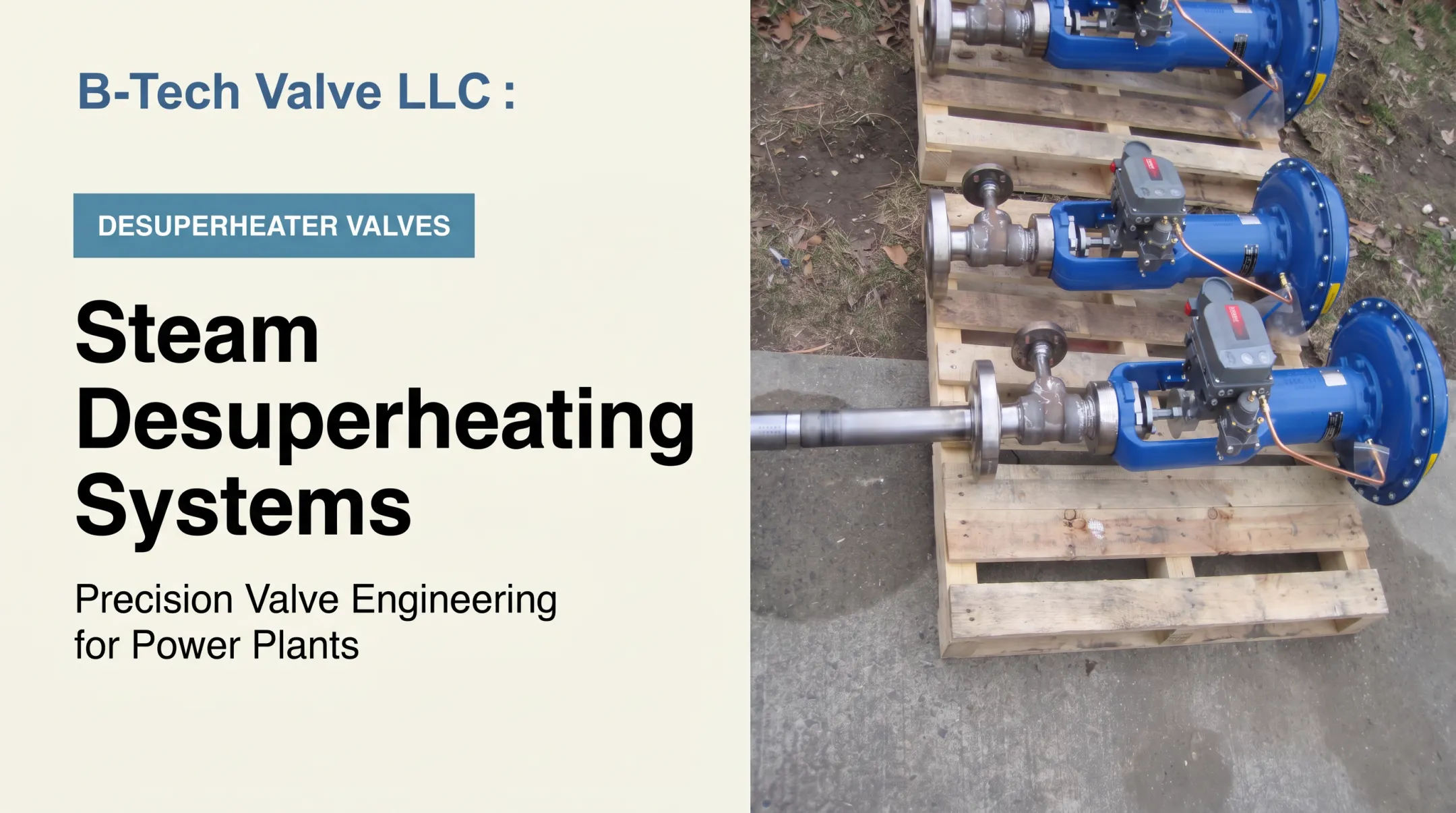
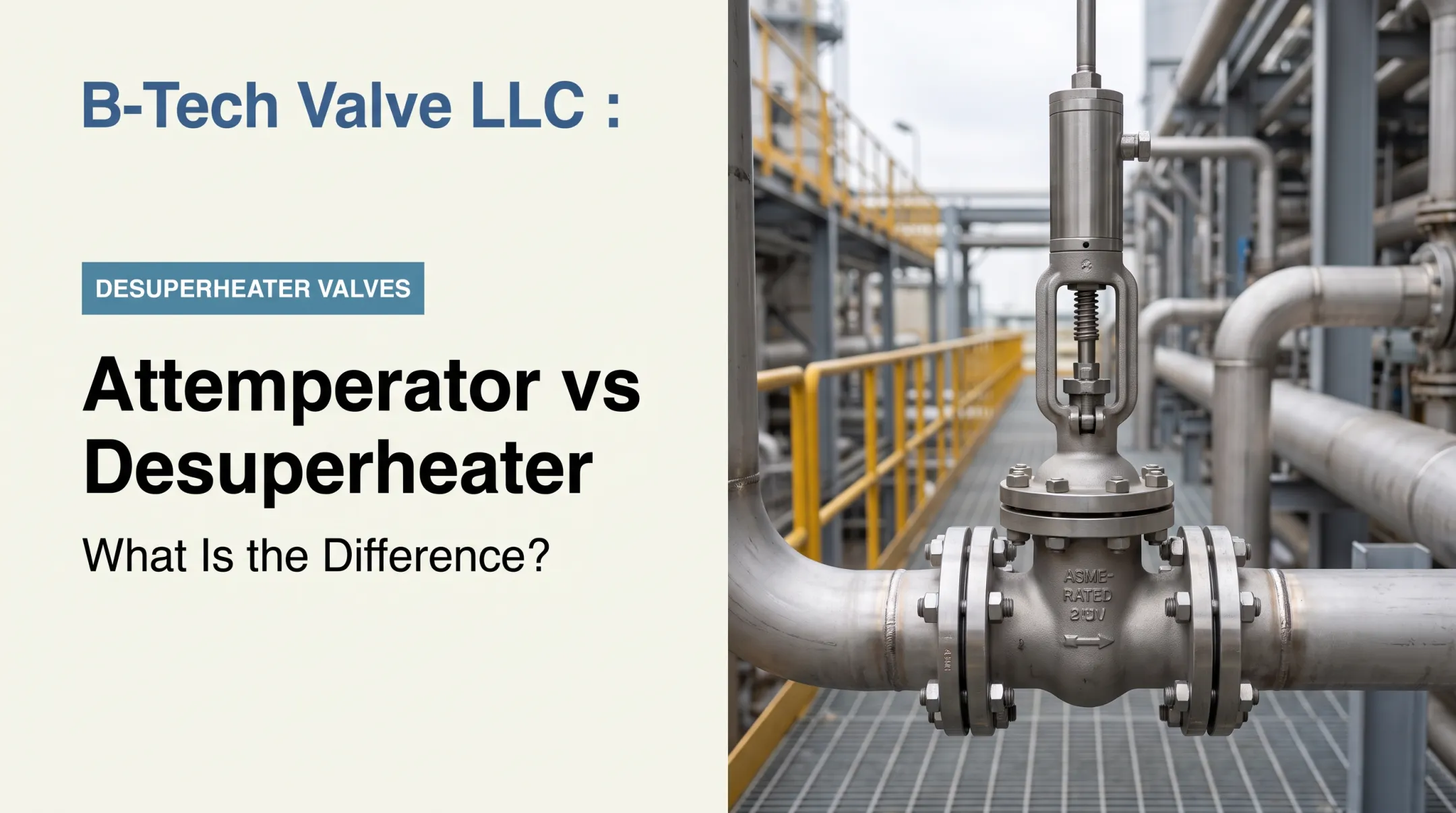
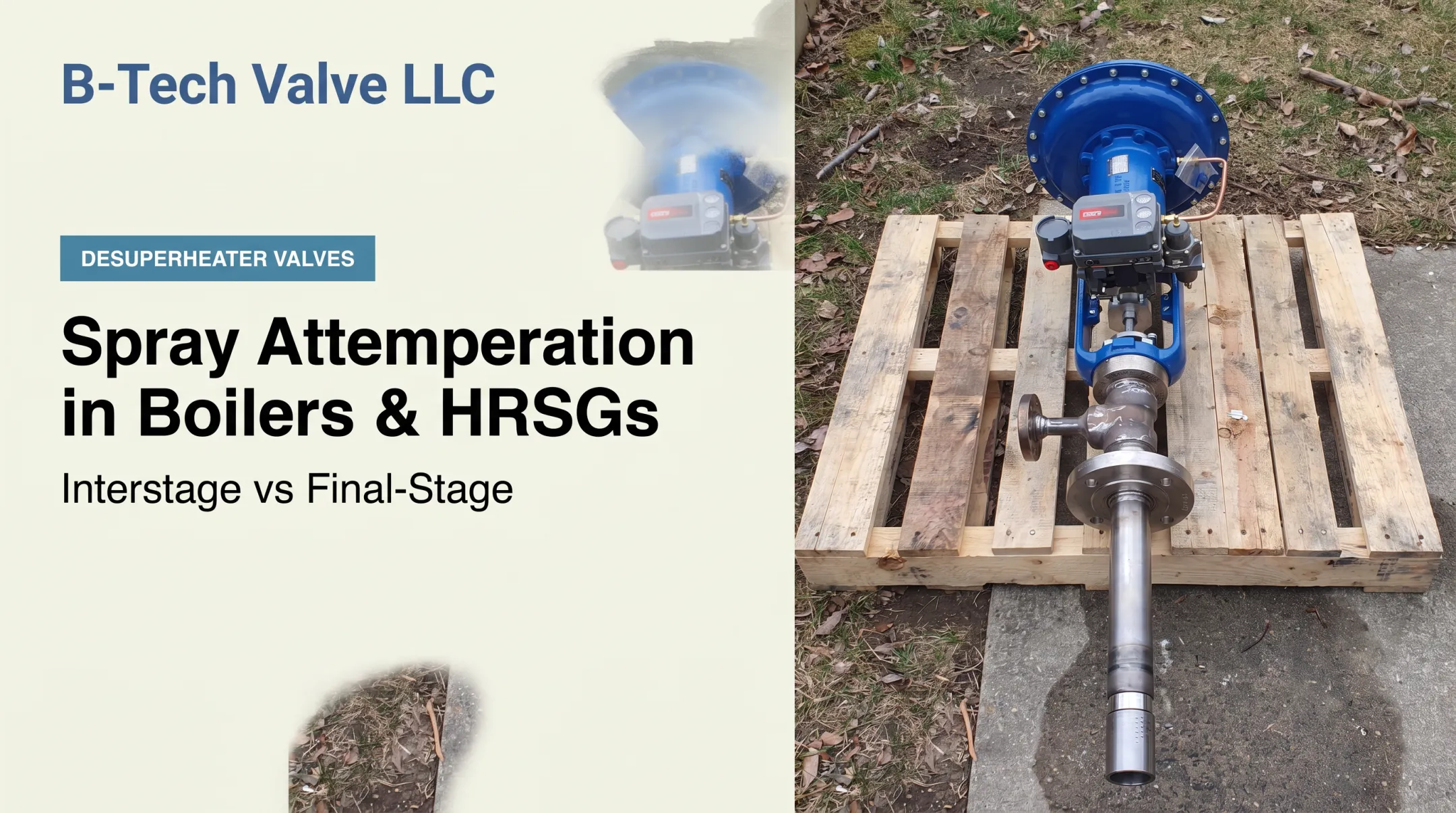
Introduction: Steam Attemperators
A few degrees of excess steam temperature can turn a routine startup into a turbine inspection. Many plant engineers struggle to hold superheated steam within a tight band, especially during load swings, cycling duty, or cold starts.
A steam attemperator solves this by injecting a controlled spray of water into superheated steam, pulling the temperature down before it reaches a turbine, reheater, or process header.
The stakes are real: EPRI's water-induction report found that spray water introduced ahead of a final superheater or reheater can accumulate and reach the turbine if it fails to fully evaporate.
This article covers how attemperators work, the design trade-offs behind them, common failure modes, and what to check before specifying or replacing one. Correct sizing isn't optional here: steam conditions, water quality, piping geometry, and control response all shape whether the unit performs or becomes a liability.
Key Takeaways
- An attemperator injects water into superheated steam, relying on atomization, mixing, and evaporation to hit the setpoint.
- It's a desuperheater application built for close temperature control inside boilers and HRSGs.
- Overspray, poor evaporation, or unstable control can trigger thermal shock, tube damage, or turbine risk.
- Size from complete operating data, not pipe size alone, and plan maintenance around actual cycling duty.
What Is a Steam Attemperator?
An attemperator cools superheated steam by introducing a measured amount of water that atomizes and evaporates, absorbing heat in the process. Get that evaporation step wrong, and you've traded a temperature problem for a wet-steam problem.
Where Attemperators Sit in the Steam Path
Placement changes the job:
- Between superheater stages — trims temperature mid-process so the final superheater surfaces don't see excessive heat.
- Between reheater stages — protects downstream reheat tubing and manages the temperature a turbine's intermediate-pressure section receives.
- At final steam-temperature control points — holds the delivered steam at the exact setpoint a turbine or process user requires.
An interstage unit and a final-control unit rarely share the same operating envelope, even if they look similar on a drawing.
Attemperator vs. Desuperheater: Overlapping, Not Identical
The hardware and operating principle overlap. "Attemperator" generally refers to a desuperheater used for precise temperature control within a boiler or HRSG, while "desuperheater" is the broader term covering any device that reduces steam superheat, including those used in general process-steam service.
A few terms worth knowing before going further:
- Superheated steam — steam heated above its saturation temperature
- Spray water — the cooling water injected into the steam stream
- Saturation temperature — the boiling point at a given pressure
- Overspray — more water injected than the steam can evaporate
- Water carryover — unevaporated droplets traveling downstream
- Thermal liner — a protective sleeve shielding pipe walls from spray-related thermal shock
Done correctly, attemperation protects heat-transfer surfaces, steam piping, steam traps, rotating seals, and turbines from excessive temperature and the thermal transients that come with it.
How Does a Steam Attemperator Work?
The control sequence is straightforward in concept: a control system reads steam temperature, modulates spray-water flow through a control valve or nozzle arrangement, then checks downstream temperature feedback to confirm the setpoint was reached. The hard part is everything that happens physically between injection and that downstream sensor.
Atomization, Mixing, and Evaporation
Water enters as a spray, breaks into droplets (primary atomization), sometimes breaks further (secondary atomization), then mixes with the steam and evaporates. Smaller, more evenly distributed droplets evaporate faster and produce more uniform downstream temperatures. Coarse droplets or poor distribution leave pockets of unevaporated water traveling further than designed.

Spray-Water Quality and Conditions
Pressure differential, water temperature, flow range, and cleanliness all affect atomization quality. Chemistry matters too. ASME's boiler-chemistry guide suggests spray water should meet the same purity needed for steam, citing figures like under 30 ppb total dissolved solids and under 10 ppb sodium as reference points, not universal mandates.
Confirm the applicable water-quality standard for your specific boiler or HRSG before specifying.
Sensor Placement and What Goes Wrong Without It
The downstream temperature sensor needs enough distance from the injection point for complete evaporation and mixing. Manufacturer literature sometimes cites a typical distance (one Fisher manual references 30 feet for its specified models), but the real number depends on design, velocity, droplet size, and pipe geometry. Never assume one figure applies plant-wide.
When evaporation is incomplete, the consequences stack up fast:
- Wet steam reaching downstream equipment
- Sensor wetting that skews control signals
- Pipe-wall impingement and erosion
- Cold spots and thermal shock
- Water carryover into heat-transfer surfaces or turbines
Isolation valves, drains, thermal liners, and alarms exist precisely to catch these failure points before they become outages. Any installation guidance should be checked against current engineering standards and the manufacturer's documentation, not assumed from a similar-looking job.
Types and Design Considerations for Steam Attemperators
Not every attemperator fits every pipe. Two broad mechanical families dominate:
- Circumferential or spray-ring designs: nozzles arranged around the steam pipe's circumference for even flow distribution; generally easier to access for maintenance.
- Probe or mast-style designs: a single assembly inserted into the steam flow, often with variable-geometry nozzles that open progressively as demand increases.
Nozzle Approaches and Trade-offs
Fixed-orifice, spring-loaded, variable-area, and swirl nozzles each suit different flow ranges, pressure differentials, and cycling duties. None is universally better. A fixed-orifice nozzle might be simpler and more robust for steady baseload service, while a variable-area design handles wider turndown during load-following operation. Maintenance access and expected wear should factor into the choice as much as flow performance.
Integrated vs. Separated Configurations
Some designs house the water-control function inside the steam pipe itself. Others pair a spray-ring or probe assembly with an external control valve. B-Tech Valve's product line illustrates both approaches:
| Feature | LPD | SPAD |
|---|---|---|
| Pipe size | 6 inches and larger | 4 inches and smaller |
| Configuration | Variable-nozzle, actuated control valve and desuperheater combined | Spray-ring, fixed-nozzle design paired with a separate temperature-control valve |
| Insertion style | 3-inch flanged insertion, 90° on the pipe side | Clamps between steam-pipe flanges |
| Pressure classes | ASME B16.34, Class 150–2700 | ASME B16.34, Class 150–2700 |
| Temperature rating | Up to 1,200°F (650°C) | Up to 1,200°F (650°C) |

Verify current application limits against product documentation before specifying either design for a given line.
Severe-Service and Piping Considerations
Repeated startups, low-load operation, vibration, cavitation, and erosion all stress attemperator components over time. Piping layout plays a bigger role than most specs give it credit for:
- Straight-run requirements ahead of and after the injection point
- Proper drainage to avoid water pooling at low points
- Valve orientation and adequate support against thermal expansion
- Access for inspection without major teardown
- Protection against leaking spray water migrating into hot downstream components
Applications and Benefits of Steam Attemperators
Attemperators show up anywhere superheated steam needs to stay within a controlled band:
- Utility boilers and HRSGs
- Cogeneration plants and waste-to-energy facilities
- District or campus heating systems
- Refineries, chemical plants, and pulp and paper facilities
- Other process-steam systems with pressure-reducing stations
Reliable temperature control protects superheater and reheater components, maintains steam conditions that turbines and process users actually need, and supports startup, load-following, and low-load operation without manual guesswork.
In one documented combined-cycle trial, Duke Energy reported stable downstream temperature readings and outlet temperature maintained above saturation under low-flow, high-spray-demand conditions (a useful case observation, though not a guaranteed outcome for every plant).
The right design always comes back to the application's actual steam and water conditions, operating profile, line size, and control range, not the name stamped on the spec sheet.
Common Steam Attemperator Problems and How to Prevent Them
Most attemperator failures trace back to a handful of root causes. Here's how symptoms map to likely culprits:
| Symptom | Likely Cause |
|---|---|
| Temperature excursions or oscillating control | Undersized valve, control tuning issue, or overspray/underspray |
| Unexpected water consumption | Leaking spray valve or nozzle erosion |
| Downstream tube or pipe distress | Incomplete evaporation, water impingement |
| Visible leakage at block or control valves | Seat wear, cavitation damage |
| Abnormal vibration | Flow-induced vibration, loose internals |
| Repeated valve failures | Cycling duty exceeding original design intent |
Plants originally designed for steady baseload operation often discover weaknesses only after shifting to frequent cycling, rapid ramping, or low-load operation. Changed spray-water conditions (a new source, altered chemistry) can expose the same gaps.
Before changing hardware or control logic, review:
- DCS trends for steam and spray-water temperature over time
- Spray-water pressure and flow against the original design range
- Valve position history during startups and transients
- Downstream inspection findings for erosion or thermal damage
Safety note: Inspection, testing, and modification of high-pressure, high-temperature steam systems must follow plant procedures, applicable codes, lockout/tagout requirements, and qualified engineering review. This isn't a place for shortcuts.
How to Select, Install, and Maintain a Steam Attemperator
Specifying an attemperator from line size alone is a common mistake. A proper specification checklist covers:
- Steam mass flow, inlet and outlet temperatures, and pressure
- Allowable temperature range plus minimum and maximum load
- Steam quality and pipe size/schedule
- Spray-water source, pressure, temperature, and chemistry
- Materials and pressure class requirements
- Control signal type and required response time
Before locking in a design, evaluate site and layout factors:
- Available straight run and injection location
- Downstream equipment and drainage
- Liner requirements and thermal expansion
- Access, insulation, and supports
- Sensor placement
Skipping this step is how undersized or poorly placed units end up in service.

Looking Beyond Purchase Price
Lifecycle thinking beats lowest bid almost every time. Compare:
- Application fit and material selection
- Control-valve durability under the plant's actual cycling duty
- Spare parts availability and lead time
- Inspection access built into the design
- Domestic sourcing and outage-schedule compatibility
B-Tech Valve LLC designs and sells U.S.-made desuperheater and attemperator valves, with components fabricated by local U.S. machine shops and final assembly and testing performed in-house.
Products are offered in ASME B16.34 pressure classes 150 through 2700 and temperatures up to 1,200°F. Confirm ratings against current technical data before specifying a replacement.
A Practical Maintenance Program
Keep it routine, not reactive:
- Review temperature and control trends on a regular schedule
- Inspect spray nozzles and valves for wear or blockage
- Check for leakage and erosion at seats and welds
- Examine liners and attachments for thermal damage
- Verify drains and isolation valves function as designed
- Confirm control logic still matches current operating conditions, not the original baseload profile
If you're evaluating a replacement or new installation, come prepared with line size, steam conditions, water conditions, existing equipment details, and operating range. That data lets an application review actually mean something, whether you're a plant engineer, distributor, repair shop, outage contractor, or EPC team.
Frequently Asked Questions
What is an attemperator in a boiler?
An attemperator injects controlled cooling water into superheated steam to regulate temperature. That protects the boiler, HRSG, piping, and downstream equipment from excessive heat.
What is the difference between an attemperator and a desuperheater?
An attemperator is generally a desuperheater used for precise temperature control within a boiler or HRSG. "Desuperheater" is the broader term for any device that reduces steam superheat.
What is the purpose of a desuperheater?
It reduces superheated steam temperature through spray-water mixing and evaporation, conditioning steam for downstream equipment. Complete evaporation is essential; unevaporated water can cause erosion, thermal shock, or water hammer.
What is the purpose of a superheater?
A superheater raises saturated steam above its saturation temperature, improving steam-cycle performance and reducing moisture-related risk to turbine blades. That added heat then needs to be controlled, which is where attemperation comes in.
How much does a desuperheater cost?
Price depends on line size, pressure class, temperature, flow range, materials, nozzle or valve design, controls, and documentation needs. Request a quote based on complete operating data rather than relying on a generic price range.
What are the different types of steam control valves?
Common categories include globe, rotary, ball, butterfly, pressure-reducing, safety/relief, and specialized spray-water control valves. The right type depends entirely on service conditions and the control precision required.