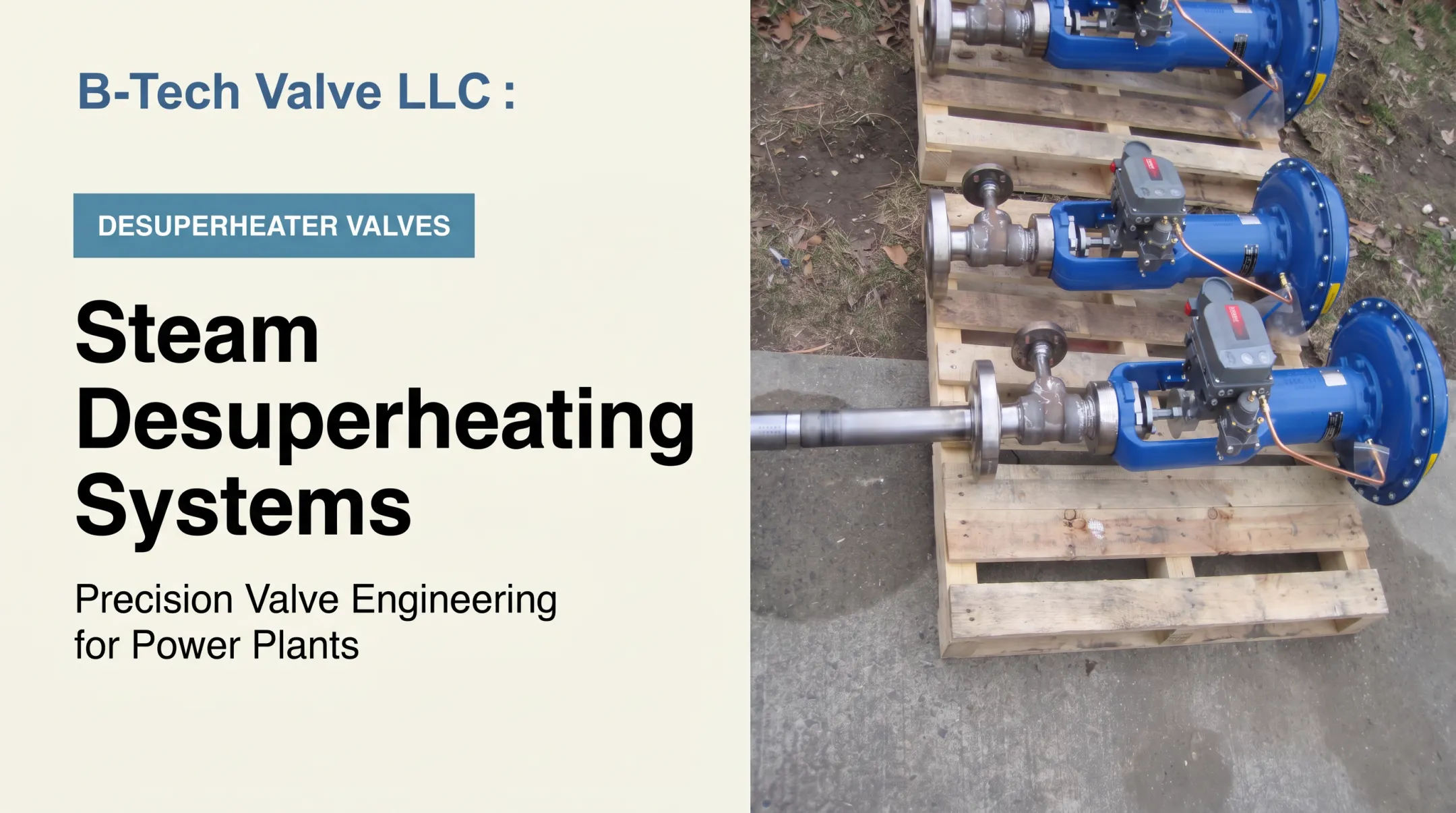
A desuperheater fixes this by stripping excess heat from superheated steam or gas, typically by injecting a controlled spray of cooling water directly into the stream. The result is steam conditioned to a specific target temperature, ready for the job it needs to do.
This guide covers how desuperheaters work, the main design types, where plants use them, and the operating data you'll need before selecting one.
Key Takeaways
- A desuperheater removes excess sensible heat to hit a precise outlet temperature.
- Direct-contact units inject water into the stream; non-contact units transfer heat through a separating wall.
- Correct sizing depends on steam conditions, flow range, spray-water quality, and downstream mixing distance.
- "Desuperheater" and "attemperator" often overlap, but confirm the intended service for your system.
What Is a Desuperheater?
Superheated steam has been heated beyond its saturation temperature, meaning it carries more thermal energy than steam at the boiling point for its pressure. That extra heat is useful for driving turbines, but it can be a liability almost everywhere else.
Downstream heat exchangers, process users, piping, and seals are frequently rated for lower temperatures. Running steam that's too hot through them can cause trim binding from thermal expansion and gasket leakage, according to Fisher's steam conditioning guidance.
A desuperheater's job is narrow but critical: bring the temperature down to spec without venting pressure or condensing the steam outright.
Core Components
Every desuperheater, regardless of type, relies on the same basic building blocks:
- A steam or gas inlet connection
- A cooling-water supply line
- Spray nozzles or a heat-transfer surface
- A control valve or flow-control mechanism
- Temperature instrumentation at the outlet
Direct-Contact vs. Non-Contact Design
Direct-contact desuperheaters inject water straight into the steam stream. The water absorbs heat and, ideally, fully evaporates before reaching the temperature sensor downstream.
Non-contact (surface) desuperheaters keep the cooling medium separate. Heat passes through a heat-exchanger wall, similar to a shell-and-tube exchanger, so the coolant never touches the process steam.
Plants choose one approach over the other based on contamination tolerance, available space, and how tightly they need to control the final temperature. B-Tech Valve's lineup focuses on the direct-contact approach: the LPD and SPAD assemblies both regulate temperature through controlled water injection, each sized for different pipe ranges.
How Does a Desuperheater Work?
The operating sequence is straightforward in concept, even though getting it right in practice takes careful engineering.
- Sensing: A temperature sensor downstream reads the current outlet condition.
- Comparison: A controller checks that reading against the setpoint.
- Adjustment: The control valve or nozzle arrangement opens or closes to change cooling-water flow.
- Mixing: Water droplets disperse into the steam, absorb heat, and evaporate.

That last step is where most of the engineering challenge lives. Droplet size, spray pattern, and the velocity difference between water and steam all affect how completely and how quickly the water evaporates. Smaller droplets evaporate faster because they have more surface area relative to their mass, which shortens the distance needed for complete mixing.
Why Mixing Distance Matters
Water must fully evaporate before it reaches the temperature sensor or any sensitive downstream equipment. Leftover liquid droplets can cause wet-steam damage or thermal shock.
Manufacturer guidance on minimum straight-pipe length varies by product and application, sometimes 8 to 25 feet, sometimes 40 to 50 feet, depending on residual superheat and sensor placement. There's no single universal number. Always check the manufacturer's sizing documentation for the specific unit.
Load Changes Create Real Risk
A desuperheater sized for full load can behave poorly at minimum load. Oversizing is one of the most common and costly selection mistakes. At very low flow, poor atomization and unstable outlet temperatures become likely, and a nearly shut control valve is often a telltale sign of incorrect sizing.
Low-load overspray and leaking spray valves can also lead to water accumulation that risks turbine water induction, a concern documented in EPRI's 2020 brief on water damage prevention in steam turbines.
Common installation and control risks include:
- Poor spray-water quality or inadequate pressure
- Incorrect temperature sensor placement
- Insufficient mixing distance before the sensor
- Operating too close to saturation temperature, which slows evaporation
Picture a simple scenario: superheated steam enters the desuperheater well above its target temperature. The controller opens the water valve, droplets disperse and evaporate across the available mixing length, and conditioned steam exits at the specified outlet temperature, cooler but still dry.
Types of Desuperheaters
Desuperheaters split into two broad families, direct-contact and non-contact, with direct-contact units further divided by how they introduce and mix water.
Spray and Nozzle Designs
These are the simplest mechanically. Fixed nozzles inject water into the steam stream. They work well for relatively stable operating conditions but depend heavily on consistent droplet dispersion. Push them outside their designed flow range and evaporation quality drops fast.
Venturi and In-Line Designs
A venturi restriction accelerates the steam, creating high-velocity turbulence that shears the water into the flow more aggressively than a simple spray. This geometry suits larger lines or applications needing a broader operating range, when engineered correctly for the specific service.
Atomizing Designs
Some units use an auxiliary medium, often steam itself, to break cooling water into much finer droplets before it enters the main flow. Finer droplets mean better mixing and tighter temperature control, particularly across wide turndown ranges. Always verify atomizing performance claims against the specific manufacturer's published data rather than general industry figures.
Multi-Nozzle and Mechanically Controlled Designs
A piston or actuator progressively opens additional nozzle orifices as demand increases, so the number of active nozzles varies with load. This staged approach helps maintain consistent spray pressure and water distribution across changing conditions, rather than forcing one fixed nozzle to handle everything from minimum to maximum flow.
Non-Contact Designs
When cooling fluid absolutely cannot mix with the process steam or gas, a surface-type unit transfers heat through a wall instead. The tradeoff is usually a bulkier assembly and a slower thermal response compared to direct injection.
| Type | Mixing Method | Typical Service | Key Selection Concern |
|---|---|---|---|
| Spray/Nozzle | Fixed nozzle injection | Stable, constant loads | Limited turndown |
| Venturi | Turbulent constriction | Larger lines, broader range | Mixing checks above design turndown |
| Atomizing | Auxiliary-medium breakup | High-turndown duties | Requires auxiliary steam supply |
| Multi-nozzle | Staged, variable injection | Changing loads | More complex control hardware |
| Non-contact | Heat-exchanger wall | No-mixing requirements | Larger footprint, slower response |
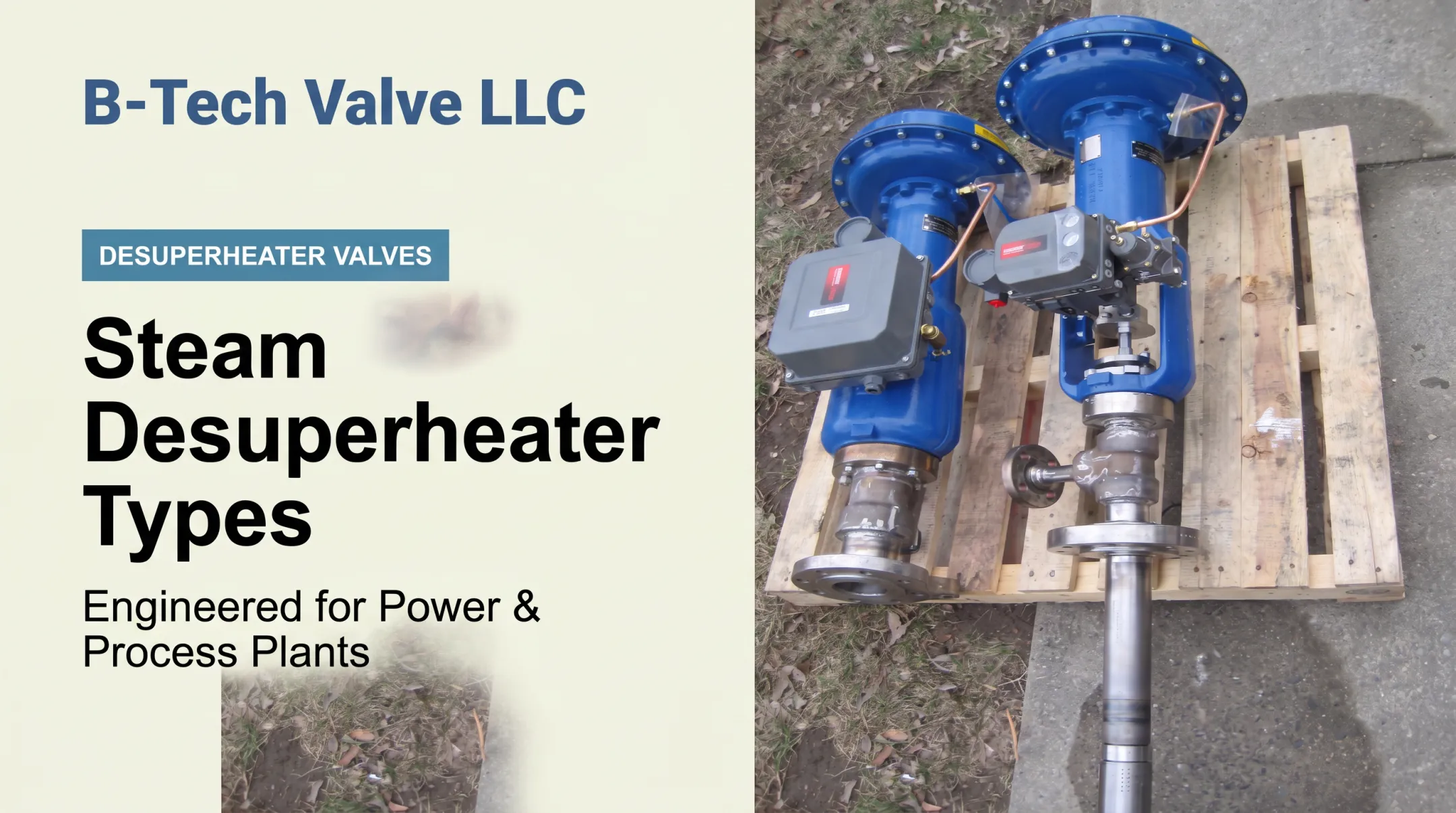
B-Tech Valve builds units in two of these categories for different pipe sizes. The LPD is a probe-type, variable-nozzle, fully actuated control valve and desuperheater combined into one assembly, built for steam pipes 6 inches and larger. It inserts through a 3-inch flanged connection at 90 degrees on the pipe.
The SPAD is a fixed-nozzle, spray-ring design for pipes 4 inches and smaller, clamping between two pipe flanges and fed by a separate temperature-control valve. Confirm suitability for your line size and conditions before specifying either.

Where Are Desuperheaters Used and What Are the Benefits?
Desuperheaters show up anywhere steam temperature needs tighter control than what comes straight off a boiler or turbine.
Power generation and HRSGs rely on them for:
- Attemperation ahead of final superheater and reheater sections
- Interstage temperature control in heat-recovery steam generators
- Bypass and auxiliary-steam temperature conditioning
Process industries depend on controlled steam temperature for heating, drying, and reaction control. Refineries use desuperheaters across process and distillation operations, a use case confirmed by Croll Reynolds' overview of temperature control equipment.
Chemical plants, pulp and paper mills, and rubber manufacturers share the same need: steam that matches the process, not just whatever the boiler produced.
A desuperheater is equally common just downstream of a pressure-reducing station. Dropping pressure changes the steam's saturation point, but the temperature often still needs conditioning before it reaches a process user.
Documented Benefits
A recycled paper mill case, reported by Lakeside Controls' case study, showed control within 0.5°F of setpoint and a full extra year of trim service life after switching to a better-matched unit. The mill also eliminated valve sticking and avoided the downtime that comes with unplanned repairs.

Plants also report these broader benefits:
- Protection for piping, steam traps, and rotating seals
- More predictable, efficient heat transfer
- Reduced thermal stress on downstream components
- Steadier process conditions overall
B-Tech Valve notes that properly sized desuperheaters can also increase steam flow capacity and reduce boiler loads and fuel costs. Energy savings are real but depend heavily on the specific system, so any quantified savings claim should be backed by your own operating data rather than a generic percentage.
A geothermal heat-pump desuperheater is a different piece of equipment entirely. It recovers waste heat to preheat domestic hot water in residential or light-commercial systems. Don't confuse it with the industrial steam desuperheaters covered here.
How Do You Select a Desuperheater?
Sizing a desuperheater correctly comes down to gathering accurate operating data before you ever look at a product catalog.
Specification Checklist
- Steam or gas composition, inlet pressure, and inlet temperature
- Minimum and maximum flow rates
- Desired outlet temperature and operating pressure
- Pipe size and acceptable pressure drop
- Expected load changes or turndown requirements
Cooling-Water Conditions Matter Just as Much
Water quality issues cause a disproportionate share of field failures. Pay attention to:
- Water temperature and available flow
- Pressure, which must typically run above process pressure
- Cleanliness and chemistry, since suspended solids can plug nozzles or distort spray patterns
- Risk of scale or deposit buildup over time
Installation Factors
- Available straight-pipe length for mixing and evaporation
- Pipe orientation and drainage
- Thermal sleeves or liners where appropriate
- Access for inspection and maintenance
Avoid oversizing. A unit that spends most of its life running at very low flow tends to have poor controllability, weak atomization, and unstable outlet readings. Size for the real operating range, not just the worst-case maximum.
Material selection and pressure-temperature ratings need to match the service too. B-Tech Valve offers its LPD and SPAD products across ASME B16.34 pressure classes 150 through 2700, for temperatures up to 1,200°F. Treat that as the capability of this specific product line, not a blanket industry standard, and confirm it against your own system ratings.
If you're a plant engineer, distributor, or outage team evaluating a replacement unit, having steam and cooling-water data ready speeds up the quote process. B-Tech Valve builds application-engineered, American-made desuperheaters with components from U.S. machine and fabrication shops. Final assembly and testing happen in-house, and stocked products support faster turnaround. Reach out with your operating data for an application review.
Frequently Asked Questions
What is a desuperheater and what does it do?
A desuperheater reduces superheat in steam or gas through controlled cooling, usually by injecting water. This conditions the steam to a safe, usable temperature for downstream equipment or processes.
What is the difference between a desuperheater and an attemperator?
The terms often overlap in practice. "Attemperator" commonly refers to the broader equipment or service used to control steam temperature within a system, so confirm the intended function for your application.
What are the main types of desuperheaters?
The main types are spray, venturi, atomizing, multi-nozzle or orifice, and non-contact (surface) designs. Selection depends on your steam conditions, pipe size, and required turndown range.
Where are desuperheaters used?
They're used in power plants, HRSGs, boiler systems, refineries, chemical plants, pulp and paper facilities, and other process operations needing controlled steam temperature. They're also common downstream of pressure-reducing stations.
Why is cooling-water quality important in a desuperheater?
Suspended solids, deposits, or poor water chemistry can plug nozzles and distort spray patterns. This directly undermines reliable temperature control and can accelerate wear.
What information is needed to size a desuperheater?
You'll need inlet steam conditions, flow range, desired outlet temperature, pipe size, operating pressure, cooling-water conditions, downstream layout, and control requirements. Accurate data upfront prevents costly oversizing or undersizing.