Introduction
A 15-year-old boiler can easily outperform a brand-new one. Age and nameplate rating tell you almost nothing about real-world efficiency.
What actually matters: stack temperature, excess combustion air, fouling on fireside and waterside surfaces, steam load profile, and the quality of your combustion controls. These factors determine whether fuel dollars turn into usable steam or disappear up the stack.
Steam temperature control is a related but separate challenge. A boiler can run efficiently and still deliver steam that's too hot, too wet, or unstable for the process, turbine, or piping downstream. Getting combustion right doesn't automatically get temperature right.
This guide covers both sides: how to define and measure boiler efficiency, how steam temperature control protects equipment and supports efficient steam use, and where desuperheaters fit into U.S. power and process plant operations.
Key Takeaways
- Define your measurement boundary and method before comparing boiler efficiency numbers across equipment or time periods
- Stack temperature, excess air, fouling, blowdown, and condensate return are the biggest efficiency levers to investigate first
- Steam temperature should match what your process, turbine, and piping actually need, not be maximized for its own sake
- Desuperheaters protect equipment and condition steam, but sizing, spray-water quality, and control response all have to be right
What Boiler Efficiency Means in an Industrial Steam System
Boiler efficiency is the ratio of useful energy delivered in steam to the energy supplied by fuel. Simple in concept. Messy in practice, because the term gets used three different ways.
Three Different "Efficiency" Numbers
- Combustion efficiency: looks only at flue-gas conditions (O2, CO2, stack temperature) to judge how well fuel is burning
- Boiler or thermal efficiency: adds radiation, convection, and other enclosure losses to the combustion picture
- Fuel-to-steam efficiency: the full boundary, including blowdown and other system losses
Report which one you're using. A boiler quoted at 85% combustion efficiency and 82% fuel-to-steam efficiency isn't contradicting itself. It's answering two different questions.
Where Boilers Lose Energy
Most industrial boiler losses fall into a handful of categories:
- High-temperature flue gas leaving the stack
- Excess combustion air carrying heat away unused
- Unburned fuel or carbon monoxide from incomplete combustion
- Radiation and convection from external surfaces
- Blowdown removing hot boiler water
- Steam and condensate leaks
Load Profile and Steam Quality Count Too
Low-load operation and cycling hurt efficiency because fixed losses (radiation, purge air, idle cycles) stay roughly constant while useful output drops. An oversized boiler running at partial load fights this constantly.
In one documented case, DOE's cycling-loss study found that replacing an oversized 1,500 hp boiler with a properly sized 600 hp unit raised efficiency from 72.7% to 78.8%. That's a specific example, not a universal payback, but it shows how much oversizing can cost.

Steam quality matters too. Wet steam, carryover, and water hammer reduce usable heat and damage downstream equipment, even when the combustion numbers look fine.
Before trusting any efficiency figure, establish a baseline with:
- Fuel consumption and steam production
- Pressure, temperature, and feedwater temperature
- Stack temperature and flue-gas oxygen
- Blowdown rate and condensate return
How Steam Temperature Control Affects Efficiency and Reliability
Steam temperature can't be evaluated alone. It has to be read alongside pressure, because saturation temperature is fixed at a given pressure. Steam above that point is superheated; steam at the saturation line carries a quality value between 0 (saturated liquid) and 1 (saturated vapor).
What Happens When Temperature Is Wrong
Too much superheat and you get:
- Unnecessary heat loss through piping and equipment
- Thermal stress on components rated for lower temperatures
- A requirement for higher-rated, more expensive downstream equipment
Too little superheat and you risk:
- Condensation and wet steam
- Poor heat transfer
- Process instability
Spirax Sarco's desuperheating guidance notes that once superheated steam cools to saturation, the heat-transfer coefficient rises and condensation occurs at a constant temperature, which is often exactly what process heat exchangers need.
How Desuperheating Works
A desuperheater injects controlled water into the steam stream. The water absorbs superheat and evaporates completely before reaching sensitive downstream components. In a probe or venturi-style design, steam accelerates through a throat, pressure changes atomize the injected water, and downstream turbulence finishes the mixing job.
Get this wrong and unevaporated water droplets travel downstream, where they can erode valve seats, damage turbine blades, or wash out steam traps.

Equipment on the Line
| Component | What's at risk |
|---|---|
| Piping and valves | Pressure-temperature ratings under ASME B16.34 must match actual service conditions |
| Steam traps | Behavior varies by model; confirm the trap is rated for superheated service |
| Turbines | Main-steam pressure and temperature affect performance curves; rapid ramp rates beyond OEM limits risk differential expansion |
| Rotating seals | Gland seals depend on steady steam conditions to prevent leakage or air ingress |
The Control Loop That Keeps It Stable
Reliable temperature control requires:
- Temperature measurement downstream of the injection point, after adequate mixing distance
- Stable spray-water pressure and quality: clean, filtered water at consistent pressure
- Valve response tuned to load changes without hunting or overshoot
- Minimum flow protection to avoid dry operation
- Safeguards against water carryover into the downstream line
Done right, temperature control delivers steam at the condition the process actually needs, trims avoidable superheat, and supports reliable heat transfer. That's a different benefit than combustion efficiency, but it still shows up in your fuel bill.
How to Measure and Calculate Boiler Efficiency
There are two standard approaches, and they answer slightly different questions.
Direct Input-Output Method
This method compares useful steam energy output to fuel energy input. You'll need:
- Steam flow and enthalpy
- Feedwater flow and enthalpy
- Fuel flow and heating value (specify HHV or LHV)
Efficiency = (steam energy output ÷ fuel energy input) × 100.
Indirect Stack-Loss Method
Instead of measuring output directly, this method starts at 100% and subtracts identified losses. You'll need:
- Stack or flue-gas temperature and ambient temperature
- Flue-gas oxygen or carbon dioxide, plus carbon monoxide
- Fuel composition and higher heating value
- Humidity and estimated radiation/convection losses
Results from the two methods can differ due to flow-meter uncertainty, instrument calibration drift, changing fuel composition, unsteady load, or incomplete loss accounting. A gap doesn't automatically mean one method is wrong. Check your boundaries first.
A Practical Measurement Sequence
- Establish the test boundary and operating load before collecting any data
- Verify calibrated instruments and confirm steady-state conditions
- Record process data for fuel, steam, feedwater, pressure, temperature, oxygen, stack, blowdown, and condensate
- Calculate efficiency using a recognized method and document every assumption
- Compare against design data and historical trends, not a single isolated reading

For a worked illustration (hypothetical values only): a boiler burning natural gas at 4% excess oxygen might show 80% efficiency on a baseline run, improving to roughly 85% with a feedwater economizer installed. These are illustrative figures for planning purposes, not guaranteed outcomes for any specific unit.
Formal performance testing should follow the current edition of the ASME PTC 4 standard, which covers test boundaries, instrumentation, and uncertainty requirements for fired steam generators.
Practical Ways to Improve Boiler Efficiency and Temperature Control
Combustion and Heat Transfer Fundamentals
Start here, because this is where most of the recoverable fuel savings live:
- Tune burners and monitor flue-gas O2/CO2 continuously
- Inspect and clean fireside and waterside surfaces on a schedule tied to actual fouling rates
- Investigate any unexplained rise in stack temperature immediately
DOE's rule of thumb from its combustion tip sheet suggests roughly a 1% efficiency gain per 15% reduction in excess air, or per 40°F drop in stack-gas temperature. Treat it as a planning estimate, not a guarantee for your unit.
Cutting Steam-System Losses
- Return condensate: hot condensate at 130–225°F displaces 50–60°F makeup water, cutting the fuel needed to reheat it
- Control blowdown: typical ranges run 4–8% of feedwater, higher for high-solids conditions; conductivity-based control avoids over-blowing
- Survey steam traps regularly and repair leaks promptly
- Insulate bare piping and valves
- Prevent carryover through proper separation and water-level control
Control and Operating Discipline
Match boiler output to actual demand instead of running one oversized unit at partial load. Avoid unnecessary cycling, track pressure and temperature trends over time, and coordinate boiler, turbine, process, and desuperheater controls so they aren't working against each other.
When to Consider Bigger Upgrades
Economizers, combustion-control upgrades, and steam-conditioning retrofits can deliver real gains, but compare expected fuel savings against capital cost, outage requirements, and maintenance using your own site data. Generic payback claims rarely survive contact with a specific plant's load profile.
Choosing a Desuperheater for a Steam System
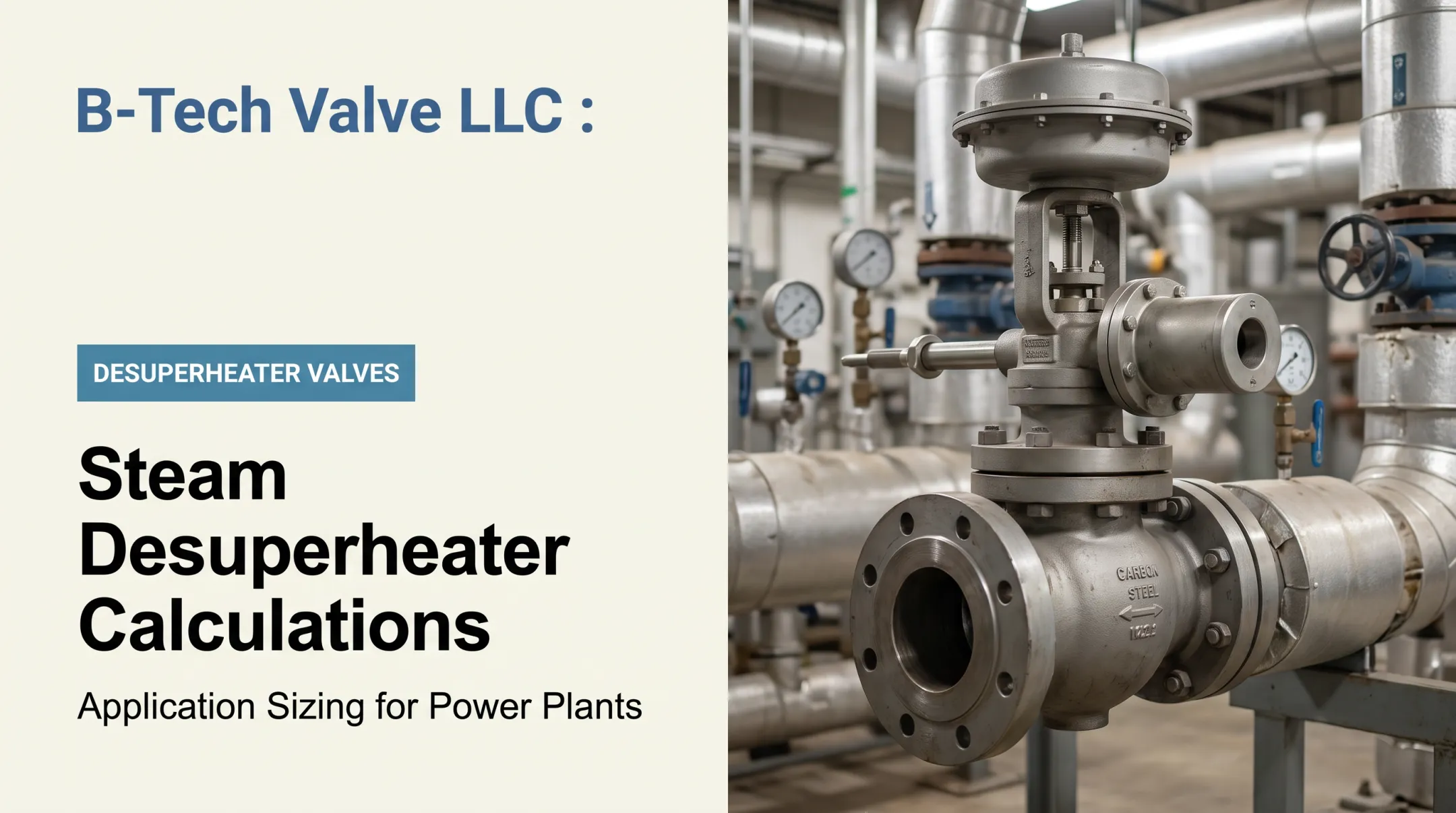
Sizing a desuperheater correctly starts with accurate application data, not a catalog guess.
Information Needed for Sizing
- Steam line size and configuration
- Inlet and outlet pressure and temperature
- Minimum, normal, and maximum steam flow
- Required outlet temperature and allowable control range
- Spray-water pressure, temperature, cleanliness, and available flow
- Materials, pressure class, code requirements, and available straight-run mixing distance
Probe-Type vs. Spray-Ring Designs
The right format depends on pipe size, load range, turndown, and how much mixing distance you have available.
- Probe-type, variable-nozzle designs for larger lines that need wide turndown and fast response
- Spray-ring, fixed-nozzle designs for smaller lines, with a separate temperature-control valve managing water flow
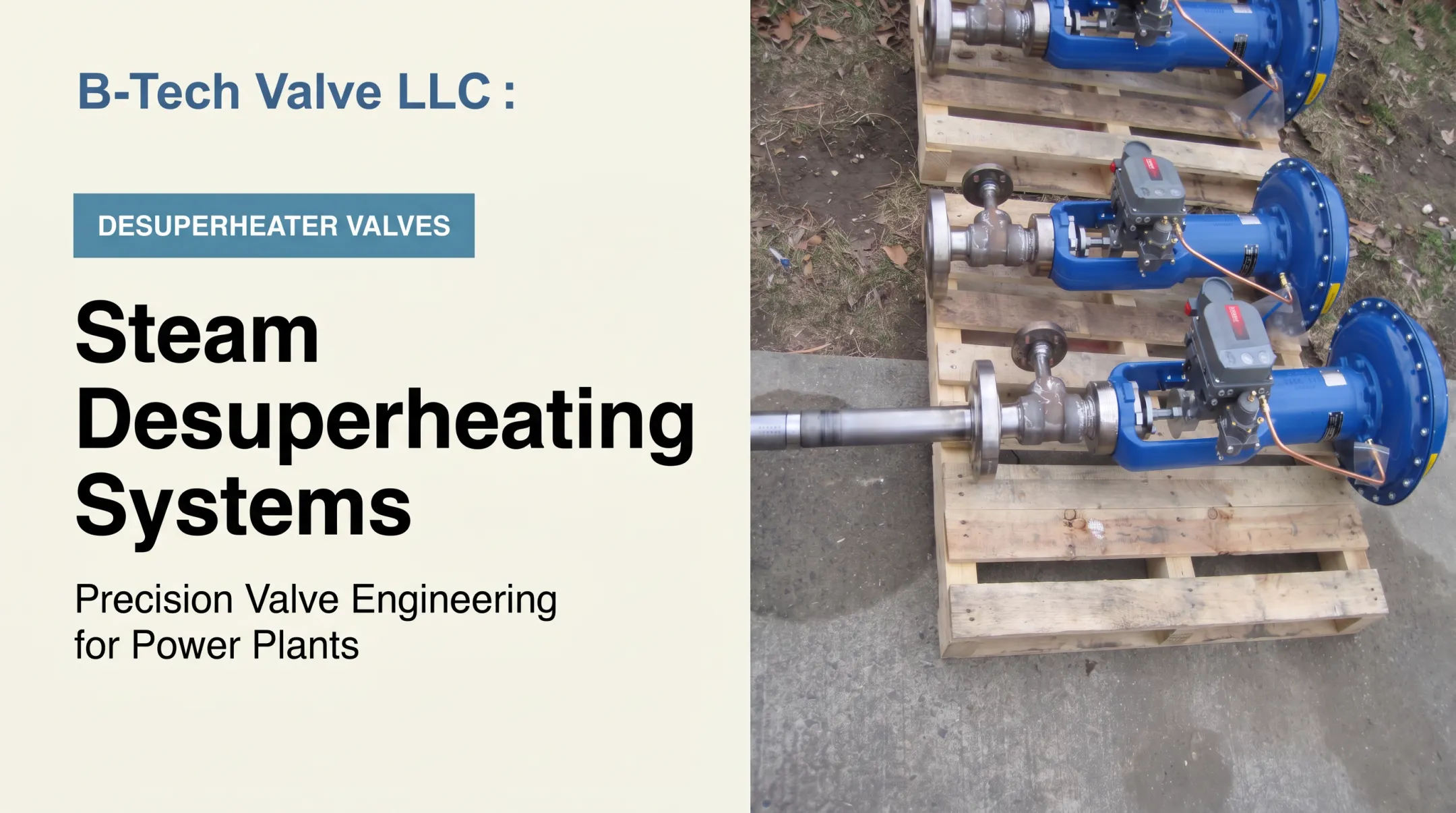
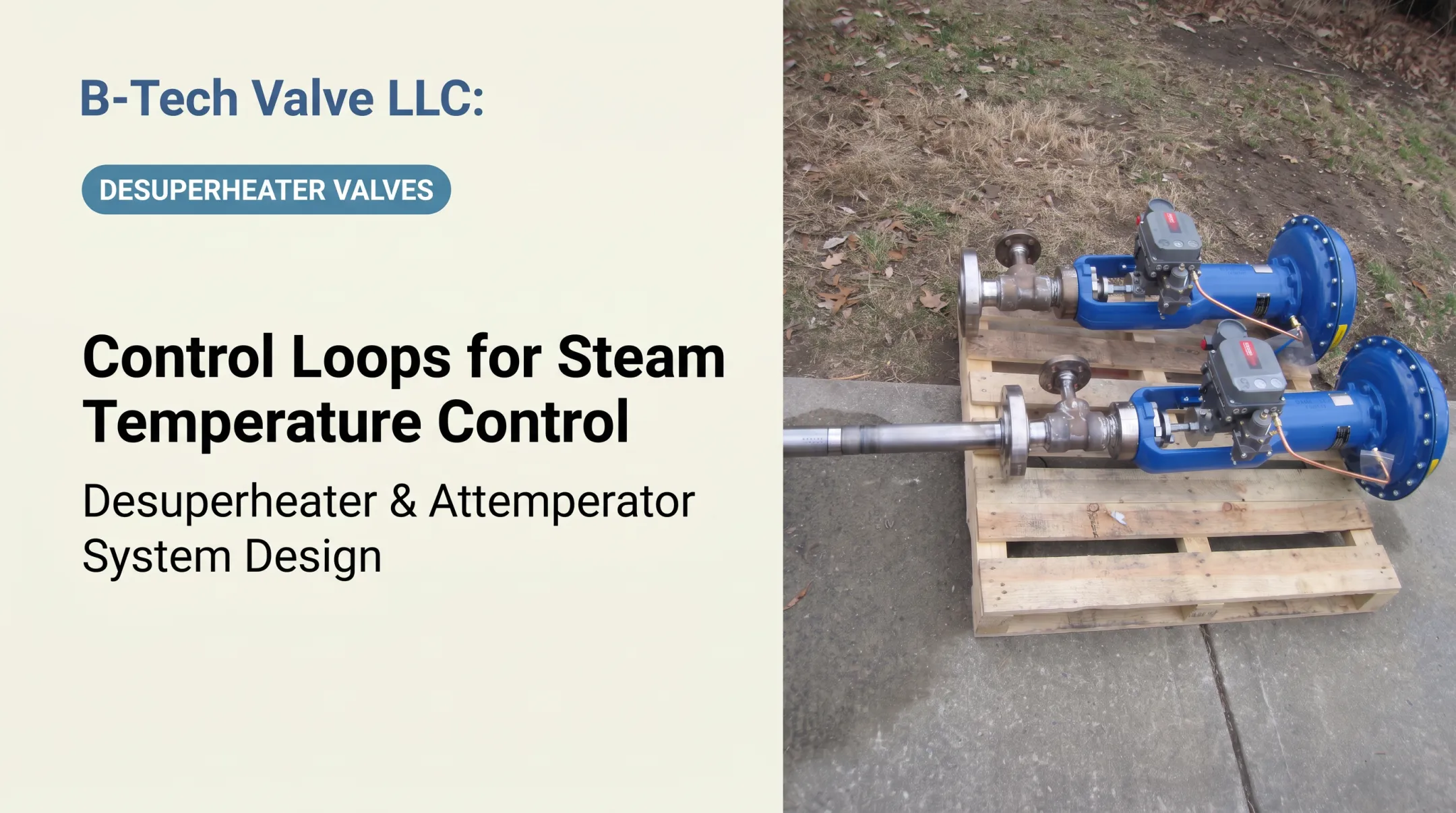
B-Tech Valve LLC, based in Palmyra, New Jersey, designs and builds application-sized desuperheater and attemperator valves for both formats.
Its LPD (Large Pipe Desuperheater) is a probe-type, variable-nozzle, fully actuated control valve for steam piping 6 inches and larger. It inserts through a 3-inch flanged connection at 90 degrees to the pipe.
Its SPAD (Small Pipe Attemperator Desuperheater) is a fixed-nozzle, spray-ring unit for pipes 4 inches and smaller. It clamps between two flanges and is fed by a separate temperature-control valve.
Both lines are built from U.S.-fabricated components, assembled and tested in-house, and offered in ASME B16.34 pressure classes 150 through 2700 for temperatures up to 1,200°F. Products are stocked for faster turnaround than waiting on overseas replacement parts.
If you're a plant engineer, outage contractor, valve distributor, or consulting engineer with steam and cooling-water conditions in hand, send them to Sales@B-TechValves.com or call 609-321-2205 for application sizing or replacement-equipment guidance. Final fit always depends on engineering review of your specific conditions.
Frequently Asked Questions
How efficient is a 30-year-old boiler?
Age alone doesn't determine efficiency. Design, fuel type, load profile, maintenance history, fouling, and control quality all matter more than the unit's birthdate. The only reliable answer comes from a current efficiency test on that specific boiler.
What is the average boiler efficiency?
There's no single industry-wide average. Efficiency varies by boiler type, fuel, operating load, and which measurement method (combustion, boiler, or fuel-to-steam) is used. Use your own tested site data rather than a generic benchmark.
Which boiler has the highest efficiency?
No single boiler design wins universally. The most efficient option depends on fuel, operating pressure, load profile, and whether heat-recovery equipment like economizers is installed. Compare options against your actual operating conditions.
How do I get boiler efficiency?
Define your system boundary, collect fuel and steam measurements, quantify key losses (stack, blowdown, radiation), and calculate using a recognized method such as ASME PTC 4. Compare results against design specs and historical trends.
How is boiler efficiency calculated?
The direct method divides useful steam energy output by fuel energy input. The indirect stack-loss method starts at 100% and subtracts measured losses. Both require a clear fuel heating-value basis (HHV or LHV) and calibrated instruments.