Get superheater control wrong, and the consequences show up fast: wet steam eroding turbine blades, overheated tubes creeping toward failure, or a control loop that can't hold setpoint through a load change. The relationship between the boiler, superheater, temperature sensors, control system, and desuperheater (also called an attemperator) determines whether steam arrives in usable condition or causes problems downstream.
This guide walks through that relationship for engineers and operators at power plants, HRSGs, industrial boilers, refineries, and chemical facilities across the U.S. who are evaluating boiler or steam-conditioning equipment.
Key Takeaways
- Water tube boilers circulate water through tubes exposed to hot combustion gas, supporting high-pressure, high-capacity steam generation.
- Superheater control keeps steam temperature inside the window required by turbines, process equipment, piping, and seals.
- Attemperation performance hinges on sizing, spray-water quality, atomization, mixing distance, sensor placement, and loop response.
- Equipment selection should reflect actual flow, pressure, temperature, pipe size, and load range, not nominal line size alone.
Water Tube Boiler Fundamentals: From Feedwater to Superheated Steam
In a water tube boiler, water and steam travel inside the tubes while combustion gas passes around the outside. That's the opposite of a fire tube design, where hot gas runs through the tubes and water surrounds them.
Feedwater enters through an economizer, which recovers heat from exhaust gas before the water reaches the boiler circuit. From there, it moves through downcomers into the waterwall tubes, where it absorbs heat and partially converts to steam.
Key Components in the Steam Path
- Steam drum - separates steam from water and supports low-moisture output
- Downcomers and risers - circulate water down and steam-water mixture up through the furnace circuit
- Waterwall tubes - water-cooled panels that form the furnace walls
- Generating bank - convective tubes that pick up additional heat from flue gas
- Superheater - raises saturated steam above its boiling point before it leaves the boiler
Why Water Tube Design Fits High-Pressure Loads
Water tube construction is typically selected when a plant needs high steam pressure or capacity that fire tube designs can't support. DOE's steam sourcebook notes that water tube boilers are used when pressures of 3,000 psi or higher are required.
They are common in turbine generation, refining, and pulp-and-paper service. That is a general application pattern, not a universal rating for every unit.
At these pressures, boiler-water control and steam-temperature control solve different problems. Water level and circulation protect the boiler itself from dry-firing or tube damage.
Superheater controls regulate the condition of steam leaving the boiler, which is a separate loop entirely.
Several variables push superheater outlet temperature around during normal operation:
- Steam load and firing rate changes
- Excess air levels
- Feedwater temperature
- Gas-side fouling on heat transfer surfaces
- Burner tuning and flame pattern
How Superheater Control and Attemperation Work
Superheated steam sits above its saturation temperature at a given pressure. That matters because wet steam entering a turbine creates liquid droplets that erode blades and add friction, while some process applications need steam closer to saturation for better heat transfer.
The control objective is to hold outlet temperature within the approved range despite constant changes in firing rate, steam flow, and demand.
The Closed-Loop Control Sequence
- Measure - A temperature transmitter reads superheater outlet temperature at a properly selected location.
- Compare - The control system checks the measured value against setpoint and calculates a correction.
- Inject - A control valve meters spray water through a desuperheater, which absorbs heat and lowers steam temperature.
- Confirm - A downstream sensor verifies the spray water fully evaporated and the loop is stable.

Matching the Control Method to the Application
Plants rarely rely on one technique alone. Gas-side heat distribution, burner adjustments, interstage spray attemperation, and final-stage desuperheating each address different parts of the temperature profile. Many facilities combine two or more depending on boiler design and load range.
Effective spray-water injection depends on more than just having a nozzle in the pipe. Key design factors include:
- Atomization energy and droplet size
- Adequate water-to-steam mixing
- Sufficient straight-run distance for complete evaporation
- Allowable pressure differential across the spray valve
- Downstream sensor placement that reflects true mixed temperature
Get any of these wrong, and the failure modes are predictable. Overspray can leave residual water that creates thermal shock or wet steam carryover. Underspray leaves outlet temperature too high, accelerating material fatigue over time.
B&W's service bulletin documents thermal-cycle cracking around attemperator welds and nozzles, along with downstream plugging from loose fragments that make steam temperature uncontrollable.
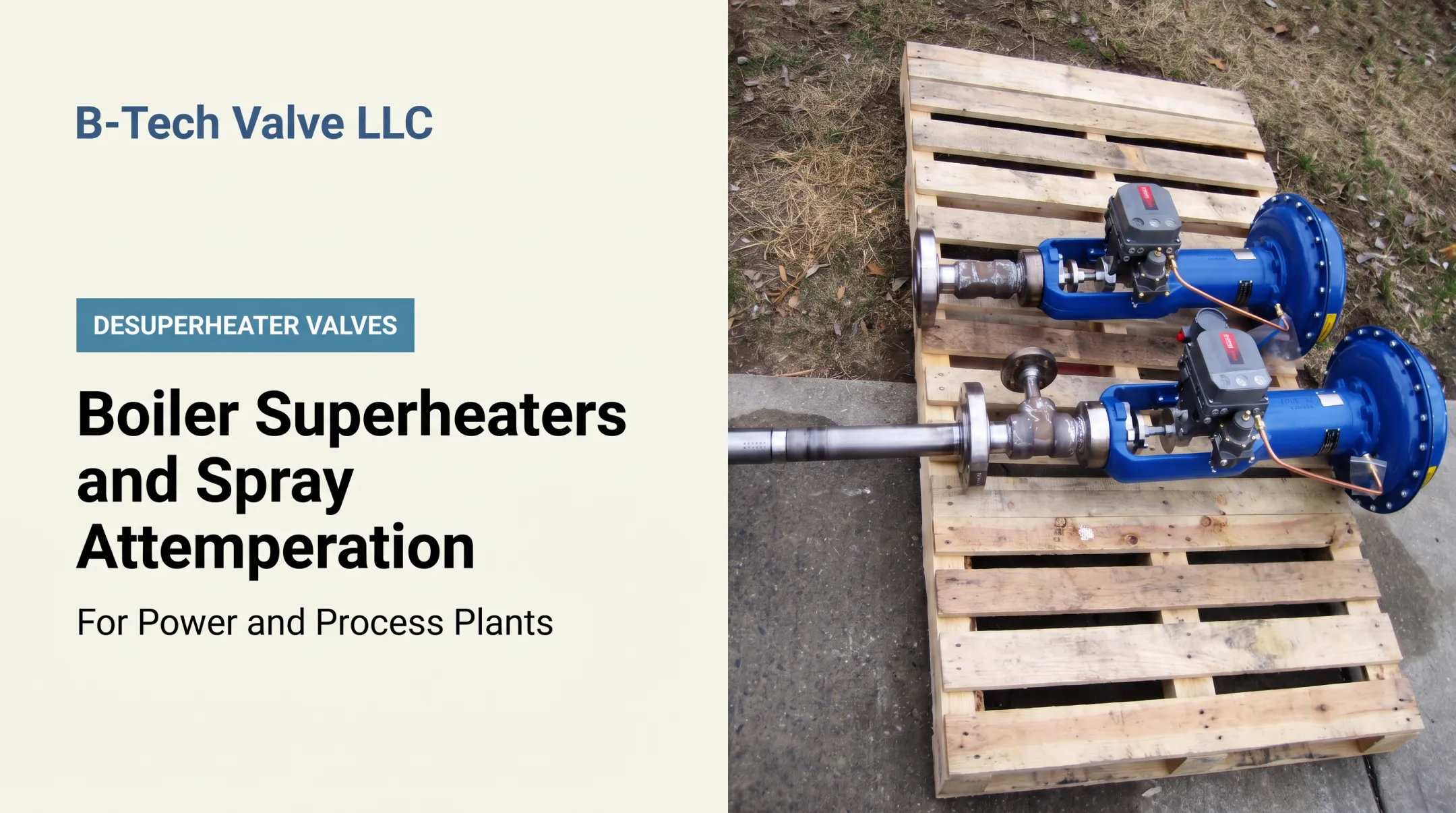
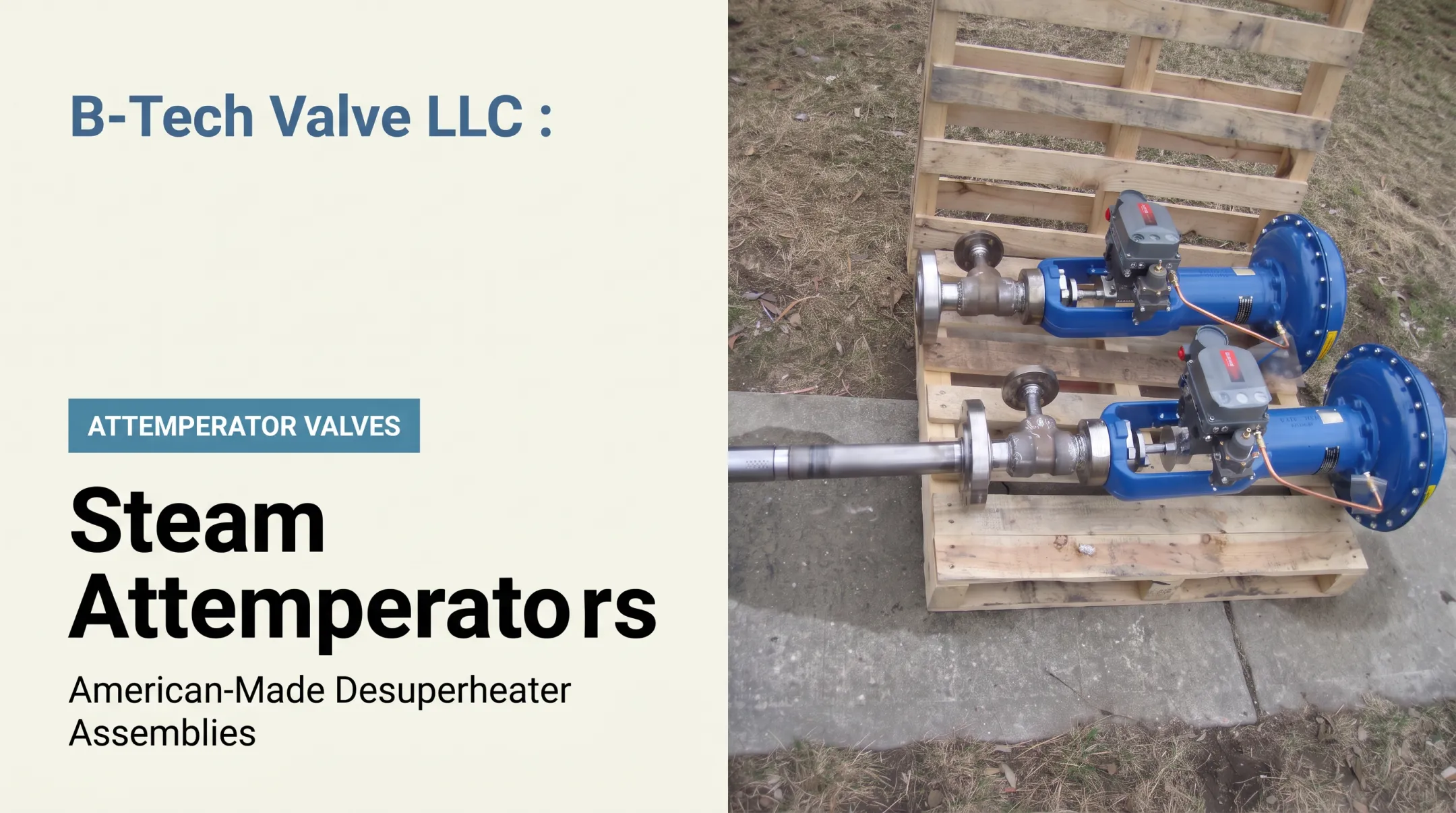
Equipment design determines whether those failure modes stay theoretical. B-Tech Valve builds two configurations sized to the customer's actual operating conditions:
- LPD Large Pipe Desuperheater: a probe-type, variable-nozzle control valve and desuperheater combined into one actuated assembly for pipes 6 inches and larger
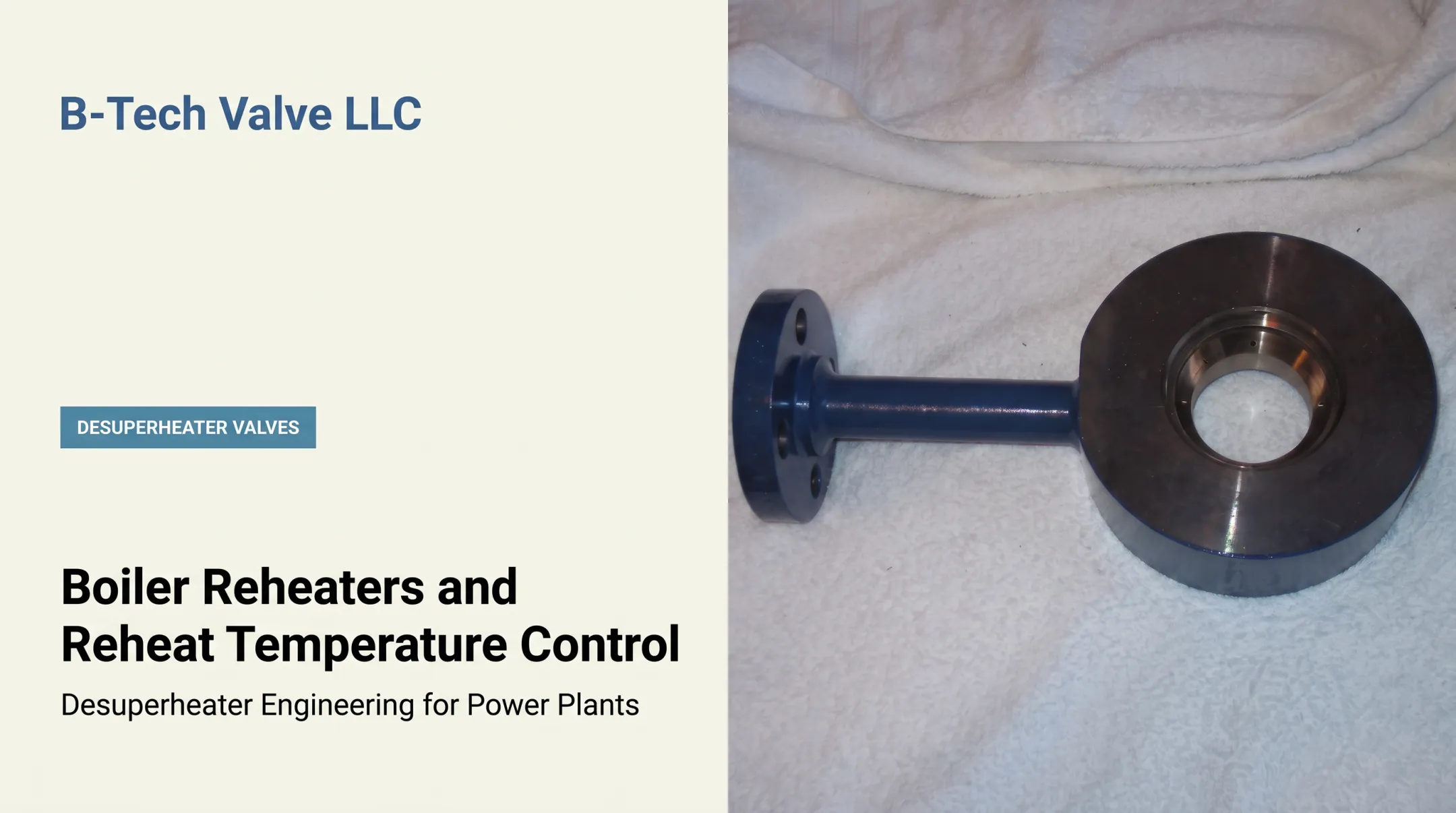
- SPAD Small Pipe Attemperator Desuperheater: a fixed-nozzle spray-ring unit for pipes 4 inches and smaller that pairs with a separate temperature-control valve
Both are application-sized rather than sold as generic catalog items.
Selecting and Specifying Superheater Control Equipment
Nominal pipe size tells you almost nothing about whether a desuperheater will perform. Sizing has to start with real operating data.
Build a Complete Specification Checklist
Before specifying equipment, gather:
- Steam flow at minimum, normal, and maximum load
- Inlet and outlet pressure and temperature
- Pipe size and schedule
- Steam velocity across the load range
- Spray-water pressure, temperature, cleanliness, and available flow
- Required control range and response time
Why Line Size Alone Isn't Enough
Two boilers with identical pipe diameters can need completely different desuperheaters. Turndown, pressure drop, atomization needs, and erosion risk all vary with actual flow and spray-water conditions. Undersized equipment struggles with controllability and noise; oversized equipment risks poor atomization and residual water at low loads.

Installation Details That Protect Performance
Installation choices affect performance just as much as the device itself:
- Injection orientation and mixing length downstream
- Temperature-sensor placement far enough downstream for full evaporation
- Isolation valves, drains, and strainers for maintenance access
- Protection against water hammer and condensate accumulation
A combined control-valve-and-desuperheater assembly, such as the LPD for 6-inch and larger steam lines, can simplify installation by reducing the number of components and connection points. That's not automatically the right call for every job. Separate valve and spray-device configurations still make sense in some layouts, particularly where existing piping or access constraints favor it.
Choosing Between a New Unit, Replacement, or Custom Assembly
- New installation: Specify based on full design-basis operating data.
- Replacement desuperheater: Match form, fit, and performance to the original while correcting known problems.
- Drop-in design: Useful when outage schedules limit piping modifications.
- Custom application-engineered assembly: Needed when steam conditions or pipe geometry fall outside standard offerings.
Power and process engineers, plant operators, outage contractors, and valve distributors working through a sizing question can send operating data to B-Tech Valve at Sales@B-TechValves.com or 609-321-2205 for application review.
Operating Challenges, Maintenance, and Troubleshooting Priorities
Unstable superheater temperature rarely traces back to a single cause. Common contributors include:
- Inaccurate or poorly located temperature sensors
- Sticking or worn control valves
- Inadequate spray-water pressure
- Blocked strainers or fouled nozzles
- Insufficient mixing distance before the next measurement point
Spray-water chemistry matters too. Clean, filtered water at stable pressure protects valves, nozzles, and downstream steam purity. Follow plant water-treatment procedures and the equipment maker's specification rather than assuming either is optional.
Maintenance Priorities Worth Scheduling
- Verify temperature-transmitter calibration on a regular interval
- Stroke-test the control valve to confirm smooth motion
- Inspect nozzles and atomizers for wear or plugging
- Check strainers, drains, and spray-water pressure
- Review operating trends, not just a single temperature snapshot
Trends reveal more than a point-in-time reading ever will. Pull steam load, spray-water flow, valve position, inlet and outlet temperatures, and alarm history together. Focus especially on startup and shutdown, when control loops take the most stress.

When commissioning after an outage, verify the entire loop, not just the valve or spray device. Sensor placement, tuning, interlocks, and fail-safe behavior all need confirmation before returning the unit to full load.
Frequently Asked Questions
How does a water tube boiler work?
Water circulates inside tubes exposed to hot combustion gas, generating steam that may pass through a superheater before reaching a turbine or process application. The steam drum separates steam from water for low-moisture output.
What are the differences between a fire tube boiler and a water tube boiler?
Fire tube boilers send hot gas through tubes surrounded by water; water tube boilers reverse that arrangement. Bosch's comparison report notes fire tube units handle load swings better, while water tube designs reach steam faster but need stricter water quality.
What is the average lifespan of a water tube boiler?
Service life varies with design, materials, operating conditions, water chemistry, and maintenance history. Condition-based inspection, rather than a fixed age estimate, is the more reliable way to assess remaining life.
What is a water tube boiler?
A water tube boiler is a steam generator where water and steam flow inside tubes while combustion gas passes around them. The design is common where high-pressure or high-capacity steam generation is required.
What is another name for a water tube boiler?
"Watertube boiler" is the common alternate spelling. Specific configurations, such as bent-tube or straight-tube designs, may carry different names depending on the manufacturer and circulation arrangement.