This article defines superheated steam, compares it to saturated steam, and covers where each is used across power generation, refining, and manufacturing. It also explains how plants control steam temperature with desuperheaters and attemperators to keep equipment safe.
The right steam condition depends on your goal. Are you maximizing turbine work? Avoiding condensation in long pipe runs? Or relying on condensing heat transfer for a process heater? Each answer points to a different steam state and a different control strategy.
Key Takeaways
- Superheated steam is heated above its saturation temperature at a given pressure, leaving it dry and gaseous.
- Turbines and other rotating equipment rely on superheated steam to avoid moisture-related erosion and corrosion.
- Desuperheaters and attemperators lower outlet temperature by injecting a controlled spray of high-quality water.
- Saturated steam often outperforms superheated steam in condensation-based heating and sterilization.
What Is Superheated Steam?
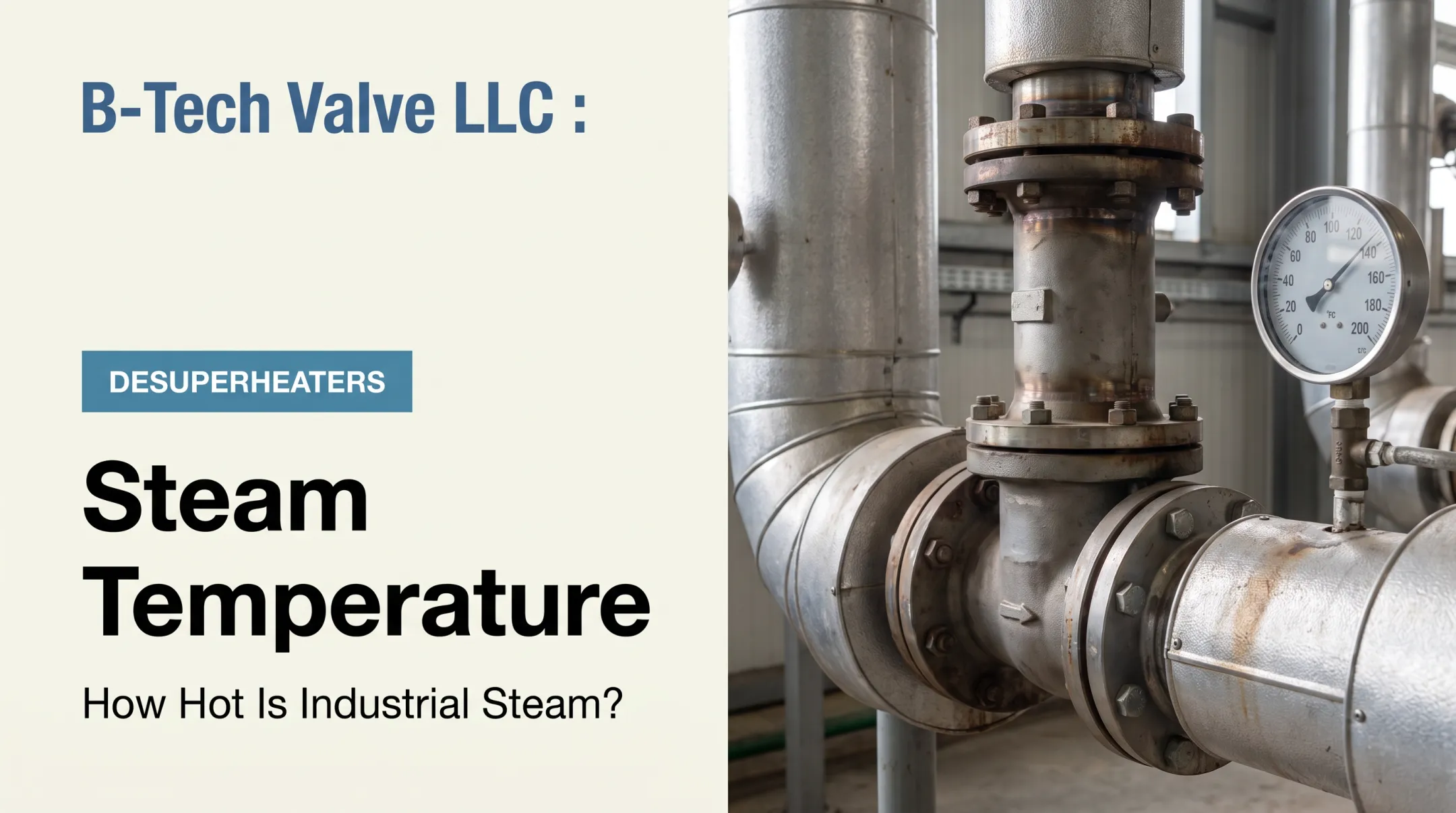
Superheated steam starts out as saturated steam. Once water fully vaporizes, any additional heat raises the vapor's temperature above the saturation point without creating more steam. That extra sensible heat is what makes it "superheated."
Superheat is relative to pressure, not a fixed number. Steam at 150 psig saturates around 366°F; push it to 500°F at that same pressure and it's superheated. Double the pressure, and both the saturation point and the superheat threshold shift too.
Four States of Steam, Not Two
Plants often talk about "wet" and "dry" steam, but there are really four distinct conditions:
- Wet steam: a mix of vapor and liquid droplets at saturation temperature
- Saturated steam: vapor and liquid in equilibrium; temperature and pressure are locked together
- Dry saturated steam: vapor at the saturation point with no entrained liquid, but no extra heat either
- Superheated steam: vapor heated beyond saturation, carrying additional sensible heat
Dry saturated steam and superheated steam get confused often, but they aren't the same thing. Dry saturated steam sits exactly at the boiling point for its pressure. Superheated steam has moved past that point and keeps climbing in temperature without a phase change.
How Boilers Produce It
Feedwater enters the boiler, boils, and separates into saturated steam. From there, the steam passes through superheater tubes (often located in the hot gas path downstream of the combustion zone) where it picks up additional heat. Some plants use an integrated boiler superheater; others add an external superheater depending on layout and process needs. Either way, the goal is the same: strip out moisture and add usable thermal energy.

Why It Matters Physically
Superheated steam carries three practical advantages: low moisture content, resistance to condensation as it expands or travels through piping, and a greater capacity to do mechanical work. ASHRAE's steam systems chapter notes that dry steam is specified where higher temperatures are needed and where liquid droplets would otherwise damage turbine-driven equipment.
Where Is Superheated Steam Used?
Turbines and Power Generation
Steam turbines are the clearest case for superheat. As steam expands through turbine stages, it cools. If it starts too close to saturation, it can condense mid-expansion and throw liquid droplets at high velocity onto the blades.
EPRI's turbine erosion research identifies water-droplet impact as a recognized damage mechanism in later low-pressure turbine stages. Starting with superheated steam gives the vapor more room to cool before it approaches that two-phase boundary.
This shows up across:
- Fossil-fuel power plants
- Combined-cycle and HRSG systems, where recovered exhaust heat generates clean superheated steam for the steam turbine or process use
- Cogeneration and waste-to-energy facilities
- Industrial steam-turbine installations driving pumps, fans, or compressors
Refineries, Chemical Plants, and Manufacturing
Refinery and petrochemical steam systems split into two camps: steam that drives equipment (turbines, blowers) and steam used purely for process heating. The right condition depends on the downstream pressure, the heat-transfer method, and what temperature the receiving equipment can tolerate.
Pulp and paper mills, drying operations, and curing processes also lean on dry, high-temperature steam. A 2024 food-science review highlights superheated steam as an effective medium for drying and decontamination in food processing, though every process still needs its own validation before scaling up.
When Saturated Steam Is the Better Choice
Superheated steam isn't universally better. For applications built around condensation (direct heating, sterilization, humidification), saturated steam often wins.
Why? Superheated steam has to cool back down to saturation before it can condense and release its latent heat. That delay works against you in equipment sized for rapid heat transfer. The CDC considers dry saturated steam ideal for sterilization cycles, precisely because it condenses quickly and transfers heat efficiently against the load.

A quick decision framework: ask whether your process needs turbine work, dry steam for drying or curing, high outlet temperature, resistance to condensation in transport, or fast condensing heat transfer. The answer tells you which steam condition, and which control strategy, fits.
How Is Superheated Steam Controlled?
Even a boiler designed to produce superheated steam needs active temperature control. Steam loads change, heat loss varies, and downstream equipment has hard temperature limits that can't be exceeded without risking damage.
The Desuperheater Control Loop
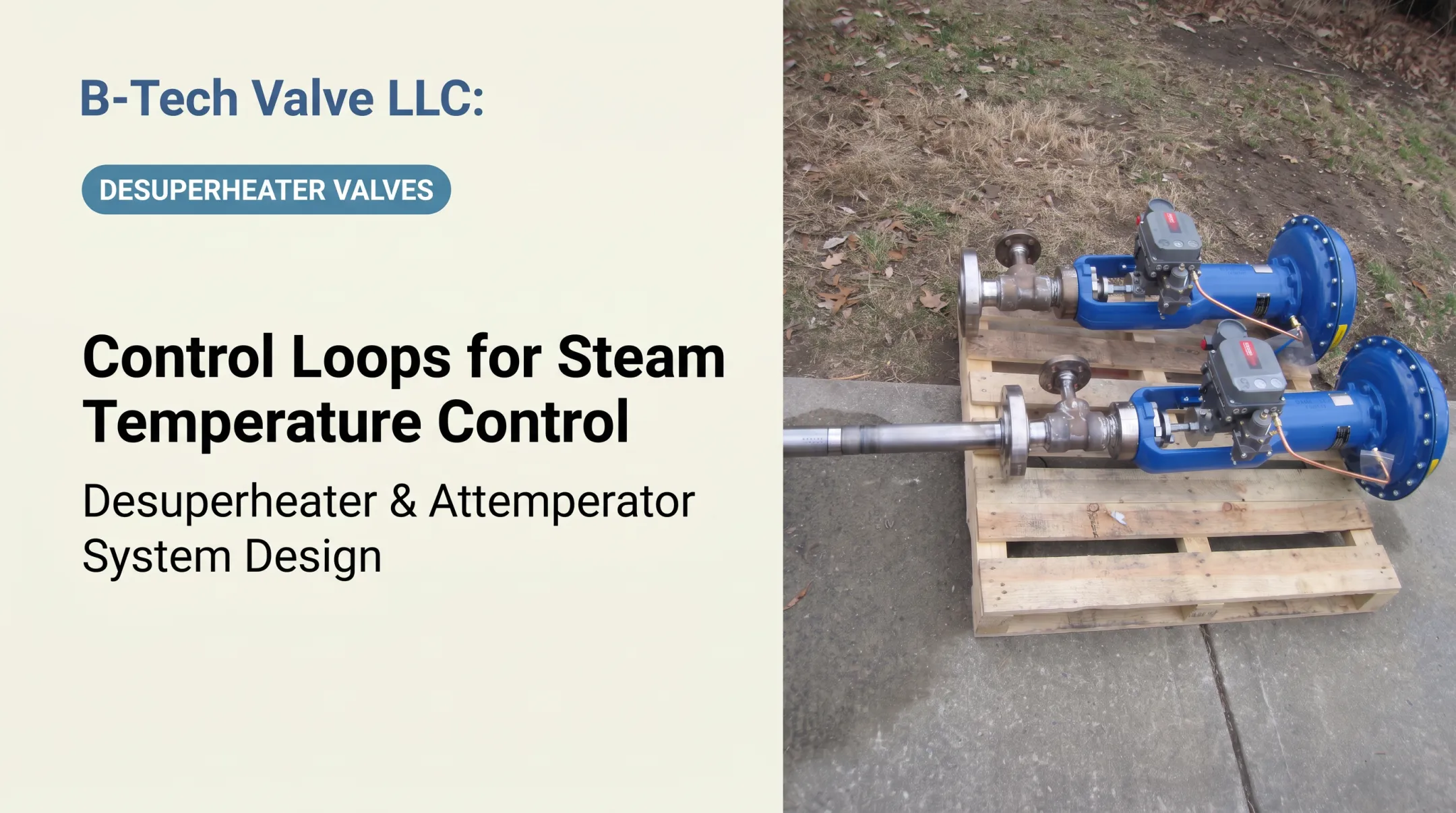
Desuperheaters (also called attemperators) inject a controlled spray of water into the steam flow. The water absorbs heat, evaporates, and pulls the steam temperature down to the target setpoint. For this to work cleanly, the water has to fully atomize and evaporate within the available straight-run piping. Otherwise you get liquid carryover and thermal shock downstream.

A typical control loop includes:
- An outlet-temperature sensor positioned far enough downstream for complete mixing
- A controller comparing that reading to setpoint
- A spray-water control valve that modulates flow
- Upstream and downstream pressure (and sometimes flow) measurements
- A control strategy tuned for transport delay and evaporation time, to avoid overshoot
Spray Water Quality Matters
Not just any water will do. Contaminated or poorly conditioned spray water introduces deposits, corrosion, and carryover into the steam system, the same problems you installed the desuperheater to prevent. Before selecting equipment, verify water pressure, temperature, cleanliness, filtration, and compatibility with your steam conditions.
Common Failure Modes
Desuperheater problems tend to trace back to a handful of root causes:
- Poor atomization: large droplets don't evaporate and impinge on pipe walls
- Excessive spray water: drives the steam toward saturation and risks wet steam
- Plugged nozzles: debris restricts flow and skews the spray pattern
- Inaccurate temperature measurement: sensor location or fouling throws off the whole loop
- Rapid steam-flow swings: outpace the control system's response time
Each of these has a real consequence downstream: eroded piping, unstable process temperatures, or equipment that's no longer protected from thermal stress.
Selecting the Right Equipment
Sizing a desuperheater isn't a matter of matching pipe diameter. It requires inlet and outlet steam conditions, minimum and maximum flow, pressure drop, available straight-run length, spray-water conditions, and materials compatible with the application. This is why consulting an application engineer and working from manufacturer sizing data beats guessing from a spec sheet.
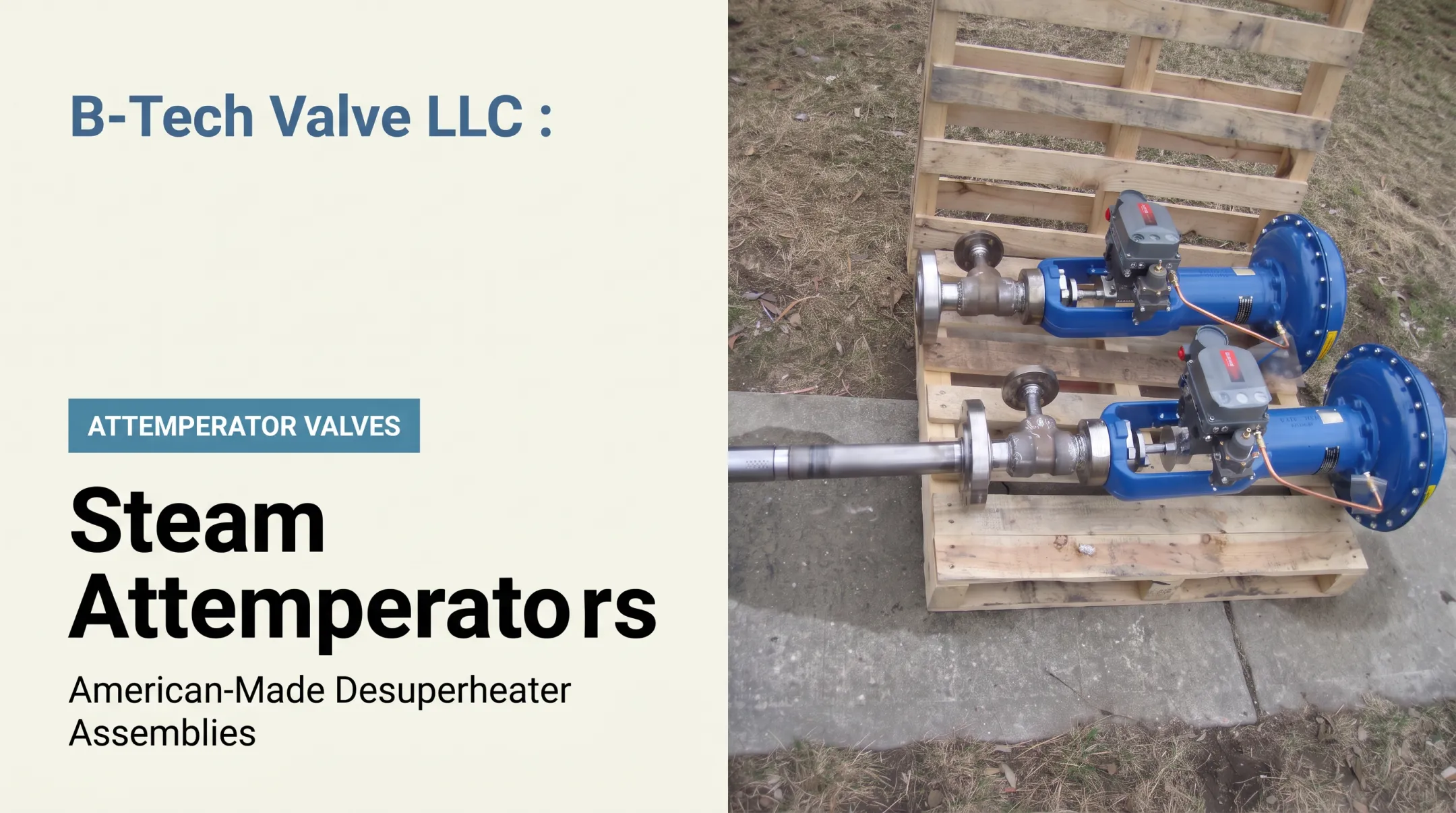
B-Tech Valve supplies application-sized, American-made desuperheater and attemperator valve assemblies for power and process plants: the LPD Large Pipe Desuperheater for steam lines 6 inches and larger, and the SPAD Small Pipe Attemperator Desuperheater for lines 4 inches and smaller. Products are offered across ASME B16.34 pressure classes 150 through 2700, with temperatures up to 1,200°F, though actual ratings and sizing should always be confirmed with the manufacturer for your specific application.
Design and Operating Considerations
Steam temperature doesn't stay constant just because the boiler produced it correctly. Insulation gaps, failing steam traps, leaks, and long piping runs all pull heat out of the system and raise condensation risk before steam reaches its destination. DOE's steam system guidance recommends routine trap inspection, leak repair, and proper insulation on both steam and condensate lines as standard practice.
Feedwater chemistry matters just as much. Poor boiler-water treatment leads to carryover and deposits that foul superheater tubes and desuperheater internals alike, undermining steam quality right at the source.
Before specifying equipment, record:
- Inlet pressure and temperature
- Target outlet temperature
- Steam-flow range
- Pipe diameter and available straight-run length
- Spray-water pressure and quality
- Control response requirements
- Materials and downstream equipment limits
Once installed, maintain it:
- Calibrate temperature sensors on a set schedule
- Stroke-test control valves
- Inspect nozzles for wear or plugging
- Verify spray-water supply conditions
- Review temperature trends for drift or cycling
- Watch for signs of wet steam or thermal stress in downstream piping
High-temperature steam systems operate under applicable codes and pressure-boundary requirements. Every plant should follow its own procedures, insulation standards, and personnel training. Specifics vary by jurisdiction and facility, so confirm requirements with your compliance team rather than assuming a one-size-fits-all standard.
Conclusion
Superheated steam is defined by one thing: temperature above saturation at a given pressure. There's no universal cutoff — it shifts with every pressure change.
The trade-off that matters most for plant teams is this: superheated steam protects turbines and resists condensation, while saturated steam often delivers better performance in condensation-based heating and sterilization. Neither one is "better" in isolation.
Matching steam condition to application means accounting for pressure, temperature, flow, piping geometry, water quality, and the limits of whatever equipment sits downstream. Get that match wrong, and you're either wasting energy or risking damage.
If your plant needs help selecting or sizing a desuperheater or attemperator, B-Tech Valve's application engineering team can walk through your steam conditions and recommend equipment built for the job.
Frequently Asked Questions
What is meant by superheated steam?
Superheated steam is steam heated above its saturation temperature at a given pressure. Under ideal superheated conditions, it contains no liquid water droplets.
What is the difference between saturated steam and superheated steam?
Saturated steam sits at the exact phase-change temperature for its pressure, where liquid and vapor coexist. Superheated steam carries additional heat above that point and stays gaseous as it cools toward saturation.
At what temperature does steam become superheated?
There's no single number: it depends on pressure. Steam becomes superheated once its temperature exceeds the saturation temperature listed for that specific pressure.
How do you get superheated steam?
Saturated steam passes through superheater tubes or another heat source after vaporization is already complete. That extra heat raises its temperature without creating more vapor.
What happens if you superheat steam?
You reduce moisture content, gain resistance to condensation, and raise the steam's temperature, which is useful for turbines and other dry-steam applications. Push it too far, though, and excessive temperature can damage downstream equipment.
What is the maximum temperature that superheated steam can reach?
There's no universal maximum. The limit depends on boiler and superheater design, operating pressure, metallurgy, control systems, applicable codes, and the tolerances of downstream equipment.