That balance depends on two pieces of equipment working together. The superheater adds the heat that gets steam to its required temperature. The spray attemperator (also called a desuperheater) trims that temperature back down when it runs too hot. Get the combination wrong, and plants see everything from turbine blade erosion to thermal shock in piping.
This article covers how superheaters and spray attemperators function, what makes a spray-water control loop reliable, the design inputs engineers need before specifying equipment, and what to look for when replacing a failing unit.
Key Takeaways
- Superheaters raise steam above saturation temperature; spray attemperators lower it back toward a setpoint by injecting water.
- Spray water must fully evaporate before reaching sensors or turbines, or you risk thermal shock and carryover.
- Reliable attemperation depends on correct sizing of the valve, nozzle, and mixing distance for your specific line.
- Common failure symptoms include temperature cycling, valve hunting, and persistent high outlet readings.
- Line size dictates equipment type: larger steam lines typically need a different arrangement than smaller ones.
What Boiler Superheaters and Spray Attemperators Do
Steam leaving a boiler drum is saturated steam: it sits right at the boiling point for its pressure, often carrying some moisture. A superheater receives this steam and passes it through tubes exposed to hot combustion gases, adding sensible heat until the steam rises above its saturation temperature at that pressure. That's superheated steam.
Why bother? Dry, superheated steam resists condensing during long pipe runs and expansion through a turbine, which protects blades from moisture erosion. But the ideal temperature isn't universal. It depends entirely on the turbine, process exchanger, or equipment downstream.
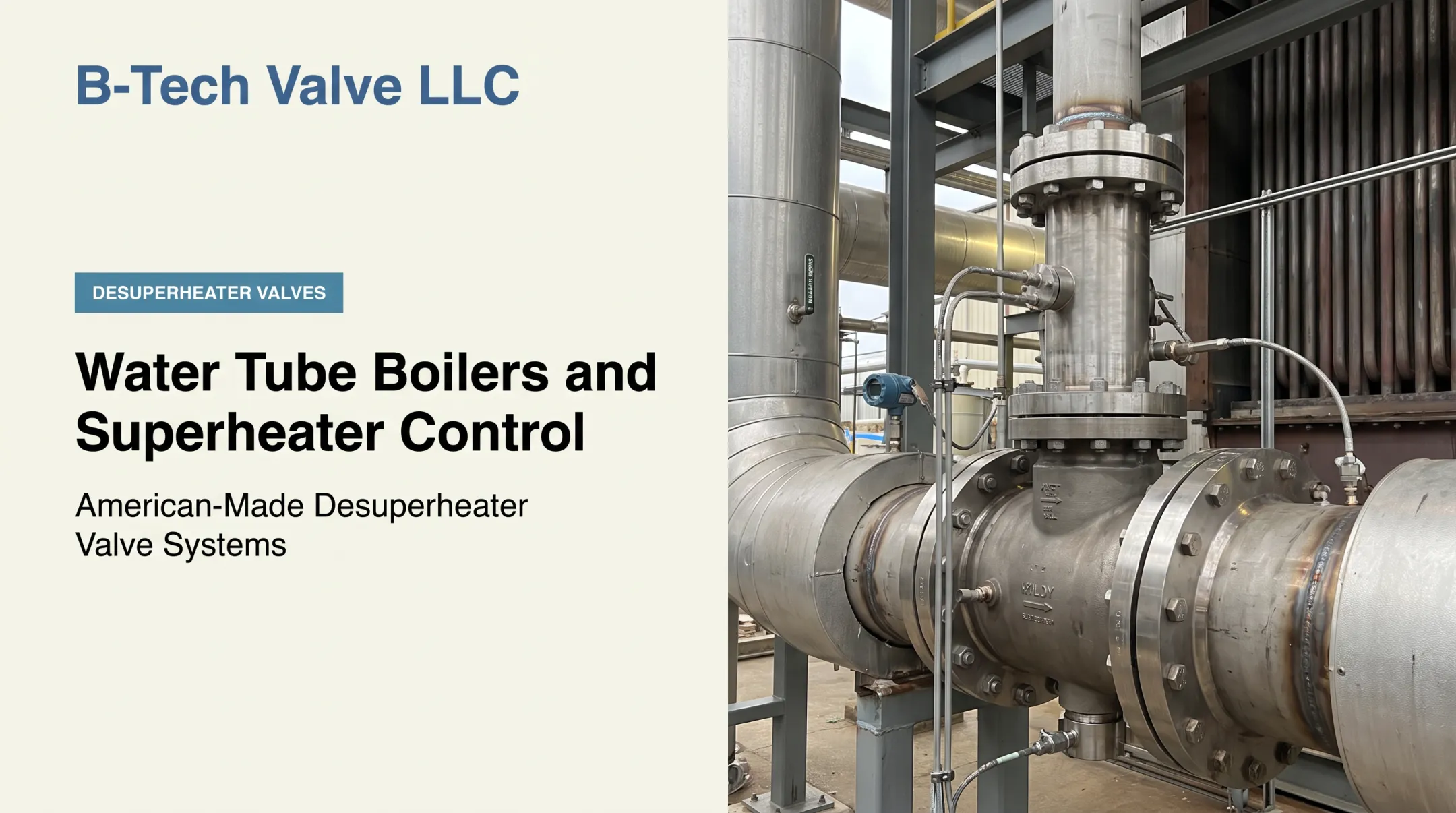
That's where a spray attemperator comes in. It's installed at a point in the steam path, commonly between superheater stages or just downstream of the final superheater, where controlled injection of treated water can pull excess heat out of the steam before it does damage.
Superheater vs. Attemperator vs. Reheater
These three terms get mixed up constantly. Here's the distinction, consistent with how Babcock & Wilcox's primer describes the steam cycle:
| Equipment | What it does |
|---|---|
| Superheater | Raises temperature of newly generated steam above saturation |
| Spray attemperator | Lowers or trims steam temperature using water injection |
| Reheater | Raises temperature of steam after it has already expanded through part of a turbine |
A typical sequence looks like this:
- Steam generates in the drum and passes through superheater tubes
- Temperature is measured downstream of the superheater
- Spray water injects if the steam is running too hot
- Water mixes and evaporates, then steam reaches the turbine or process user at target condition
Steam-property concepts like saturation temperature, enthalpy, and steam quality (the vapor fraction in a wet mixture) all come from standard steam tables. There's no single pressure or temperature that applies to every boiler, so pull these values for your specific operating point.

How Spray Attemperation Controls Steam Temperature
The physics is straightforward: injected water absorbs heat from the surrounding steam and evaporates. Done correctly, this pulls the steam temperature down to setpoint without leaving any liquid water behind. Done poorly, you get wet steam downstream, which creates its own problems.
The Control Loop
A spray attemperation system typically includes:
- Downstream temperature sensors that measure the actual steam condition
- A controller comparing that reading against setpoint
- An actuator and spray-water valve regulating how much water goes in
- A nozzle or spray ring that atomizes the water into fine droplets and spreads it across the steam flow
Droplet size and residence time matter more than most people expect. Water droplets need enough mixing distance and travel time to fully evaporate before they reach a temperature sensor or sensitive equipment. If they don't, you get inaccurate readings and potential impingement damage.
Spray-water quality, pressure, temperature, and cleanliness all factor in too. Plant standards and manufacturer specs typically call for treated water, filtration, and proper isolation for inspection. Skipping this is a common root cause of nozzle plugging down the line.
Coarse vs. Fine Control
Combustion adjustments, gas-flow changes, and boiler load shifts handle coarse temperature control. Spray attemperation handles the fine trim on top of that. Control safeguards usually include high-temperature alarms, loss-of-spray detection, valve-position feedback, and interlocks, though the exact setup should match your facility's control philosophy.
Overspray and underspray are both problems. Excessive spray can produce wet steam, thermal shock, erosion, and carryover. Insufficient capacity leaves outlet temperature stuck above target. A widely cited 2012 outage handbook survey found 29% of plants reporting overspray, 29% reporting startup temperature excursions, and 47% reporting attemperator control instability. Those figures are a reminder that this isn't a rare issue.

Design and Application Factors for Reliable Attemperation
Before sizing or replacing a spray attemperator, engineers need a specific set of inputs:
- Steam line size and configuration
- Normal, minimum, and maximum steam flow
- Inlet and outlet pressure
- Inlet and target temperature
- Design and upset conditions
- Available spray-water pressure, temperature, and chemistry
Installation Geometry Matters as Much as Sizing
Line size and steam velocity drive turndown requirements, nozzle arrangement, and valve sizing. But even a perfectly sized unit will underperform without the right installation geometry. Straight-run length, injection orientation, downstream mixing distance, accessible drains, and inspection access all affect whether the spray fully evaporates before reaching a sensor or turbine.
Material and pressure-boundary decisions for high-temperature, high-pressure service should reference applicable ASME codes (Section I for power boilers, B31.1 for power piping, B16.34 for valve pressure-temperature ratings) rather than generic rules of thumb. Engineers also need to evaluate:
- Thermal gradients and pipe stress
- Vibration, erosion, and corrosion
- Water hammer risk
- Incomplete evaporation under upset conditions
A Practical RFQ Checklist
For an engineering review or replacement quote, include:
- Process conditions (flow, pressure, temperature ranges)
- Connection details and line size
- Control signal type and valve fail position
- Allowable pressure drop
- Required documentation and inspection requirements
- Spare parts and commissioning support needs
A quick selection example: a large main-steam line running 6 inches or larger typically needs an integrated, variable-nozzle control-valve arrangement to handle turndown. A smaller line, say 4 inches or under, is often better suited to a spray-ring design paired with a separate control valve. Treat line size as the first filter in any selection process: it narrows the field fast.

Benefits, Failure Modes, and Maintenance Considerations
Properly controlled superheat and attemperation stabilize steam temperature, protect downstream equipment, and reduce the risk of unplanned trips. That protection extends to turbine blades (moisture erosion risk), rotating seals, steam traps, and piping, without any guarantee of a specific service-life extension, since that depends on the whole system.
Symptoms and Likely Causes
| Symptom | Common cause |
|---|---|
| Persistent high outlet temperature | Undersized spray capacity |
| Unstable temperature cycling | Control-tuning issues |
| Valve hunting | Actuator problems or poor sensor placement |
| Nozzle plugging | Poor water quality |
| Downstream moisture | Insufficient mixing distance |
EPRI's water induction research identifies low-load overspray and leaking spray valves as common causes of water accumulating in superheater and reheater elements, a risk that can carry water toward the turbine if left unaddressed.
Maintenance That Prevents Failures
- Inspect nozzles and spray rings for wear or plugging on a scheduled basis
- Test valve and actuator response, not just position
- Calibrate temperature sensors regularly
- Check strainers and the spray-water system for contamination
- Review drains, insulation, and pipe supports
- Track operating trends to catch drift before it becomes a failure
Safety note: troubleshooting high-pressure, high-temperature steam and spray-water equipment requires qualified personnel, approved isolation, proper depressurization, and lockout/tagout procedures specific to your site.
Selecting a Superheater-Temperature-Control Solution
Not every temperature problem means replacing the whole system. Sometimes a worn nozzle or sticking valve is the actual culprit, and a targeted repair solves it. Other times, especially after years of thermal cycling, the piping, control architecture, or the attemperator itself needs a full evaluation.
Line size and service conditions typically point toward one of two configurations:
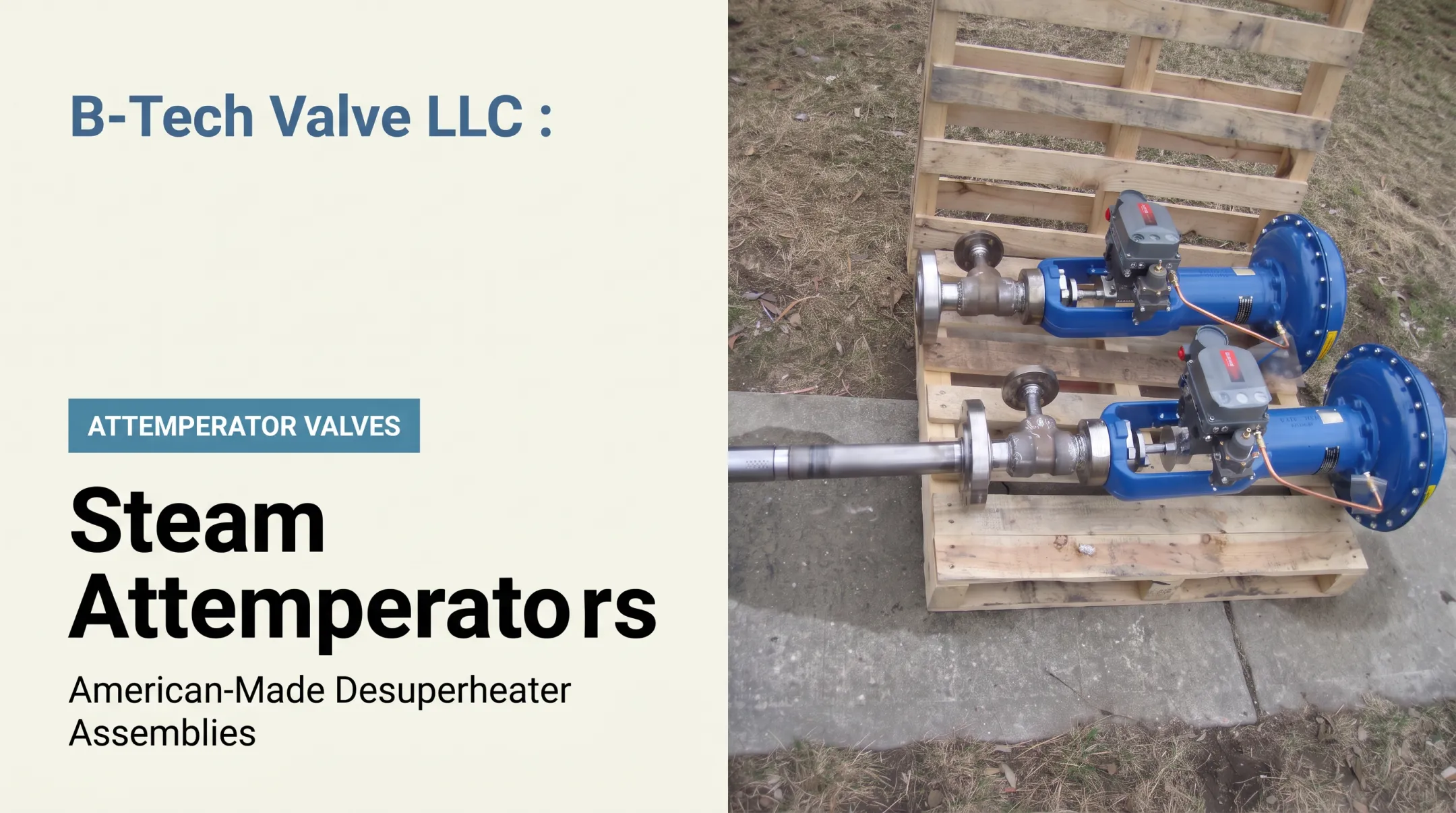
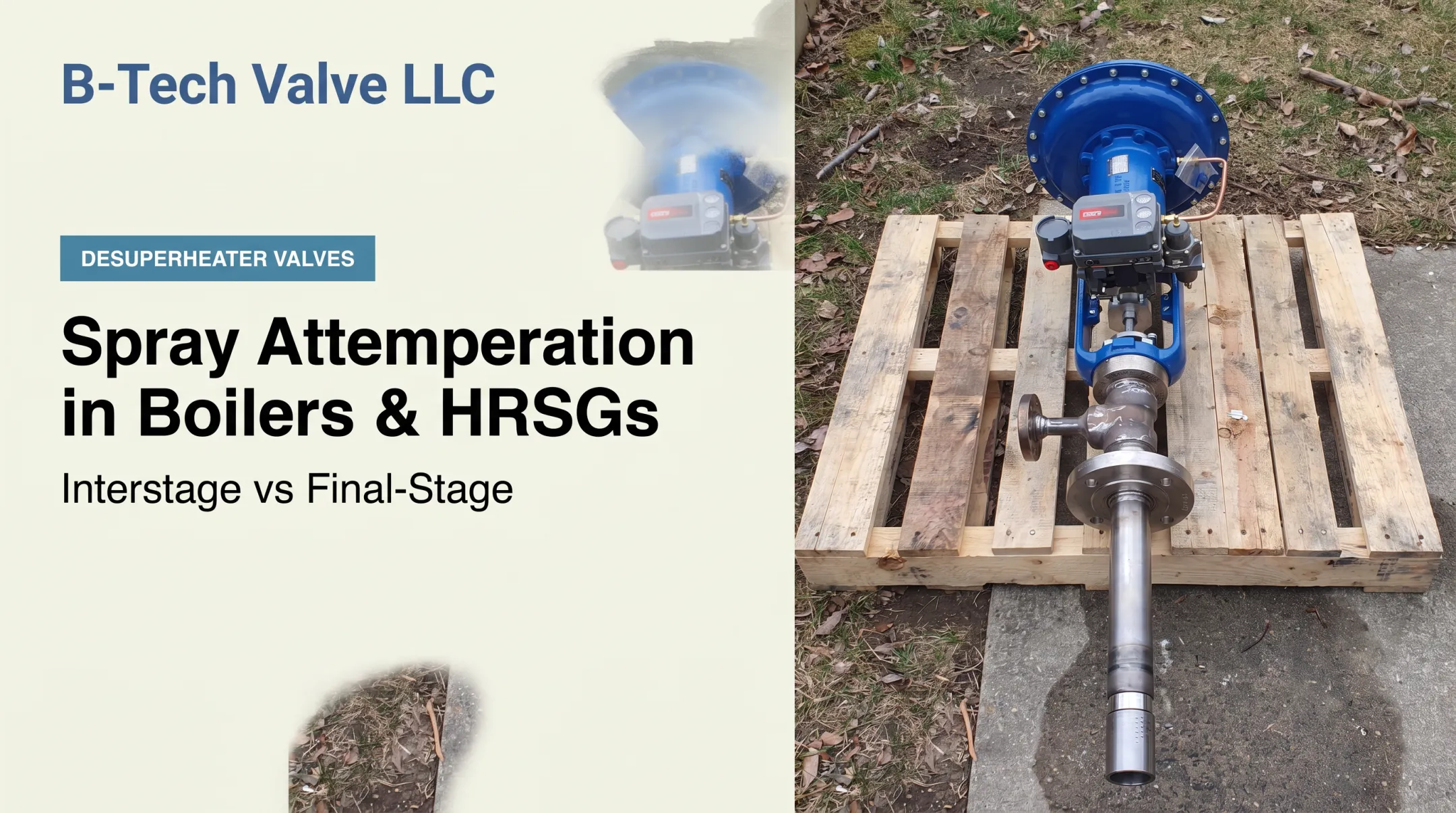
- For 6-inch and larger steam lines: B-Tech Valve's LPD is a probe-type, variable-nozzle, fully actuated control valve and desuperheater combined into one assembly. It inserts through a 3-inch flanged connection at 90 degrees on the pipe side.
- For 4-inch and smaller steam lines: B-Tech Valve's SPAD is a fixed-nozzle spray-ring unit that clamps between two steam-pipe flanges and draws water through a separate temperature-control valve.
Always confirm the actual product datasheet, connection details, materials, and pressure/temperature class for your specific application before finalizing a spec. Product ratings vary by material and configuration even within the same product line.
B-Tech Valve designs and sells American-made steam and gas desuperheater and attemperator valves, with components sourced from U.S. machine and fabrication shops and final assembly and testing done in-house. Products are offered across ASME B16.34 pressure classes 150 through 2700 and for temperatures up to 1,200°F, though the exact rating should be verified against the specific product and material for your service.
For an application review, plants and engineers typically need to provide:
- Line drawings and the operating envelope
- Steam and water conditions
- Target outlet temperature
- Control architecture and existing equipment details
- Failure history and outage timeline
If you're facing a failing attemperator or specifying one for a new steam system, B-Tech Valve's application engineering team can review your conditions and recommend a sized solution. Reach out at 609-321-2205 or Sales@B-TechValves.com.
Conclusion: Coordinating Superheating and Spray Attemperation
A superheater delivers the steam temperature your process or turbine needs. A spray attemperator provides the correction and protection when that temperature runs higher than the system can handle. Neither works well without the other being properly tuned.
The selection principles that matter most:
- Define your real operating envelope
- Verify spray-water quality and pressure
- Give the system enough mixing distance for complete evaporation
- Protect your instrumentation from poorly mixed flow
- Choose equipment sized for your actual line, not a generic catalog spec
Before specifying or replacing attemperation equipment, especially where turbine protection or outage deadlines are on the line, loop in boiler, piping, controls, and valve specialists early. The cost of getting it wrong shows up fast in cycling temperatures, nozzle failures, or worse.
Frequently Asked Questions
What is the function of a superheater in a boiler?
A superheater raises saturated steam above its saturation temperature, producing higher-temperature steam suited to power generation or process applications. The exact target temperature depends on the downstream equipment it feeds.
How does a boiler superheater work?
Steam flows through tubes exposed to hot combustion gases, picking up heat indirectly through the tube walls. The resulting pressure and temperature behavior depends heavily on the specific boiler design and firing conditions.
What happens if you superheat steam?
Superheating increases steam's temperature and energy content and reduces moisture-related risks during expansion. Excessive temperature without adequate control can damage tubes and downstream equipment, so attemperation keeps steam within safe limits.
What is a primary superheater?
The primary superheater is generally the first section that raises steam temperature after it leaves the boiler drum, as distinct from later secondary or finishing superheater stages. Exact staging and terminology vary by boiler OEM.
What is spray attemperation in a boiler?
Spray attemperation injects controlled, treated water into superheated steam so the water evaporates and pulls the steam temperature down toward a target setpoint. It's the primary method for fine-tuning steam temperature downstream of a superheater.
How do you choose a boiler desuperheater?
Match the unit to your steam flow range, pressure, temperature, and line size, then confirm spray-water conditions, required mixing distance, control response, and materials. Always request documentation covering installation geometry and commissioning support before finalizing your choice.