That sounds simple until load swings, combustion variation, and transient startups all compete for control of the same outlet temperature.
Reheat steam has to stay inside tight limits set by the boiler, turbine, piping, and material specs, even as heat transfer and gas-side conditions shift underneath it. Get it wrong and the cost shows up as creep damage, moisture carryover, or a forced outage.
This article covers reheat-cycle fundamentals, temperature-control methods, protection risks, troubleshooting steps, and how plants select desuperheater or attemperator equipment.
Key Takeaways
- A reheater takes cold reheat steam from the turbine's first expansion stage and returns it hotter to the next stage downstream.
- Temperature control balances turbine efficiency and moisture protection against tube overtemperature and thermal shock.
- Combustion and flue-gas adjustments handle broad temperature swings; spray attemperation trims temperature quickly.
- Equipment selection depends on steam conditions, pipe size, water quality, and plant-specific operating requirements.
What Is a Boiler Reheater and How Does the Reheat Cycle Work?
A boiler reheater is a heat-exchange surface that reheats steam after it has already given up energy in the high-pressure turbine, before that steam enters the intermediate- or low-pressure section. It picks up cold reheat steam and sends it back out hotter.
The reheat cycle moves through five stages:
- The boiler and superheater generate main steam at design pressure and temperature.
- The high-pressure turbine extracts work from that steam, dropping its pressure and temperature.
- Cold reheat steam returns through piping to the boiler's reheater section.
- The reheater raises the steam's temperature back toward main-steam conditions.
- Hot reheat steam expands again through the intermediate- and low-pressure stages before reaching the condenser and feedwater system.
Reheater vs. superheater
- A superheater treats newly generated steam leaving the boiler drum or once-through circuit.
- A reheater treats steam that has already done turbine work and lost pressure and temperature.
- The superheater feeds the HP turbine; the reheater feeds the IP turbine.
- Both raise steam temperature, but they sit at different points in the cycle and serve different stages.
Reheating does three things for the cycle:
- Adds enthalpy for the second expansion
- Improves the expansion path across the IP and LP stages
- Cuts moisture formation in later stages, where wet steam erodes blades over time

Where reheaters show up
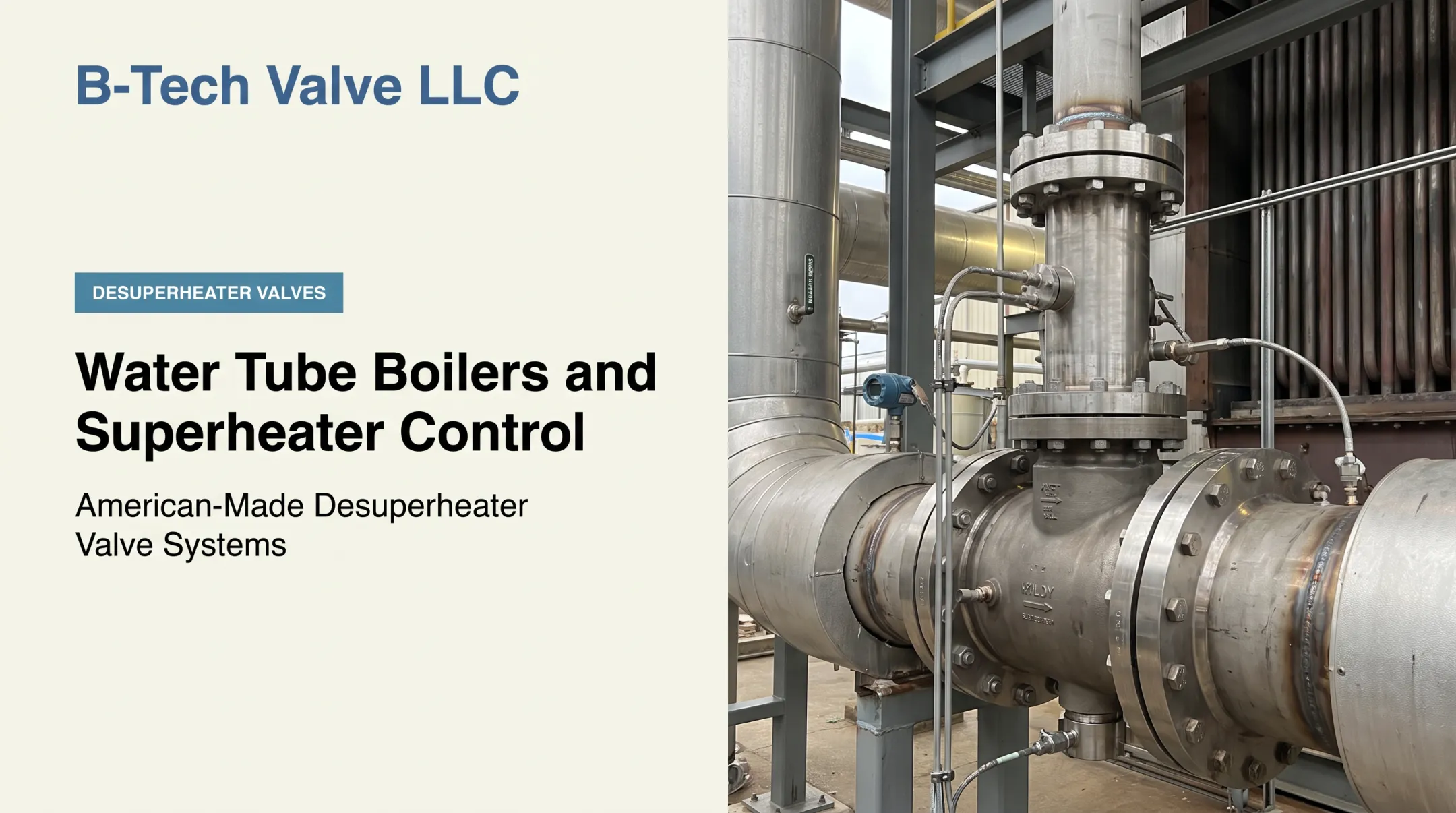
In a conventional utility boiler, reheater tube banks typically sit in the convection pass. They pick up heat from flue gas after it has already passed the primary superheater surfaces.
A heat recovery steam generator works differently. Exhaust gas usually passes the HP superheater, then the reheater, then the HP evaporator. On the steam side, cold reheat steam often combines with IP-superheater steam before entering the reheater bank, according to EPRI's HRSG guide.
Reheat outlet temperature isn't chased to the highest number the metal can tolerate. It's coordinated with main-steam temperature and turbine inlet design limits. The IP turbine casing, rotor, and first-stage blading are built around a specific temperature window.
Running hotter buys nothing and risks the turbine. Running cooler sacrifices efficiency and adds moisture downstream.
How Reheat Temperature Control Works
The control objective is simple to state and hard to execute: hold reheat steam at its target outlet temperature through load swings, without tripping tube-metal, turbine-inlet, or piping limits in either direction.
Operators and control systems pull from several measurement points:
- Reheat inlet and outlet temperature
- Main-steam temperature and pressure
- Steam flow and boiler load
- Spray-water pressure and temperature
- Flue-gas or furnace temperature readings relevant to the reheater zone
Coarse control: combustion and gas-side adjustments
Burner tilt, excess-air changes, fuel-air ratio adjustments, flue-gas damper positioning, and gas-recirculation changes all shift how much heat the reheater surface absorbs. These methods move the whole reheat temperature profile, but slowly.
They're the broad-stroke tool for steady-state trimming across a load range, not for reacting to a swing within minutes. Some boiler designs avoid burner tilt altogether and run reheat temperature control independent of the combustion process, trading mechanical complexity at the burner for a cleaner split between combustion and temperature control.
Fine control: spray attemperation
Spray attemperation injects conditioned water directly into the steam, where it flashes to vapor and pulls heat out of the surrounding flow. It's the quick-response tool, but it only works cleanly when:
- Nozzles atomize the spray into fine droplets, not a solid stream
- Droplets get enough mixing length to fully evaporate before reaching a pipe wall or turbine inlet
- Downstream temperature sensors sit far enough past the injection point to read a representative, fully mixed value
Spray that doesn't fully evaporate before contacting metal is where things go wrong. More on that in the next section.
| Method | Response speed | Typical use | Water use | Risk if misapplied |
|---|---|---|---|---|
| Combustion/flue-gas adjustment | Slow, broad | Steady-state trim | None | Limited reheat range at some loads |
| Spray attemperation | Fast, localized | Transient and fine trim | Moderate to high | Unevaporated spray, thermal shock |
Control-loop safeguards
- High- and low-temperature alarms
- Spray-water pressure permissives before the valve opens
- Minimum-flow logic to prevent nozzle fouling
- Actuator position feedback and sensor cross-checks
- Trip or bypass logic specific to the plant's design basis
Too much spray water, applied too fast, can create pressure loss, sharp thermal gradients, or wet-steam carryover into the turbine. Too little, or a delayed response, lets reheat temperature climb toward overtemperature territory. Set both alarm thresholds from OEM and plant design data, not a number borrowed from another unit.

Why Reheat Temperature Requires Protection
Overtemperature: the slow failure
Reheater tubes that run hot for extended periods don't usually fail all at once. Creep damage accumulates as a thermo-mechanical process.
Internal steam-side oxide growth raises tube-wall temperature further, and fireside corrosion thins the wall. Both increase stress and accelerate the creep rate, according to EPRI's corrosion research. Left unchecked, that progression ends in tube leakage. Because reheat steam carries real energy, a failure can produce a high-energy release that damages nearby equipment.
Undertemperature: the efficiency and moisture problem
Running cold brings a different problem. Lower reheat temperature means more moisture forms as steam expands through the IP and LP turbine stages. That moisture erodes blades over time and drags down overall cycle performance. Plants sometimes have to restrict operation rather than run reheat below the design band.
Transients matter as much as steady-state numbers
Startup, shutdown, ramping, and load rejection stress the reheater differently than steady running does. Undrained condensate combined with attemperator overspray during startup can quench and shrink specific tubes relative to their hotter neighbors, creating bending stress right at header-to-tube connections.
In documented HRSG assessments, thermal-mechanical fatigue from overspray caused more damage than brief overtemperature excursions did. Metal temperature gradients during a transient can matter as much as the outlet reading once things settle.
Common causes of abnormal reheat temperature:
- Fouled or ash-covered heating surfaces
- Uneven gas flow or burner imbalance
- Sensor drift or miscalibration
- Spray-valve malfunction or sticking
- Inadequate spray-water pressure or blocked nozzles
- Poor atomization from worn nozzle internals
- Control tuning that's drifted from commissioning settings
A practical diagnostic sequence:
- Confirm the instrument reading is valid before reacting to it.
- Compare redundant temperature readings against each other.
- Review trends against load and flow, not just the instantaneous value.
- Check spray-water pressure, flow, and valve travel.
- Inspect combustion or gas-flow conditions for imbalance.
- Escalate to an outage inspection if evidence points to tube or nozzle damage.
Choosing and Applying Reheat Temperature-Control Equipment
Before any attemperator or desuperheater gets specified, a plant needs real application data, not just a nominal pipe size:
- Steam pressure and temperature at minimum, normal, and maximum load
- Steam flow range across that load span
- Pipe size and allowable pressure drop
- Available spray-water source and its chemistry
- Control-valve authority and downstream equipment limits
Matching the assembly to the pipe
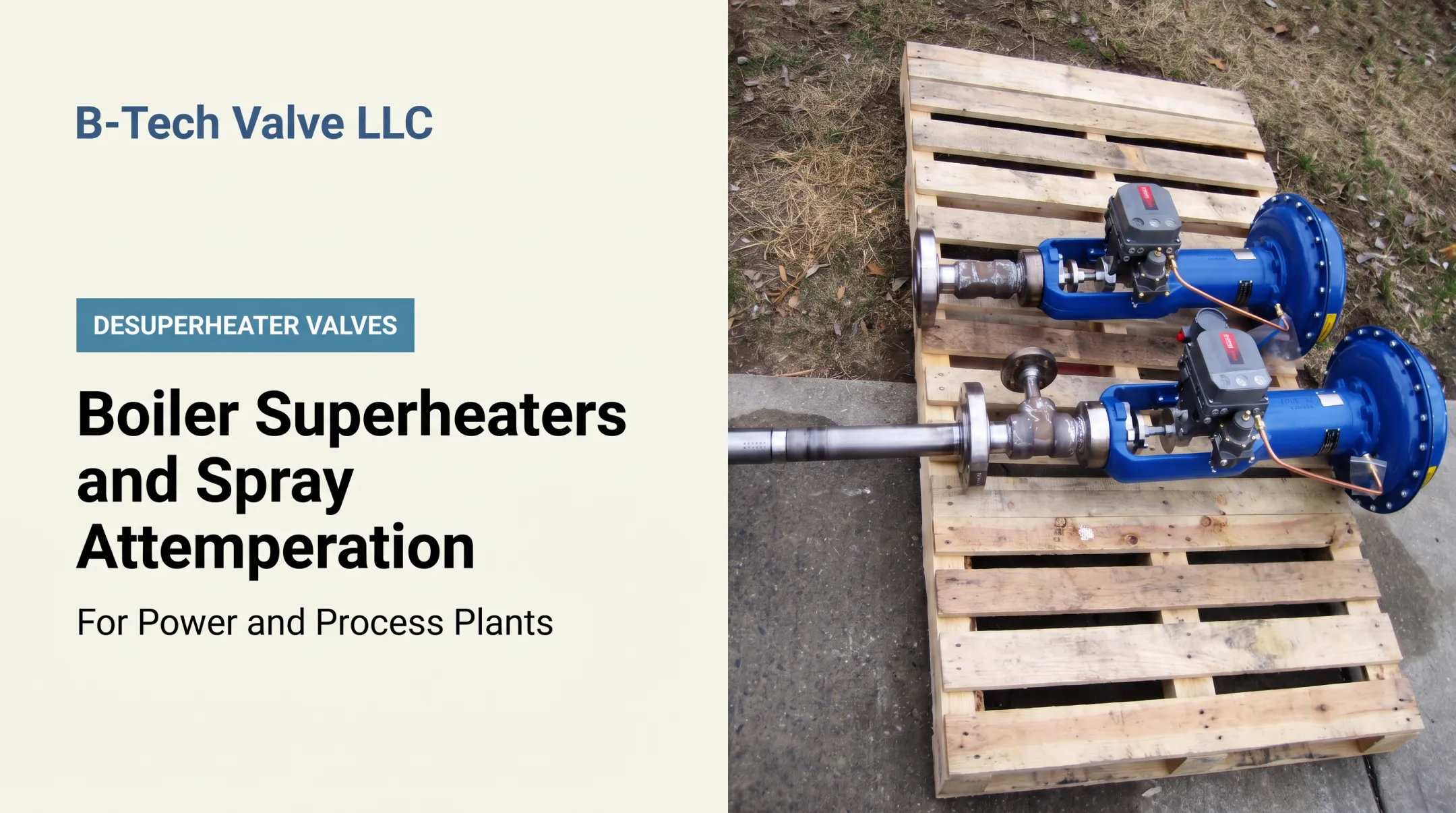
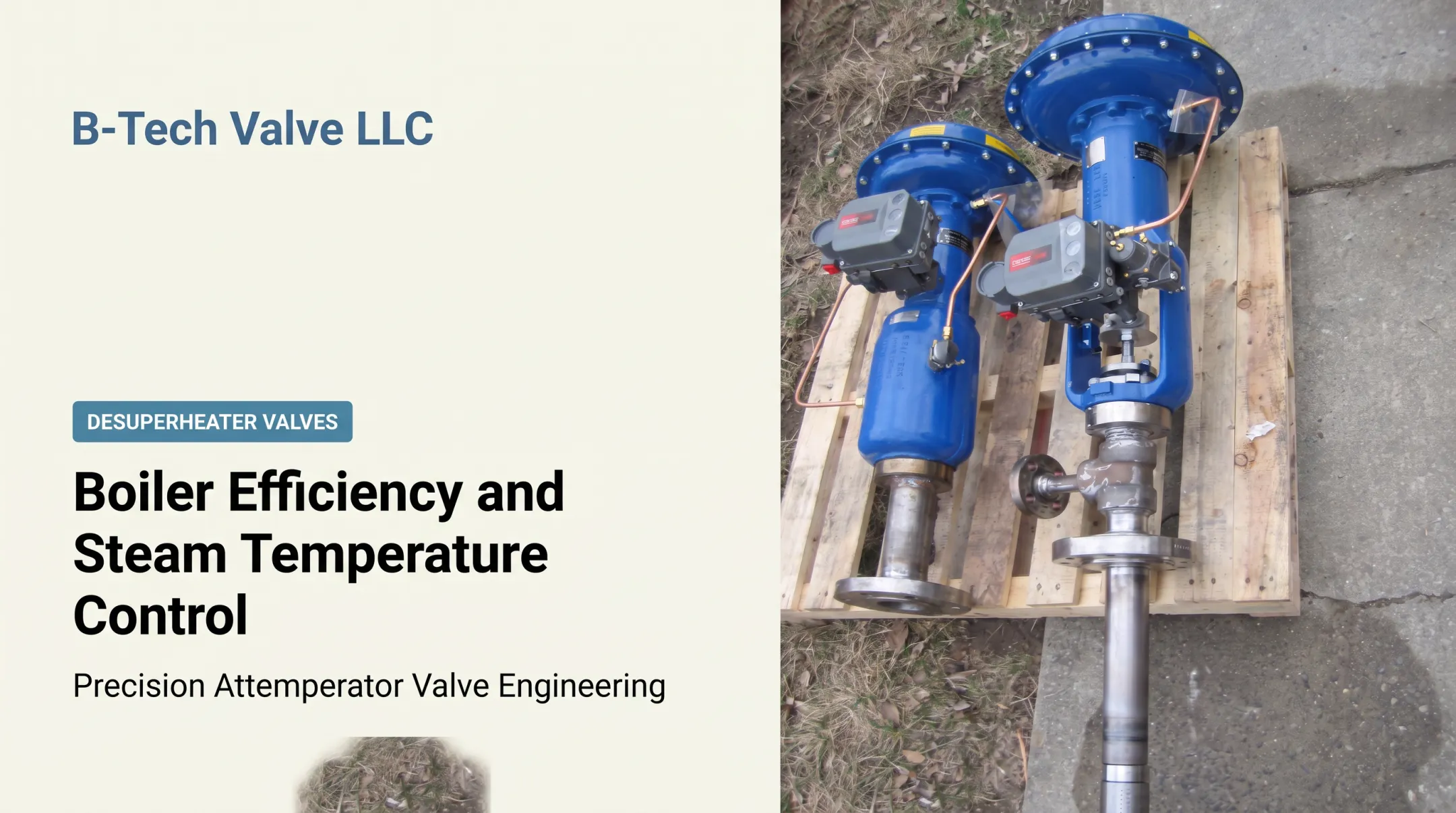
Line size and required spray capacity largely decide which configuration fits. As an application example, B-Tech Valve's LPD is built for steam pipes 6 inches and larger. It combines a variable-nozzle, actuated control valve and desuperheater in a single assembly that inserts through a 3-inch flanged connection at 90 degrees.
Its SPAD targets pipes 4 inches and smaller, using a fixed-nozzle spray ring that clamps between two flanges and draws feedwater from a separate temperature-control valve. Either approach needs engineering review against the specific application, since nominal pipe size alone doesn't capture flow turndown or mixing-length constraints.

Design features worth evaluating:
- Nozzle arrangement and atomization quality across the turndown range
- Actuator and valve sizing, including turndown ratio
- Materials and pressure class rated for the actual operating window
- Drain and start-up provisions
- Inspection access without a full teardown
- Compatibility with the plant's existing control system
Installation layout matters as much as the hardware. Straight-run distance after the injection point, sensor location, support for thermal expansion, and erosion protection all affect whether spray water fully evaporates before it reaches a bend, a turbine inlet, or a downstream instrument. Getting these wrong is a common root cause of the unevaporated-spray problems covered above.
A supplier should hand over the following before the unit ships:
- Sizing calculations
- Materials and pressure-class documentation
- Control-valve characteristic curves
- Spray-water requirements
- Drawings, test records, and inspection requirements
- Commissioning guidance
B-Tech Valve builds its LPD and SPAD assemblies around components from U.S. machine and fabrication shops, with final assembly and testing done in-house. Products are offered across ASME B16.34 pressure classes 150 through 2700, for temperatures up to 1,200°F. Stocked units can support faster replacement planning when a plant is working against an outage window, though actual lead time depends on the specific application.
Request-for-quote checklist for plant teams, distributors, outage contractors, and consulting engineers:
- Steam pressure, temperature, and flow at min/normal/max load
- Pipe size, schedule, and material
- Spray-water source, pressure, and chemistry
- Required turndown and control range
- Existing control-valve or actuator preferences
- Site elevation and ambient conditions, if relevant
Operating and Maintenance Checklist
Trend it before it trips. Track reheat inlet and outlet temperatures, the differential between them, spray-water pressure and flow, valve position, load, steam flow, and alarm history. Drift usually shows up in trends before it shows up as a trip or a tube problem.
Inspect the parts that wear. Routine checks should cover spray nozzles, strainers, valves, actuators, positioners, temperature sensors, drains, and downstream piping, looking for plugging, erosion, leakage, sluggish travel, or signs that spray water isn't fully evaporating.
Watch spray-water quality. Attemperator spray water generally needs to meet close to the same purity standard as the steam itself. Boiler feedwater sometimes qualifies, but it often needs additional purification first.
ASME's consensus guidance suggests spray water stay essentially oxygen-free and low in dissolved solids, sodium, and silica. It also flags deposit-forming chemicals like sodium hydroxide and sodium phosphate as ones to control. Treat those as suggested values to check against your own design basis, not a universal limit.
During planned outages:
- Verify nozzle condition and orientation
- Inspect internal components for erosion or deposits
- Calibrate temperature instruments
- Confirm valve stroke and fail-safe position
- Review welds and supports for fatigue indications
- Compare findings against prior outage records
Escalate when these show up. Loop in engineering or the OEM for:
- Repeated temperature excursions
- Sensor disagreement that won't resolve
- Visible downstream erosion
- A spray valve that keeps hunting
- Rising pressure drop
- Tube-leak indications
- Inability to hold reheat temperature across the operating range
Frequently Asked Questions
What is reheater protection in a thermal power plant?
Reheater protection combines temperature monitoring, alarms, and control actions, like spray attemperation or combustion adjustment, to keep reheat steam within turbine and tube-metal limits. Specific trips and permissives are set by the plant's own design basis.
What is a reheat cycle?
In a reheat cycle, steam expands partway through a high-pressure turbine, returns to the boiler's reheater to regain temperature, then expands again through the intermediate- and low-pressure stages. This second expansion improves efficiency and reduces moisture downstream.
What is a superheater and reheater?
A superheater raises the temperature of newly generated steam before it reaches the turbine. A reheater raises the temperature of steam that has already expanded through the HP turbine, preparing it for the next expansion stage.
How does a waste heat recovery boiler work?
A heat recovery steam generator uses hot gas-turbine exhaust, rather than direct fuel combustion, to heat water and steam surfaces. Superheater and reheater sections sit in the gas path based on the plant's specific HRSG arrangement.
What is the function of a preheater?
A preheater raises the temperature of an incoming fluid, like combustion air or feedwater, before it enters the next process step. That's different from a reheater, which reconditions steam that has already passed through part of the turbine.