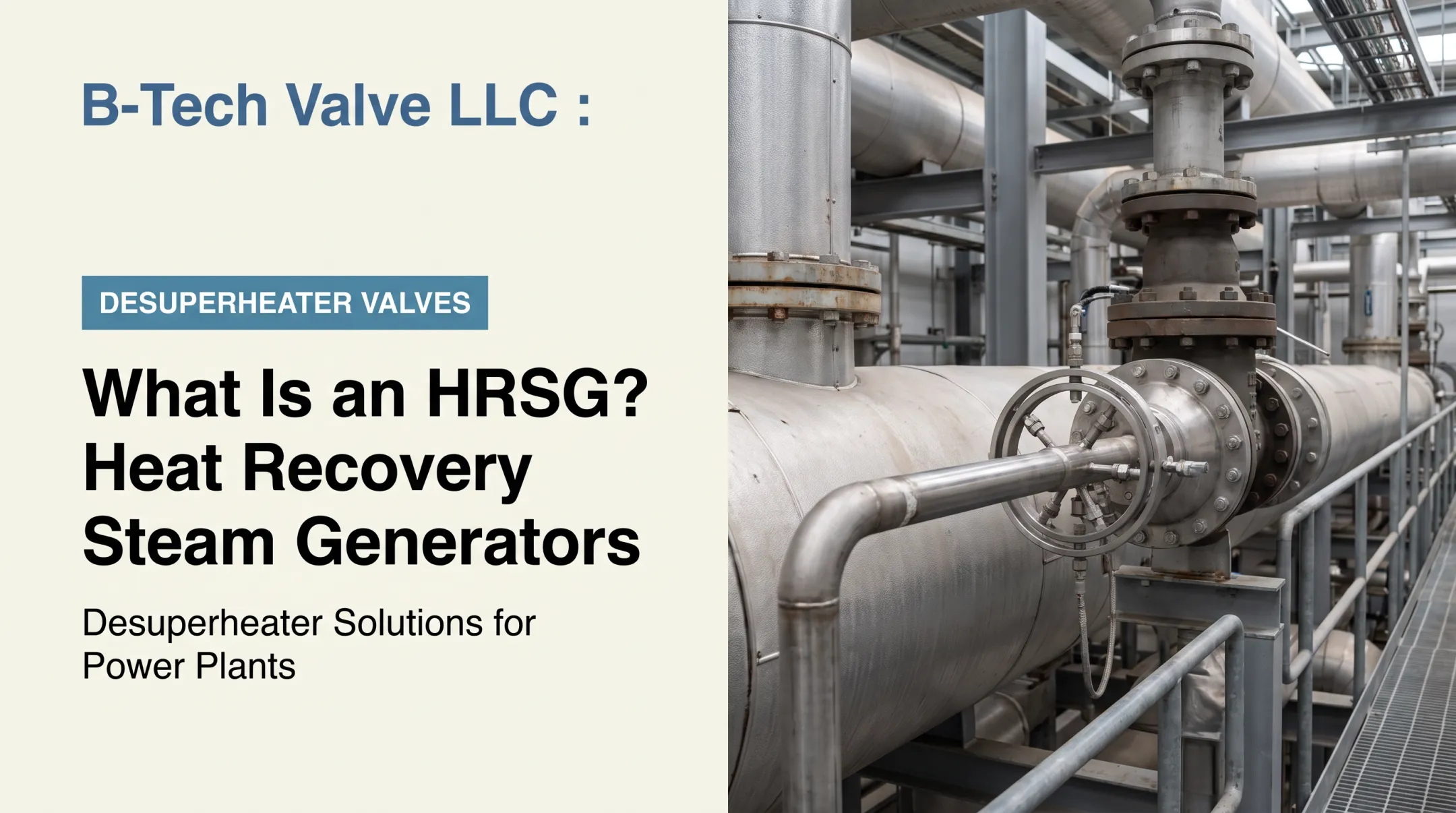
This matters because that exhaust can leave a gas turbine at 900°F to 1,100°F, carrying energy that would otherwise go to waste. This article is written for plant engineers, project managers, and operators who need a working understanding of HRSG design: the major heat-transfer sections, how pressure levels are arranged, what operating conditions do to component life, and why steam-temperature control deserves its own line item on any specification sheet.
Key Takeaways
- An HRSG moves heat from gas-turbine exhaust through an economizer, evaporator, steam drum, superheater, and optional reheater in sequence.
- Drum-type and once-through designs trade off differently on cycling flexibility, water chemistry, and startup speed.
- Pressure-level count, layout orientation, and supplementary firing all shift the heat-recovery and cost equation.
- Steam temperature control protects turbines, piping, and seals from thermal shock and erosion.
- Final design requires exhaust, steam, feedwater, and site data, not just a nameplate MW rating.
What Is an HRSG Boiler and How Does It Work?
A conventional boiler burns fuel in a dedicated furnace to make steam. An HRSG works differently: it uses hot exhaust gas, typically from a gas turbine, as its primary heat source. No burner is required, though supplementary firing can be added later.
Two fluid streams move through an HRSG without ever mixing:
- Exhaust gas flows across the outside of tube banks, losing heat as it travels toward the stack.
- Feedwater and steam move inside those tubes, picking up heat through the tube walls.
The gas follows a predictable path through the unit:
- Exhaust entry – hot gas enters the HRSG inlet duct.
- Feedwater preheating – the economizer raises feedwater temperature without boiling it.
- Evaporation – the evaporator converts feedwater into a steam-water mixture.
- Steam separation – in drum units, the steam drum separates vapor from water.
- Superheating – the superheater raises steam above saturation temperature.
- Optional reheating – a reheater reconditions steam returning from a steam turbine's intermediate stage.
- Stack discharge – cooled gas exits to the atmosphere.
That superheated steam has several uses. It can spin a steam turbine for additional electricity, supply a combined heat and power system, or feed an industrial process directly.
In a combined-cycle plant, each piece has a distinct job:
- Gas turbine generates the exhaust heat
- HRSG converts it to steam
- Steam turbine extracts additional power
- Condenser turns spent steam back into water
- Feedwater system returns that water to the HRSG to restart the cycle
The gas-turbine-to-HRSG-to-steam-turbine-to-condenser loop is the core arrangement of the plant.
This bottoming-cycle arrangement is why combined-cycle plants post such strong numbers. EPA's 2017 CHP catalog characterizes utility-scale gas-turbine/steam-turbine combined-cycle efficiency at more than 60% on a lower-heating-value basis. Treat that figure as a technology characterization, not a guarantee for any individual plant.

Main Components of an HRSG Boiler
An HRSG is a series of heat-transfer sections, arranged to match the exhaust-gas temperature profile against the feedwater and steam conditions a plant needs.
| Component | Role |
|---|---|
| Economizer | Preheats feedwater before it reaches the evaporator, without letting it steam or flash |
| Evaporator | Converts feedwater into a steam-water mixture using tube bundles or water-wall panels |
| Steam drum | Separates steam from water, supports circulation, and manages blowdown and water level |
| Superheater | Raises steam temperature above saturation for turbine or process use |
| Reheater | Reheats steam returning from an intermediate turbine stage (optional) |
Economizer and Evaporator Behavior
The economizer has one job: get feedwater close to boiling without crossing that line. Steaming inside economizer tubes causes flow instability and thermal stress, so designers size the tubing and flow path to avoid it.
Many units use counterflow circuitry to optimize water velocity and heat absorption. Designers also build in drain and vent capability for startup and shutdown.
Downstream, the evaporator does the actual boiling. How water moves through it depends on the circulation method:
- Natural circulation relies on density differences between hot and cool water to drive flow through vertical tubes, often paired with a horizontal gas path.
- Forced circulation uses a pump to push water through the evaporator, useful where natural circulation alone isn't reliable.
- Once-through (OTSG) designs skip the drum entirely. Feedwater moves through preheating, evaporation, and superheating in one continuous pass and exits as superheated steam.
Steam Drum and Supporting Hardware
In drum-type units, the steam drum marks the boundary between the economizer, evaporator, and superheater sections. It holds a meaningful water and steam inventory, handles blowdown to manage dissolved solids, and demands careful water chemistry control to limit scale and corrosion.
Beyond the core sections, several components materially affect how an HRSG actually runs:
- Headers and tube bundles that route flow between sections
- Casing and ductwork that contain and direct the gas path
- Stack, bypass dampers, and diverter systems for flexible operation
- Drains, vents, and safety valves for startup, shutdown, and overpressure protection
- Sootblowing or cleaning provisions and inspection access ports
HRSG Design Choices and Operating Considerations
No single HRSG configuration works for every plant. The right choice depends on cycling frequency, steam demand, site footprint, and budget.
Drum-Type vs. Once-Through Design
Drum units carry more water and steam inventory, which can mean slower startup but more forgiving control. Once-through units eliminate the drum, which some manufacturers position as an advantage for part-load and cycling flexibility. Neither design is universally superior.
Water chemistry requirements, control complexity, and pressure range all shift depending on which path a project takes. The decision should rest on the plant's actual operating profile rather than a general preference.
Layout, Pressure Levels, and Firing Options
Horizontal and vertical HRSG layouts solve different site problems:
- Horizontal gas flow, vertical tubes – a common arrangement that supports natural circulation and offers straightforward access.
- Vertical gas flow, horizontal tubes – better suited to sites where plot space is limited, though it changes structural support and lifting requirements.
Pressure arrangement is another lever. Single-, dual-, and triple-pressure HRSGs recover progressively more heat by adding drums, piping, and controls at each level. Each added pressure level also adds cost and maintenance points.
Supplementary duct firing adds fuel directly to the exhaust stream to boost steam output, including at reduced turbine loads and across a wider range of ambient conditions. It also raises downstream temperature limits and emissions-control requirements.

OCGT vs. CCGT and Operating Profile
An open-cycle gas turbine (OCGT) discharges its exhaust without sending it through a steam bottoming cycle. A combined-cycle gas turbine (CCGT) plant routes that same exhaust through an HRSG to produce steam for a steam turbine. EIA's 2022 analysis frames this as the functional line between the two configurations.
Startup frequency, ramp rate, load swings, and required availability all feed back into thermal design. Frequent cycling increases thermal fatigue risk at header connections and attemperation points.
Add in differential expansion, tube vibration, corrosion, and fouling, and inspection access stops being optional: it becomes a design input from day one.
How Steam Temperature Control Protects an HRSG System
Superheated steam has to land within a tight temperature window. Go too hot, and downstream turbines, piping, seals, and rotating components take on stress they weren't built for. Go too cold, and efficiency drops along with it.
How Attemperation Works
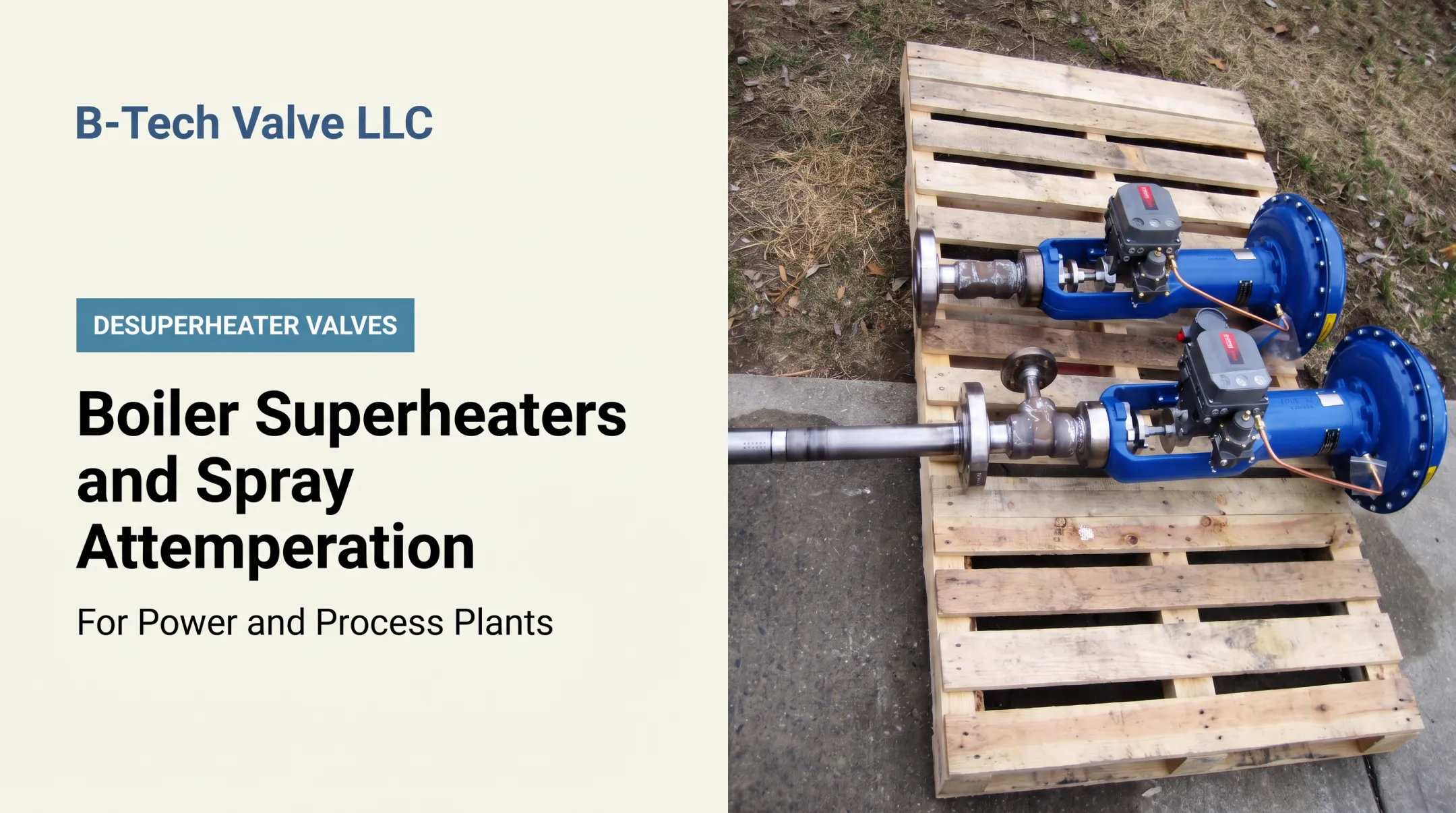
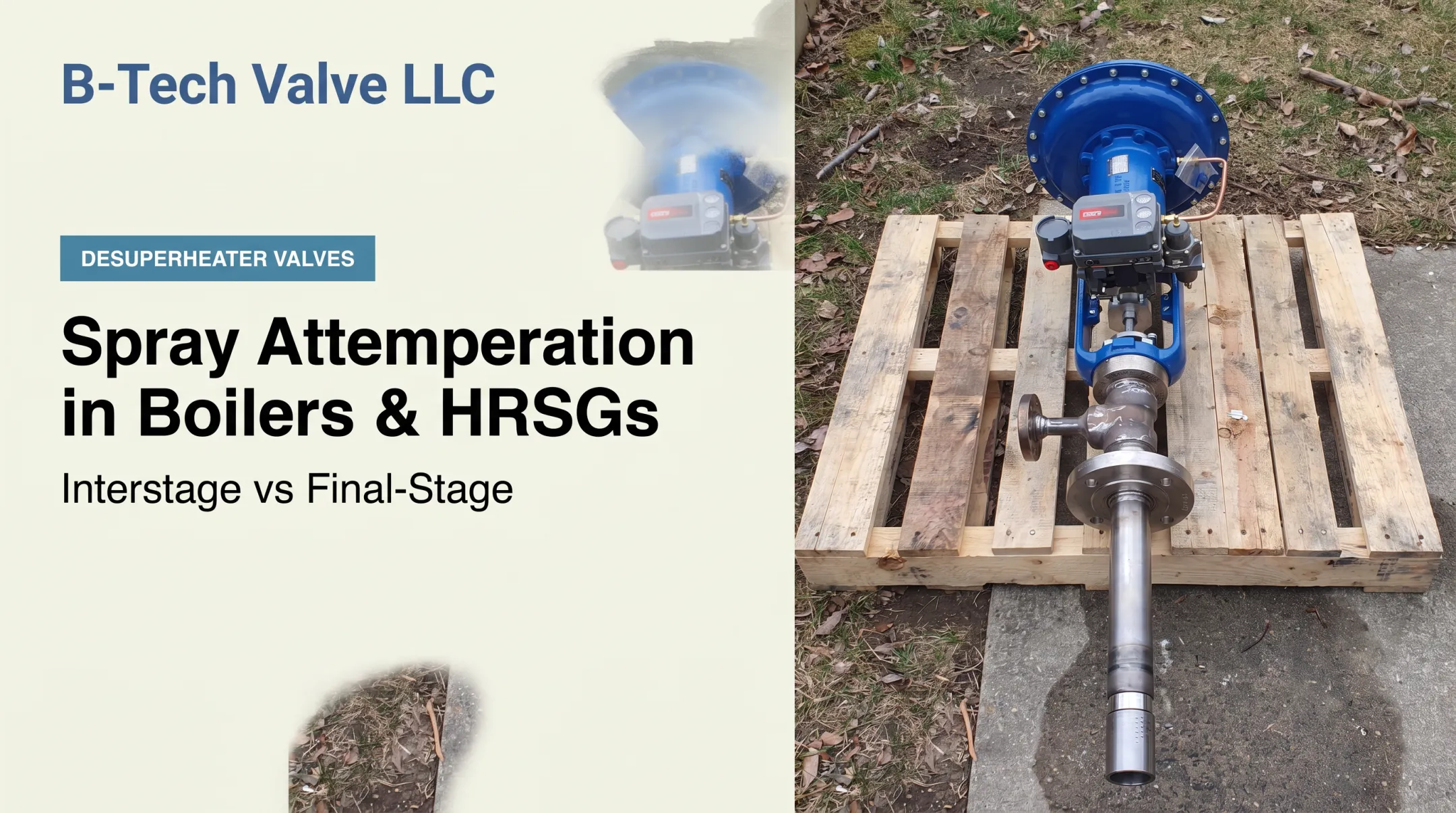
Attemperation, also called desuperheating, controls steam temperature by injecting fine spray water directly into the steam path. The process depends on several elements working together:
- A control valve that meters spray-water flow based on steam temperature
- Spray nozzles that atomize water into fine droplets
- Sensors that feed real-time temperature data back to the control loop
- Sufficient mixing distance and evaporation time downstream of the injection point
Risks of Poor Desuperheater Application
When sizing or placement is off, the consequences show up fast. POWER's desuperheater guidance points to several recurring failure modes:
- Incomplete evaporation at low load, letting unvaporized droplets travel further downstream
- Poor spray distribution near elbows, causing droplet agglomeration and water fallout
- Overspray and water carryover, which can quench piping locally and damage turbine components
- Unstable control from inaccurate temperature feedback caused by spray that hasn't fully evaporated
Those failure modes show up where steam-conditioning equipment sits: downstream of superheaters and reheaters, at pressure-reducing stations, bypass systems, and process-steam takeoffs. In each location, steam temperature has to be trimmed before it reaches sensitive equipment.

This is the space B-Tech Valve LLC works in. The company designs and builds American-made, application-sized desuperheater and attemperator valves for power and process plants, including its LPD line for steam pipes 6 inches and larger and its SPAD line for pipes 4 inches and smaller.
B-Tech doesn't supply the HRSG itself. When a spray-water system needs replacing or resizing, matching the valve to actual line size, pressure, temperature, steam flow, spray-water conditions, and turndown requirements is what prevents the failure modes listed above.
HRSG Specification and Project Data Checklist
A nameplate rating or plant MW figure tells you almost nothing about the thermal and mechanical details a final design needs. Before requesting a quote or design review, gather data across these categories:
Process conditions:
- Exhaust source, flow rate, temperature, and gas composition
- Steam flow, pressure, and temperature targets
- Feedwater pressure, temperature, and water chemistry
- Operating profile and ambient/site conditions, including altitude
Configuration details:
- Desired pressure levels and reheater requirements
- Supplementary firing plans and steam turbine interface
- Bypass operation, startup targets, and emissions requirements
Mechanical and installation factors:
- Plot space, equipment orientation, and access clearances
- Lifting capacity, transport limits, and foundation loads
- Piping connections, insulation, drains, and vents
For retrofit or replacement projects, also gather:
- Existing drawings and field measurements
- Inspection reports and tube-failure history
- Material specifications and the original operating envelope
Confirm applicable ASME Boiler and Pressure Vessel Code sections, ASME B16.34 where valves are involved, and any National Board or jurisdictional requirements for the installation. A qualified engineer still needs to verify the full operating envelope before finalizing design, regardless of how detailed the nameplate data looks.
Conclusion
HRSG design depends on how exhaust conditions, heat-transfer section sizing, pressure arrangement, startup behavior, and steam temperature control work together. That full system view is what protects downstream equipment over the plant's life.
Before requesting a design review or replacement quotation, assemble your exhaust, steam, feedwater, site, and existing-equipment data.
If steam conditioning is part of your scope, B-Tech Valve LLC can review line size, pressure, temperature, and flow conditions to help size an LPD or SPAD unit for your application. Reach the team at Sales@B-TechValves.com or 609-321-2205.
Frequently Asked Questions
How does an HRSG boiler work?
Hot gas-turbine exhaust passes over tube bundles, transferring heat through the tube walls to feedwater and steam inside. The flow sequence runs through the economizer, evaporator, and superheater before the steam is used or the gas exits the stack.
What is an HRSG boiler?
A heat recovery steam generator produces steam by capturing heat from hot exhaust gas rather than burning fuel directly. It's most commonly paired with a gas turbine in combined-cycle or cogeneration plants.
What is the difference between a boiler and an HRSG?
A conventional boiler generates steam through direct combustion in its own furnace. An HRSG is built around recovering exhaust heat from another source, though supplementary duct firing can add fuel heat when extra steam capacity is needed.
What is the difference between OCGT and CCGT?
An open-cycle gas turbine (OCGT) discharges exhaust without recovering its heat in a steam cycle. A combined-cycle gas turbine (CCGT) plant sends that exhaust through an HRSG to produce steam for a steam turbine, extracting additional power.
How much steam is required to generate 1 MW?
There's no universal figure. Steam pressure and temperature, turbine efficiency, condenser or back-pressure conditions, plant configuration, and whether the MW figure is gross or net output all change the answer for a given plant.