In an operating steam system, "steam hammer" almost never refers to the Nasmyth steam-powered forging hammer of the 1800s. It refers to water hammer: a sudden pressure surge created when condensate, rapidly collapsing steam, or an abrupt velocity change slams into piping, valves, or fittings.
Recurring banging, pipe movement, or vibration isn't a quirk of your system. Left unaddressed, it fatigues piping, loosens supports, wrecks valve internals, destroys steam traps, and threatens rotating equipment seals. According to Plant Engineering's analysis, water hammer ranks as the number one problem in steam systems.
This article breaks down the shock mechanisms behind steam hammer, the warning signs that precede failure, and the drainage, trap, and startup practices that keep it from happening in the first place.
Key Takeaways
- Steam hammer results from condensate slugs or collapsing steam creating a forceful pressure surge inside the pipe
- Differential, thermal, and hydraulic shock have distinct triggers, so where and when the noise happens matters for diagnosis
- Proper pipe slope, drip legs, correctly sized traps, and controlled warm-up form the foundation of prevention
- Conditioning equipment addresses temperature control, not condensate management, and should never substitute for drainage and trapping
Common Causes of Steam Hammer in Steam Lines
A steam system is a compressible system until liquid condensate shows up. Once water accumulates in a line designed to carry vapor, pressure differences and rapid condensation turn that liquid into a projectile.
Engineers generally sort the resulting shocks into three categories, and more than one often shows up in the same system at once.
| Shock Type | Primary Trigger | Typical Location |
|---|---|---|
| Differential shock | Condensate slug accelerated by steam flow | Elbows, tees, valves, pipe ends |
| Thermal shock | Rapid collapse of steam in subcooled water | Near trap discharge, flooded returns |
| Hydraulic shock | Sudden velocity change from a valve or pump | Flooded condensate lines |
Differential Shock From Condensate Slugs
Condensate pools at low points in a steam main. Steam flowing across that pooled liquid creates waves, much like wind across a puddle, and under the right velocity, those waves build into a slug of water large enough to fill the pipe cross-section. Steam flow then accelerates that slug until it hits an elbow, valve, tee, reducer, or pipe end.
Conditions that promote this:
- Inadequate pipe slope or pitched the wrong direction
- Missing or poorly located drip legs
- Blocked drainage points
- Undersized or failed steam traps
- Rapid steam admission during startup
Pipe geometry, operating pressure, and steam velocity all influence how destructive the resulting impact becomes.
Thermal Shock From Rapid Condensation
When hot steam contacts cooler condensate, or enters a flooded return line, it condenses almost instantly. The vapor bubbles collapse and the surrounding liquid rushes in to fill the void, producing the repetitive popping, banging, and pressure fluctuation operators associate with a "noisy" line.
Research on condensation-induced water hammer, published by OSTI's 1994 study, describes how this liquid acceleration followed by sudden deceleration generates pressure pulses strong enough to rupture piping.
Common triggers include:
- Failed-open steam traps dumping live steam into condensate
- Leaking bypass valves
- Cold condensate entering a hot return
- High- and low-pressure returns improperly combined
Thermal shock tends to sound sharper and more rapid-fire than differential shock, and it clusters near trap discharge points or return-line junctions rather than open mains.

Hydraulic Shock From Sudden Velocity Changes
Rapid valve closure, abrupt valve opening, a pump trip, or aggressive control-valve action can generate a pressure wave in any flooded line. Hydraulic shock shows up most often in liquid-filled condensate piping, but it can also affect steam systems where condensate has collected or where steam and condensate share a restricted flow path.
When diagnosing a bang, compare its timing against:
- Valve movement (manual or automated)
- Pump starts, stops, or trips
- Control-loop action during load changes
If the bang lines up with one of these events rather than with steam admission, hydraulic shock is the likely culprit.
Other Contributing Conditions
These conditions introduce more liquid into steam distribution than the system was designed to handle:
- Boiler carryover and excessive moisture
- Poor water quality
- Weak separator performance
Design and layout gaps then let a minor condensate problem escalate:
- Improper line sizing
- Dead legs and low points without drainage
- Undersized traps
- Poor pipe support design
"The line always sounds like that" isn't a diagnosis. Before choosing a fix, document the operating state, location, frequency, and recent maintenance history.
What Happens If Steam Hammer Is Ignored
Repeated pressure shocks don't just make noise. They fatigue metal. Over time, that fatigue loosens pipe supports, distorts or cracks piping, and opens up flange leaks. Valve internals get battered. Steam traps fail. Strainers crack. Instrumentation and control equipment drift out of calibration from the repeated impact.
Operationally, this shows up as:
- Unstable pressure or temperature control
- Reduced equipment availability
- Forced outages and emergency repairs
- Product-quality problems tied to inconsistent steam conditions
- Rising maintenance costs from recurring component replacement
Personnel risk is the part that can't be overstated. OSHA's accident report documents a Baltimore Thermal Energy incident where a high-pressure steam-line strainer ruptured, with a second rupture occurring the next morning and an employee killed from burns. Ruptured piping, ejected components, and hot condensate are not hypothetical risks. Follow site-specific isolation, inspection, and escalation procedures whenever steam hammer is suspected.
Warning Signs You're About to Experience Steam Hammer
Early detection comes from correlating sound and vibration with specific operating conditions, not from a gut feeling that "something's off."
- Loud banging, knocking, or popping during startup, load changes, or steam admission
- Visible pipe movement or abnormal vibration, plus water discharge, leaking flanges, damaged insulation, hot spots, or repeated failures of traps, vents, strainers, or supports
- Unstable pressure or temperature readings, unexpected condensate buildup, water backing up in drip legs, or a sudden change in trap discharge sound
Any one of these on its own is worth investigating. Two or more together usually mean the system is already losing the fight against condensate.
How to Prevent Steam Hammer in Steam Lines
Prevention is a design, operating-procedure, and maintenance task, not a pressure-reduction trick. Eliminating the source of condensate or the abrupt velocity change is far more reliable than simply tolerating a narrower operating range.
Correct Piping Layout and Condensate Drainage
Pipe slope, correctly positioned drip legs, drain points at low spots and risers, adequate supports, and properly arranged branches all help condensate move toward removal points instead of pooling in the main.
Pipe sizing, line routing, and separation of steam and condensate returns deserve a fresh look during any design change, expansion, or replacement project. If water hammer persists after routine trap maintenance, have qualified engineering personnel review the piping drawings against actual field conditions.
Select, Size, and Maintain Steam Traps
Traps remove condensate and noncondensable gases while holding back live steam. Trap type, capacity, pressure differential, installation orientation, and discharge arrangement all have to match the application, not just the pipe size.
Common failure modes and their consequences:
- Failed closed — condensate backs up, heat transfer drops, and waterhammer risk rises
- Failed open — live steam escapes into the return, raising backpressure and energy loss
- Blocked strainer — restricted flow mimics a failed-closed trap
- Undersizing — capacity falls short during startup or peak load
Build a documented inspection and testing program using methods appropriate to the system, and base replacement decisions on verified operating conditions rather than sound alone.
Use Controlled Startup and Warm-Up Procedures
Gradual steam admission gives cold condensate time to clear before full load hits the line. Open drains and drip legs as the operating procedure requires, and confirm stable conditions before ramping up. Unsupervised or rushed startup after a shutdown, maintenance outage, or cold soak is one of the most common causes of both condensate slugs and thermal shock.
Startup procedures should spell out:
- Operator responsibilities and communication requirements
- Interlocks or alarms, where applicable
- A clear response if banging starts mid-warm-up (typically: stop, reduce rate, reassess)
Control Valves, Flow Changes, and Condensate Returns
Slow-opening or properly characterized control valves, sound control-loop tuning, and staged load changes all reduce the odds of hydraulic shock. Avoid abrupt pump or valve transitions wherever the process allows it.
On the condensate side, prevent flooding, avoid mixing incompatible pressure levels, and verify return-line capacity against actual trap discharge. Trap blow-through sending live steam into cooler liquid is a frequent, overlooked cause of return-line hammer. Water hammer arrestors can have a role in specific liquid-filled sections, but they're a supplement to correct drainage and trap maintenance, not a replacement for it.
Apply Steam Conditioning Equipment Appropriately
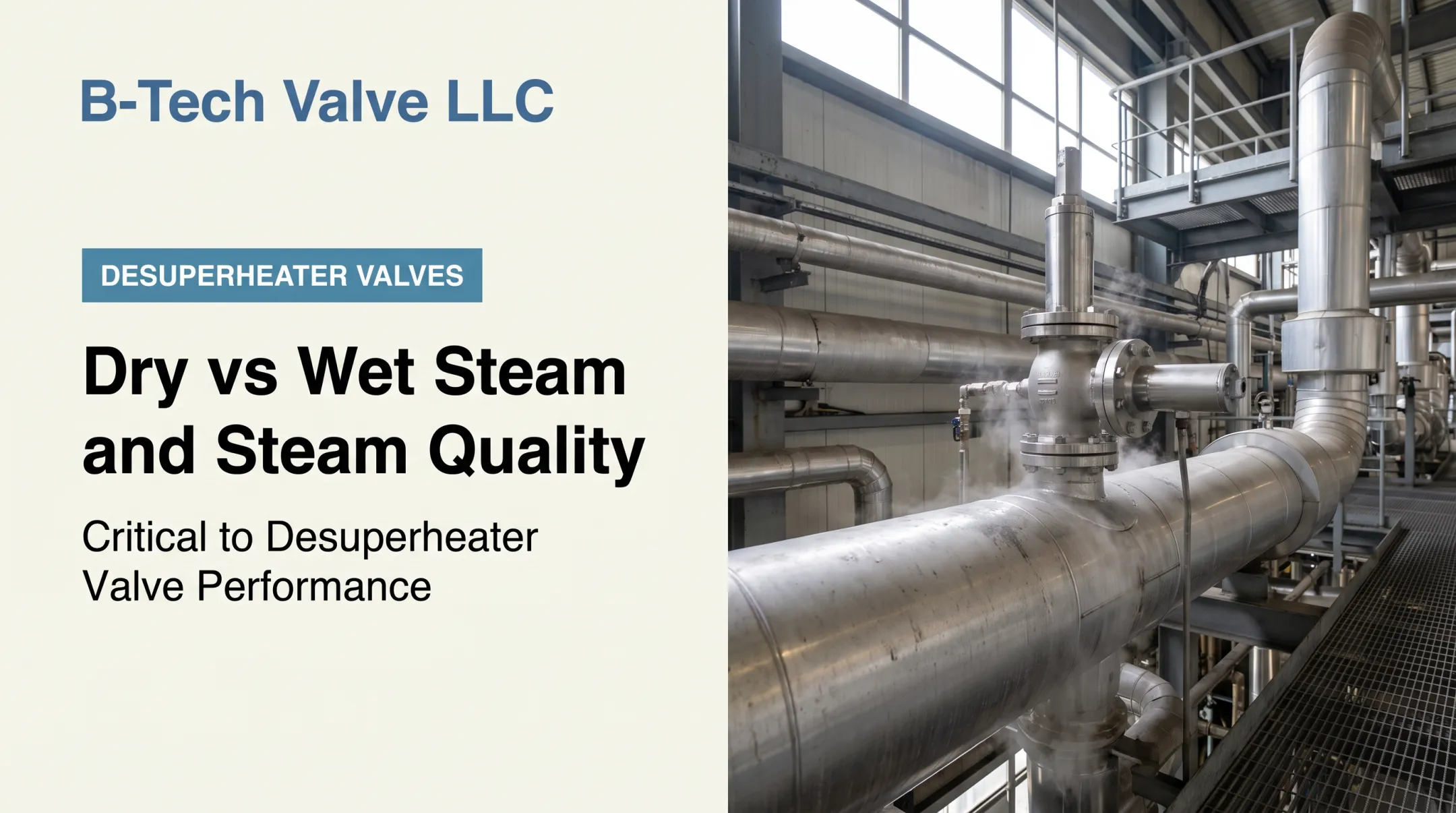
Desuperheaters and attemperators control steam temperature by introducing and mixing cooling water into the steam flow. Getting that right requires evaluating spray-water quality, downstream straight-run requirements, evaporation distance, and control response, or the unit itself can start creating moisture and carryover problems.
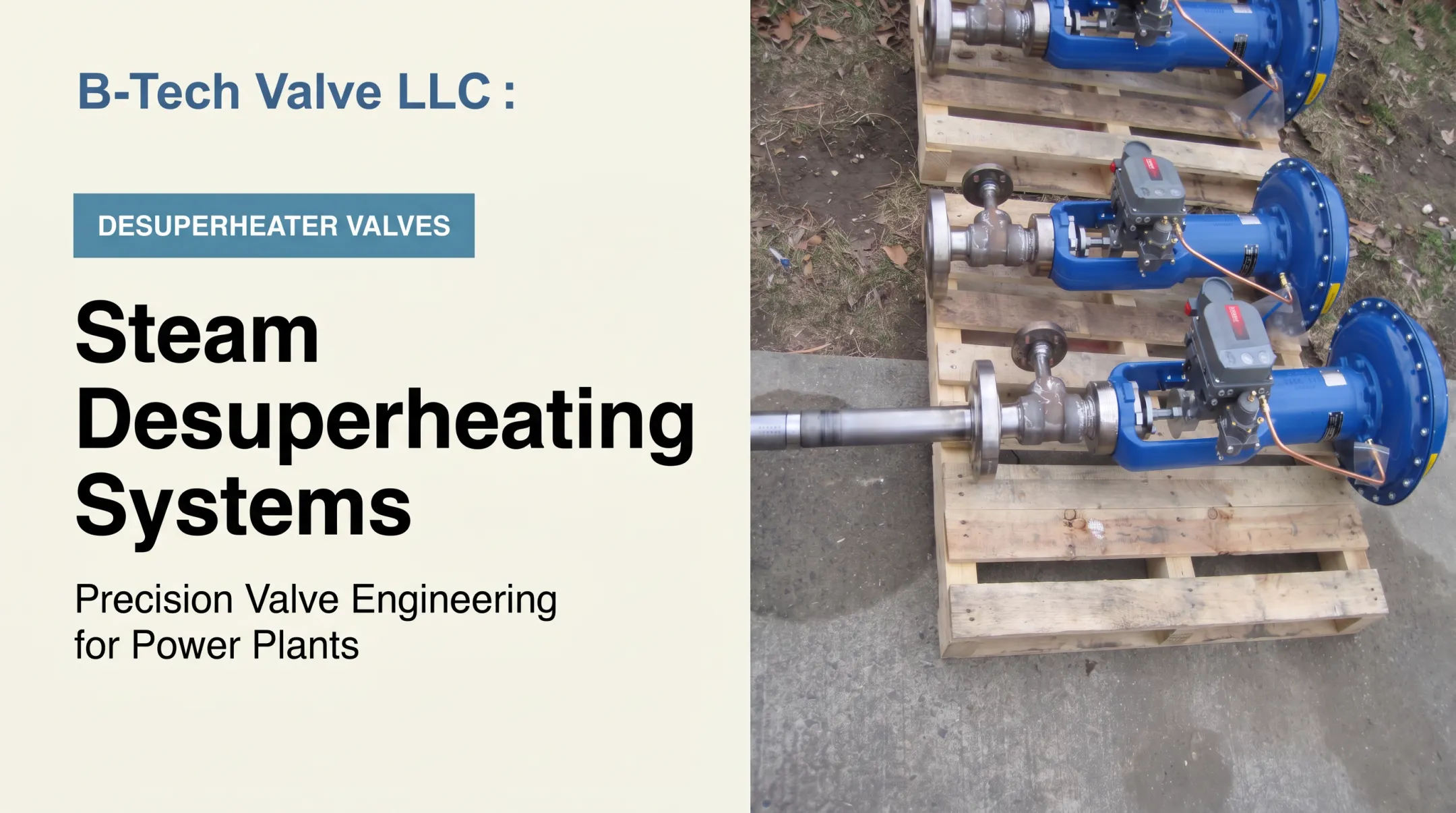
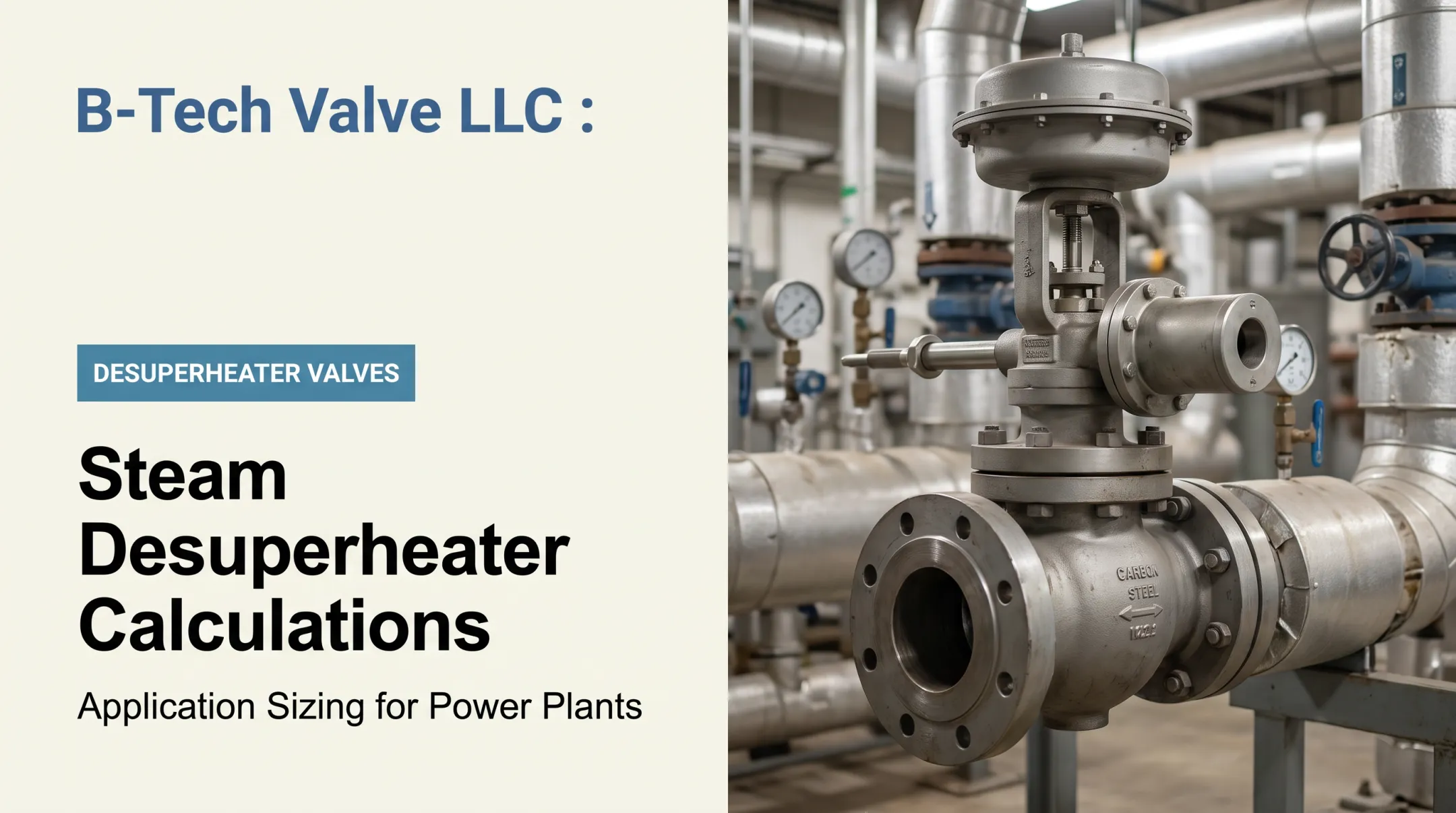
This is where B-Tech Valve's product line fits into the conversation, though only as one piece of a complete system. The company's LPD Large Pipe Desuperheater is a probe-type, variable-nozzle actuated valve built for steam pipes 6 inches and larger. The SPAD Small Pipe Attemperator Desuperheater uses a fixed-nozzle spray-ring design paired with a separate temperature-control valve, sized for pipes 4 inches and smaller. Both are offered across ASME B16.34 pressure classes 150 through 2700 and rated to 1200°F (650°C), with final selection based on actual steam, water, pressure, temperature, and line-size data.
A desuperheater is not a universal water-hammer cure. Persistent hammer still requires a review of condensate drainage, trap condition, piping slope, startup practice, and control-valve behavior. Plant engineers replacing or upgrading steam-conditioning equipment are welcome to request application guidance based on their specific operating data.

Tips for Long-Term Prevention and Control
Steam hammer prevention doesn't end at installation. It needs ongoing routine checks and documentation to stay ahead of condensate problems.
- Routine monitoring: Set inspection routes for traps, drip legs, drain valves, supports, expansion points, flanges, and strainers; trend pressure and temperature where instruments allow
- Operator training: Teach staff to separate normal valve or trap sounds from abnormal banging, with clear triggers to cut load, isolate equipment, or escalate to engineering
- Systematic documentation: Log hammer location, timing, sound pattern, process load, valve positions, trap condition, weather or cold-start conditions, and repairs
- Engineering review: Use pressure, temperature, vibration, or acoustic monitoring where justified; check findings against piping drawings and equipment data before any change
Conclusion
Steam hammer has identifiable mechanisms. Differential, thermal, and hydraulic shock each trace back to condensate management or an abrupt change in flow and temperature. Correct drainage, disciplined pipe layout, steam-trap maintenance, controlled startup, and stable valve and condensate-return operation address the root cause rather than the symptom.
Don't let recurring hammer become background noise. Investigate it promptly, and when steam conditioning, replacement valves, or broader system modifications are on the table, bring in an application engineer who can size the solution to your actual operating conditions.
Frequently Asked Questions
How does a steam hammer work?
The historical Nasmyth steam hammer used steam pressure to drive a forging ram. In an operating steam line, "steam hammer" instead describes water hammer: condensate movement, rapid condensation, or sudden flow changes that create a pressure surge inside the pipe.
Are steam hammers still used?
Forging steam hammers are largely obsolete in modern manufacturing, replaced by hydraulic and mechanical presses. "Steam hammer" as a term, however, is still widely used to describe water-hammer problems in operating steam and condensate systems.
What was the steam hammer used for?
The original steam hammer, developed by James Nasmyth, forged and shaped large metal components, including ship parts too big for existing equipment. That historical machine is unrelated to the piping phenomenon covered in this article.
What is the difference between steam hammer and water hammer?
Water hammer is the broader pressure-surge phenomenon that can occur in any liquid-filled system. Steam hammer commonly refers to water hammer specifically in steam systems, driven by condensate, rapid condensation, or sudden velocity changes.