Introduction
A steam pressure reducing valve drops downstream pressure to a target setpoint. That's the entire job description. Many plant engineers assume this also fixes any steam temperature problem, but that assumption doesn't always hold up.
Pressure reduction changes steam's saturation temperature. It doesn't automatically change the steam's actual temperature to match. If the steam entering the PRV carries meaningful superheat, the outlet steam can stay well above saturation even after pressure drops to spec.
That gap matters: superheated steam transfers heat less efficiently and can stress equipment built around saturated conditions.
This article lays out a decision framework rather than a blanket rule. We'll cover when a PRV alone does the job, when you also need desuperheating, which operating indicators tell you the difference, and which conditions call for engineering validation before you act.
Key Takeaways
- A PRV controls steam pressure; a desuperheater controls temperature through metered water injection
- Lowering pressure drops saturation temperature, but actual steam temperature may stay superheated
- Near-saturated steam requirements or defined temperature limits signal a need for desuperheating
- Complete operating data, not pipe size alone, should drive equipment selection
- Missing data on flow turndown or water quality leads to wet steam and unstable control
Why Steam PRVs Matter and Why Pressure Reduction May Not Be Enough
How a Steam PRV Controls Pressure
A steam PRV senses downstream pressure and modulates its opening to hold a target outlet pressure as flow demand shifts. Two main designs handle this job:
- Direct-acting PRVs: downstream pressure acts directly against a spring-loaded sensing element. Simple and reliable, but limited in capacity and accuracy at high or variable flow.
- Pilot-operated PRVs: a pilot senses downstream pressure and repositions the main valve. This gives tighter control and handles larger, more variable loads.
The right type depends on capacity, load variation, and how tight your control needs to be. Pipe size alone doesn't answer that question.
Why a Pressure Drop Doesn't Guarantee Saturated Steam
This is where plants get tripped up. Saturation temperature depends on pressure, but actual steam temperature during a pressure drop doesn't fall at the same rate.
Look at two reference points from NIST's saturation data: steam at roughly 129 psig saturates around 355°F, while steam at roughly 1.4 psig saturates around 217°F. That's a 138°F difference in saturation temperature alone.

Now throttle steam from the higher pressure to the lower one through a PRV. The saturation target drops by that full 138°F.
If the inlet steam was already superheated, the actual temperature drop during throttling is far smaller. Steam exits the valve well above the new saturation point, even though the pressure gauge reads correctly.
What Excess Superheat Does Downstream
Equipment built around saturated steam depends on condensation for efficient heat transfer. Superheated steam has to cool to saturation first, and that sensible-heat exchange is small compared to the heat released during condensation.
Left unaddressed, lingering superheat can cause:
- Slower heat transfer at exchangers, reboilers, and dryers
- Temperature overshoot in sensitive processes
- Stress on seals, gaskets, piping, and steam traps designed for cooler conditions
- Inconsistent results in direct-contact or sterilization applications
Pressure, temperature, and overpressure each call for a different device:
| Device | Primary Function |
|---|---|
| Steam PRV | Controls downstream pressure |
| Desuperheater | Controls steam temperature via water injection |
| Relief valve | Protects against overpressure |
These three devices aren't interchangeable. A PRV won't fix a superheat problem, and a desuperheater isn't a substitute for overpressure protection.
When You Also Need Desuperheating
The right configuration depends on what the downstream process actually needs, not just whether a PRV happens to be installed upstream.
Downstream Process Requirements
Desuperheating typically comes into play when the downstream process needs steam close to saturation:
- Heat exchangers and reboilers relying on efficient condensation
- Dryers and direct-contact heating systems needing stable temperature
- Sterilization equipment with defined temperature tolerances
- Process vessels where steam quality affects product consistency
In HRSG applications, attemperators control steam temperature during startup and help meet turbine-inlet requirements. According to POWER's HRSG analysis, that control reduces the risk of thermal damage to tubes and piping.
Manufacturer and engineering guidance should define acceptable superheat for your specific equipment rather than applying one number across every application.
Steam Conditions and Load
Before specifying anything, compare:
- Inlet and outlet pressure
- Inlet temperature and degree of superheat
- Minimum and maximum steam flow
- Expected load turndown
A desuperheater sized for design-load conditions can still underperform at low load. Low-load and intermittent on/off operation are specifically linked to attemperator thermal cycling and reported field failures, per Babcock's service bulletin.
A unit that looks fine on paper at full load can fall apart at turndown if spray-water control or minimum stable flow wasn't part of the sizing exercise.
Equipment Protection and Layout
Reducing steam temperature protects downstream piping, gaskets, rotating seals, instrumentation, control valves, and heat-transfer surfaces. But the desuperheater needs room to actually work.
Injected water needs sufficient downstream straight run, mixing time, and evaporation distance before reaching a sensor or fitting. Pipe orientation, velocity, elbows, reducers, drains, and sensor placement all affect whether water fully evaporates or carries over as liquid.

Steam Quality and Water Supply
Spray water quality matters as much as the mechanical design. Before selecting an injection style, check:
- Water cleanliness and compatibility with the steam system
- Pressure differential between spray water and steam line
- Filtration and isolation provisions
Poor atomization, contaminated water, or insufficient water pressure creates wet steam, erosion, thermal shock, or an outlet temperature that won't settle down.
Application-Specific Equipment Selection
A practical rule: use a PRV alone when the resulting pressure and steam temperature already satisfy process and equipment requirements. Add desuperheating when pressure reduction leaves unacceptable superheat, or the process needs controlled, near-saturated steam.
Line size factors into equipment choice, too:
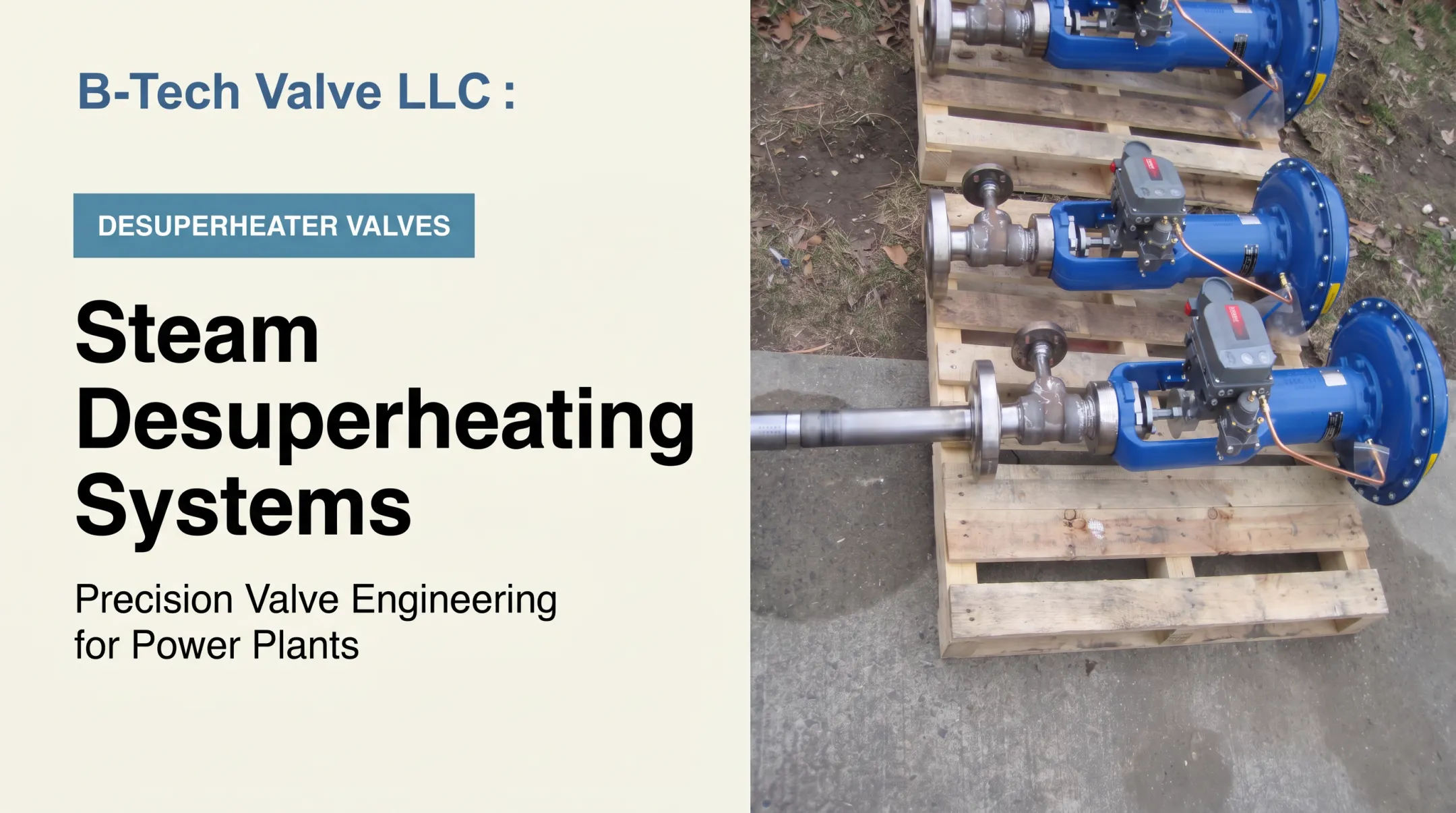
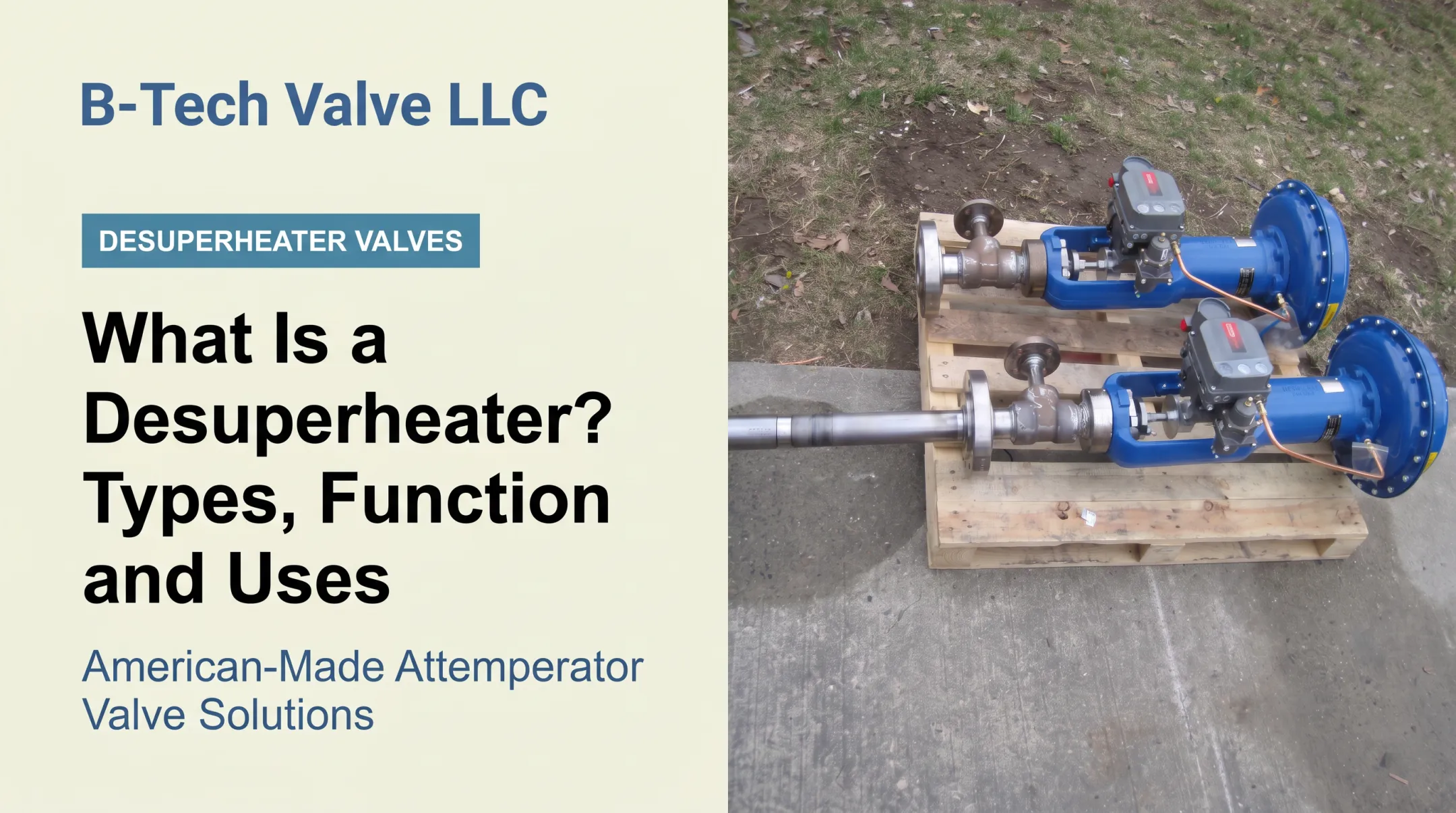
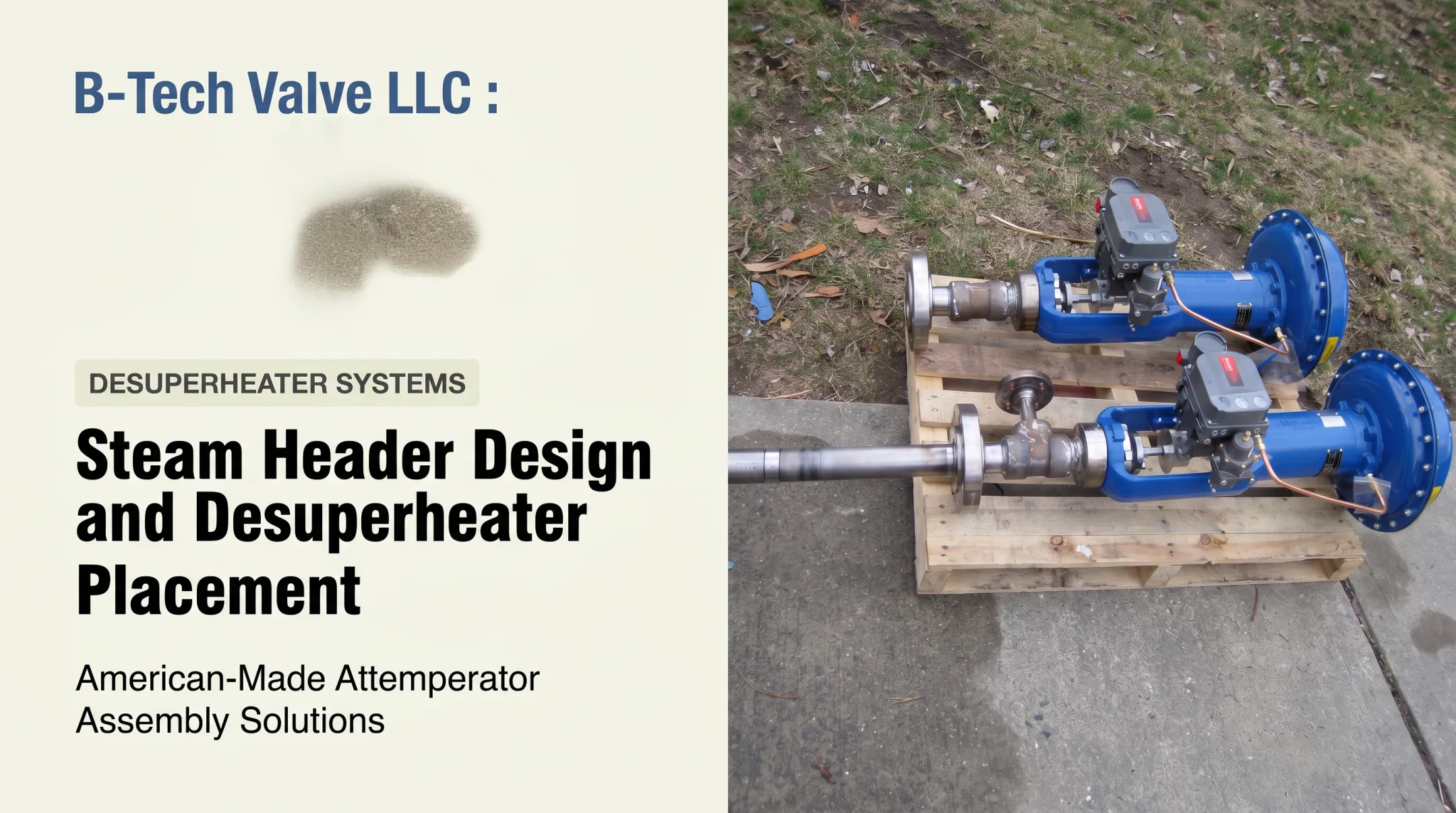
- B-Tech Valve's LPD combines a variable-nozzle, actuated control valve and desuperheater in one assembly for steam piping 6 inches and larger
- The SPAD uses a fixed-nozzle spray-ring design fed by a separate temperature-control valve, sized for 4-inch and smaller lines
Confirm current pressure class and temperature rating before finalizing a selection, since specs can shift between product revisions.
Rather than picking a desuperheater off nominal pipe size, send complete operating data to a manufacturer or qualified engineer for review.
When to Avoid Desuperheating or Acting on Incomplete Information
Adding a desuperheater isn't automatically an improvement. Skip it when:
- The downstream process already tolerates existing steam temperature
- There isn't enough evaporation distance
- The operating range can't support stable spray-water control
Warning signs that call for more review before acting:
- Unknown inlet temperature or missing minimum-flow data
- Inadequate spray-water pressure or questionable water quality
- Frequent wet-steam symptoms at existing equipment
- Short straight-run piping with no room for evaporation
- Poorly placed temperature sensors
- Downstream systems never designed to handle injected water
Acting on incomplete information has real consequences: water carryover, erosion, thermal shock, control hunting, incomplete desuperheating, pressure instability, and higher maintenance over time.
A desuperheater also isn't a catch-all fix. It should not be used to:
- Correct a poorly sized or improperly installed PRV
- Eliminate the need for proper condensate drainage
- Replace a safety relief device
- Compensate for a process problem that hasn't been diagnosed
If the root cause is a PRV that's undersized or installed wrong, fix that first.
Best Practices for Timing and Selecting Desuperheating
Document the Full Operating Envelope
Before choosing equipment, record the full operating range:
- Normal, minimum, maximum, and startup pressure, temperature, and flow
- Steam quality and expected load changes
- Pipe size, downstream equipment limits, and required outlet temperature
Use steam tables or validated engineering calculations to estimate outlet saturation temperature and remaining superheat after pressure reduction. Flag which assumptions still need confirmation through actual measurement.

Coordinate Control Logic
Pressure and temperature loops need a shared control strategy. Define:
- Sensor locations and response times
- Alarm limits for pressure and temperature
- Startup sequencing, isolation, and bypass procedures
- Maintenance access for valves, nozzles, and instruments
Verify Installation Fundamentals
Check these before commissioning:
- Upstream and downstream straight runs meet mixing and evaporation distance requirements
- Spray-water filtration and isolation valves are in place
- Drainage handles condensate accumulation
- Temperature measurement location supports accurate readings
- Access exists for routine inspection
Commission at Multiple Load Points
Confirm performance at low, normal, and high load, not only at design conditions. At each load point, verify:
- Outlet pressure and outlet temperature
- Spray-water response and evaporation performance
- Absence of liquid carryover
Reference applicable ASME, API, manufacturer, or site standards during commissioning.
Ready to size a unit for your application? B-Tech Valve requests steam and cooling-water conditions, pressure, temperature, flow range, and line size before recommending equipment, not just nominal pipe size. Plant engineers, distributors, and outage contractors can reach the team at Sales@B-TechValves.com or 609-321-2205 for sizing data sheets and brochures on the LPD and SPAD lines.
Conclusion
There's no universal rule requiring every steam PRV station to include a desuperheater. The correct call depends on actual superheat remaining after pressure reduction, what the downstream process requires, equipment temperature limits, operating range, water supply, and installation geometry.
A PRV manages pressure. A desuperheater manages temperature. Treating them as interchangeable, or assuming one solves both problems, is where plants run into trouble.
Coordinated PRV and desuperheater selection can improve steam conditioning and protect downstream equipment when the application genuinely calls for it. Final sizing and control design should still go through qualified engineering review, using real operating data rather than assumptions based on pipe size.
Frequently Asked Questions
How does a steam pressure reducing valve work?
A steam PRV senses downstream pressure and modulates its opening to hold a set outlet pressure as flow demand changes. It controls pressure, not necessarily outlet temperature.
What are the types of pressure reducing valves (PRVs)?
Direct-acting PRVs use downstream pressure against a spring-loaded element and suit smaller, steadier loads. Pilot-operated PRVs use a pilot to reposition the main valve for tighter control across larger or variable flow. Choose based on operating conditions, not pipe size.
What pressure should a steam pressure reducing valve be set at?
Set pressure should match the downstream process and equipment design limits, accounting for operating load and allowable variation. Confirm the setpoint against applicable engineering requirements, not a generic rule of thumb.
What is the best valve for high-pressure steam?
The right choice depends on pressure class, temperature, flow range, pressure drop, and materials; there's no single universal answer. A PRV controls pressure, while a relief valve protects against overpressure, and the two serve different purposes.
What is the purpose of a desuperheater and how does it differ from a superheater?
A desuperheater injects metered water to reduce steam temperature and superheat. A superheater does the opposite, adding heat to raise steam temperature above saturation.
At what psi is steam considered high pressure?
"High pressure" is context-dependent, tied to system design, applicable codes, and equipment ratings rather than one universal psi figure. Define it against your specific system's requirements, not a generic cutoff.