That's a problem, because the plug, seat, and cage do the real work. These parts sit directly in the process stream, absorbing pressure drop, temperature swings, velocity, and constant mechanical cycling. In steam and high-energy process systems, that exposure adds up quickly.
This article breaks down what valve trim actually means, how the plug, seat, and cage function as a system, why flow-characteristic terms differ from material trim numbers, and how to select trim that actually survives your application.
Key Takeaways
- Valve trim includes the internal parts that contact process fluid or directly control flow and sealing
- The plug meters flow, the seat provides the sealing surface, and the cage guides the plug while shaping flow
- Flow characteristics (quick-opening, linear, equal-percentage) are different from material trim numbers like API designations
- Trim selection depends on fluid chemistry, pressure, temperature, cavitation risk, and required shutoff class
- Mismatched trim leads to erosion, galling, leakage, and unplanned outages
What Is Valve Trim?
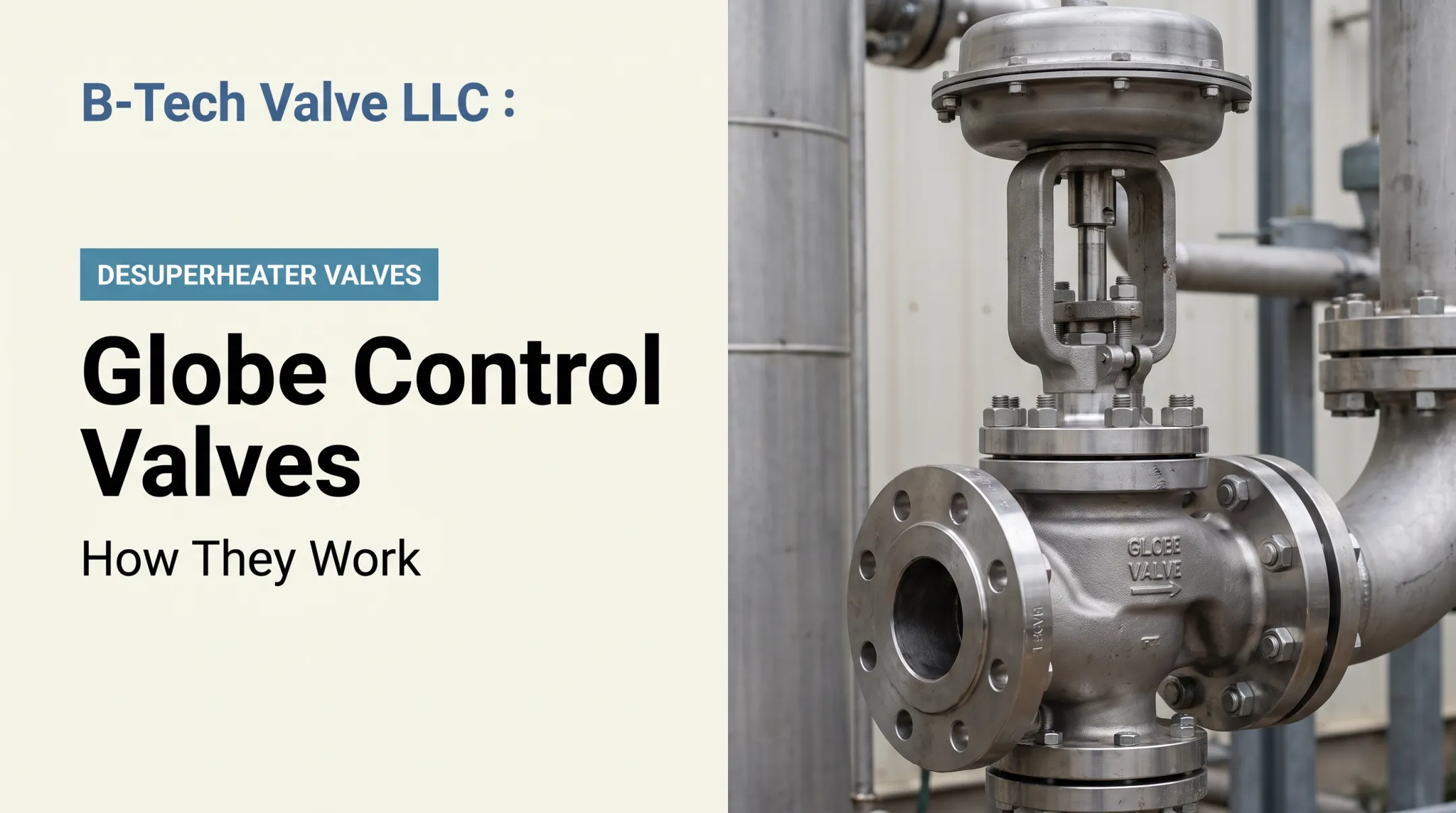
Valve trim refers to the internal operating and sealing components of a valve, the parts that are exposed to the process fluid or that directly contribute to controlling flow. For a typical globe or control valve, this generally includes:
- Stem – transmits actuator motion to the closure element
- Plug (closure member) – opens, throttles, or closes the flow path
- Seat or seating surface – the stationary surface the plug seals against
- Cage – guides the plug and often shapes the flow path (where fitted)
- Guides, bushings, and backseat – support alignment and secondary sealing functions
The valve body and bonnet are generally not considered trim, even though exact definitions vary between standards and manufacturers. The body contains pressure. The trim does the moving, throttling, guiding, and sealing inside that pressure boundary.
Trim Terminology Shifts by Valve Type
"Valve trim" isn't one fixed parts list across the industry. It can mean the physical internal components, or it can refer to a specified material combination assigned a trim number.
Terminology also changes by valve design:
- A ball valve's trim typically means the ball, seats, and stem
- A gate valve's trim covers the stem, wedge or gate seating surfaces, seats, and backseat
- A cage-guided globe valve adds a cage to the operating assembly, which rotary and gate designs don't have
Don't assume a parts list from one valve family applies to another. Always check the manufacturer's documentation for the specific design in front of you.
Why Is Valve Trim Important in Steam and Process Systems?
Trim condition dictates whether a valve controls flow predictably, shuts off reliably, and lasts through the next outage cycle. When trim is mismatched to service, the consequences show up fast:
- Erosion and corrosion that thin critical surfaces
- Galling between mating metal parts
- Vibration and cavitation damage
- Seat leakage and loss of tight shutoff
- Excessive actuator load and unstable control
- Objectionable noise and premature replacement
Steam and high-energy services are particularly tough on trim. High temperature, large pressure drops, high velocity, and flashing or two-phase conditions concentrate wear right at the plug, seat, and cage.
Erosion and cavitation behave differently depending on the fluid state. In liquid service, flashing happens when pressure drops below the fluid's vapor pressure. Cavitation follows when pressure recovers above vapor pressure and vapor bubbles collapse, producing impinging jets that attack trim surfaces, according to Emerson's erosion research.

These are liquid-service mechanisms, not generic dry-steam damage modes. Don't assume the same failure pattern applies across every service.
Galling is another risk. A manufacturer notice on record with the Nuclear Regulatory Commission describes how insufficient hardfacing at a cage-and-plug mating surface created unpredictable galling that impaired valve function. Surface treatment specs matter as much as base material selection.
In desuperheating and attemperator service specifically, trim sees repeated throttling against sharp temperature differentials between incoming steam and injected water. That's exactly the kind of duty where undersized or poorly matched trim shows wear early.
Plug, Seat and Cage: The Three Key Trim Elements
Think of these three parts as a working system, not standalone components. The plug changes the available flow path. The seat provides the mating surface for shutoff. The cage supports guidance and, in many designs, shapes the flow itself.
Plug
The plug is the movable closure element connected to the stem. Depending on the valve design, it moves linearly or rotates to open, throttle, or close the flow path.
Plug profile determines the valve's inherent flow characteristic, meaning how flow rate relates to stem travel at a constant pressure drop:
- Quick-opening – most of the flow-rate change happens early in the travel, useful where rapid flow establishment or on-off-style operation is needed
- Linear – flow rate changes proportionally with travel, giving a fairly constant relationship across the stroke
- Equal-percentage – equal travel increments produce equal-percentage flow changes; suited to fine control at low openings and stable response as pressure shifts

Here's where confusion often creeps in: flow characteristic and material trim number are not the same thing. "Equal percentage" describes flow behavior. An API or manufacturer trim number, like Trim 10, identifies a specified combination of materials. Mixing these up during a spec review is a common and avoidable mistake.
No single plug profile is universally correct for steam, gas, or liquid service. Plug shape, port geometry, pressure drop, and actuator sizing all have to work together for the specific application.
Seat
The seat is the stationary sealing surface the plug closes against. The quality of that plug-to-seat contact directly determines shutoff performance and acceptable leakage.
Seating approaches come with different trade-offs:
| Seat type | Strength | Limitation |
|---|---|---|
| Soft seat (elastomer/PTFE) | Tight shutoff at lower temperatures | Limited temperature and abrasion tolerance |
| Metal-to-metal | Higher temperature capability | Generally harder to achieve the tightest shutoff classes |
| Hard-faced | Improved erosion and wear resistance | Added cost and complexity |
Seat retention also varies by construction (integral, replaceable, screwed, or welded), depending on the valve design. Always verify the specific terminology against the manufacturer's drawing rather than assuming a standard arrangement.
Common seat damage mechanisms include:
- Erosion from high-velocity or particulate-laden flow
- Corrosion from incompatible process chemistry
- Wire drawing from fluid cutting through during near-closed throttling
- Galling between mating metal surfaces
- Foreign-particle damage during startup or upset conditions
- Thermal or mechanical distortion under cycling loads
Each of these shows up as leakage or degraded control, so seat inspection during outages is worth the time it takes.
Cage
The cage is a perforated or shaped internal component used in cage-guided globe and control valves. It guides the plug, helps retain internal parts, and often controls the flow path itself.
Cage opening geometry affects:
- Flow capacity and inherent characteristic
- Pressure distribution across the trim
- Noise generation
- Cavitation resistance
- Overall flow stability
Not every valve has a cage. Gate, ball, and butterfly designs use different guiding and sealing arrangements entirely, so cage terminology shouldn't be applied to them by default.
Standard cages shape flow into linear, equal-percentage, or quick-opening characteristics. Specialized designs go further. Noise-attenuating cages reduce sound from high flow rates and large pressure drops. Multistage anti-cavitation cages use staged, successively larger flow areas to manage pressure reduction where vapor collapse is a risk.
In operation, the three parts function together: the cage constrains and guides plug movement, the plug meters flow through the cage openings, and the plug seals against the seat at shutoff.
Quick reference:
- Plug = moving flow-control element
- Seat = sealing surface
- Cage = guiding and flow-conditioning component (where fitted)
How to Choose the Right Valve Trim
The correct trim comes from matching the complete service envelope to valve function, not from defaulting to the hardest, most expensive, or most familiar material on the shelf.
Service Conditions
Document the full picture before specifying anything:
- Process fluid composition and corrosive constituents
- Pressure and temperature range, plus differential pressure
- Flow rate, velocity, and line size
- Phase changes, flashing, or two-phase conditions
- Suspended solids or particulate content
- Operating frequency and cycling patterns
Steam, clean liquid, slurry, and flashing service all impose different demands on plug geometry, seating, guidance, and material selection. A trim package that performs well in clean saturated steam can fail quickly in a flashing, particulate-laden line.
Required Valve Function
Isolation and throttling are different jobs with different trim requirements. Shutoff duty drives seat design and leakage class; continuous modulation drives plug profile, cage configuration, and actuator force.
A valve built primarily for shutoff shouldn't be pressed into throttling service without checking the manufacturer's application limits first. That mismatch is a common source of premature trim wear.
Material and Wear Resistance
Corrosion resistance and erosion resistance don't always point to the same material, and that tension has to be resolved for each specific fluid. Also weigh:
- Hardness differential between mating surfaces
- Galling resistance
- Temperature capability
- Compatibility between plug and seat materials
Hard-facing and specialized alloys can help in demanding service, but there's no universal "best" material. Verify suitability against manufacturer data and the applicable standard for your exact application.
Noise, Cavitation, and Pressure Reduction
Large pressure drops across control valves can trigger cavitation, flashing, vibration, and excessive velocity, all of which attack trim surfaces. Cage and plug geometry are often selected specifically to manage these effects.
Sizing, noise, and cavitation behavior should be evaluated using the applicable control-valve standards and guidance for your service conditions, rather than relying on rule-of-thumb assumptions.
Maintenance and Lifecycle
Trim selection isn't a one-time decision. It has long-term consequences:
- Is the trim replaceable, and are spare parts actually available?
- Is the configuration interchangeable with standard designs, or is it a non-standard build?
- Can inspection happen without major disassembly?
- Does the timeline support your planned outage window?
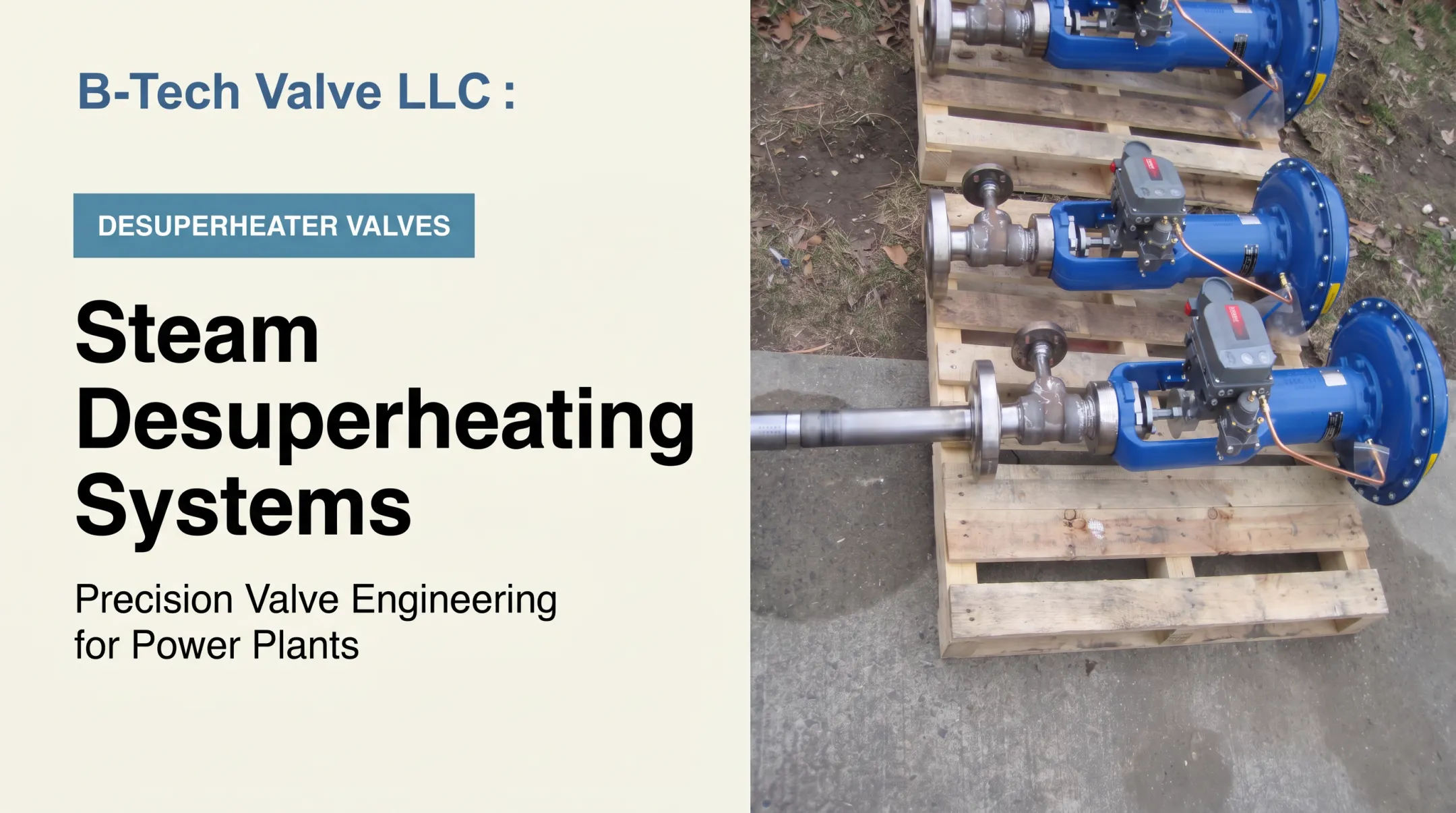
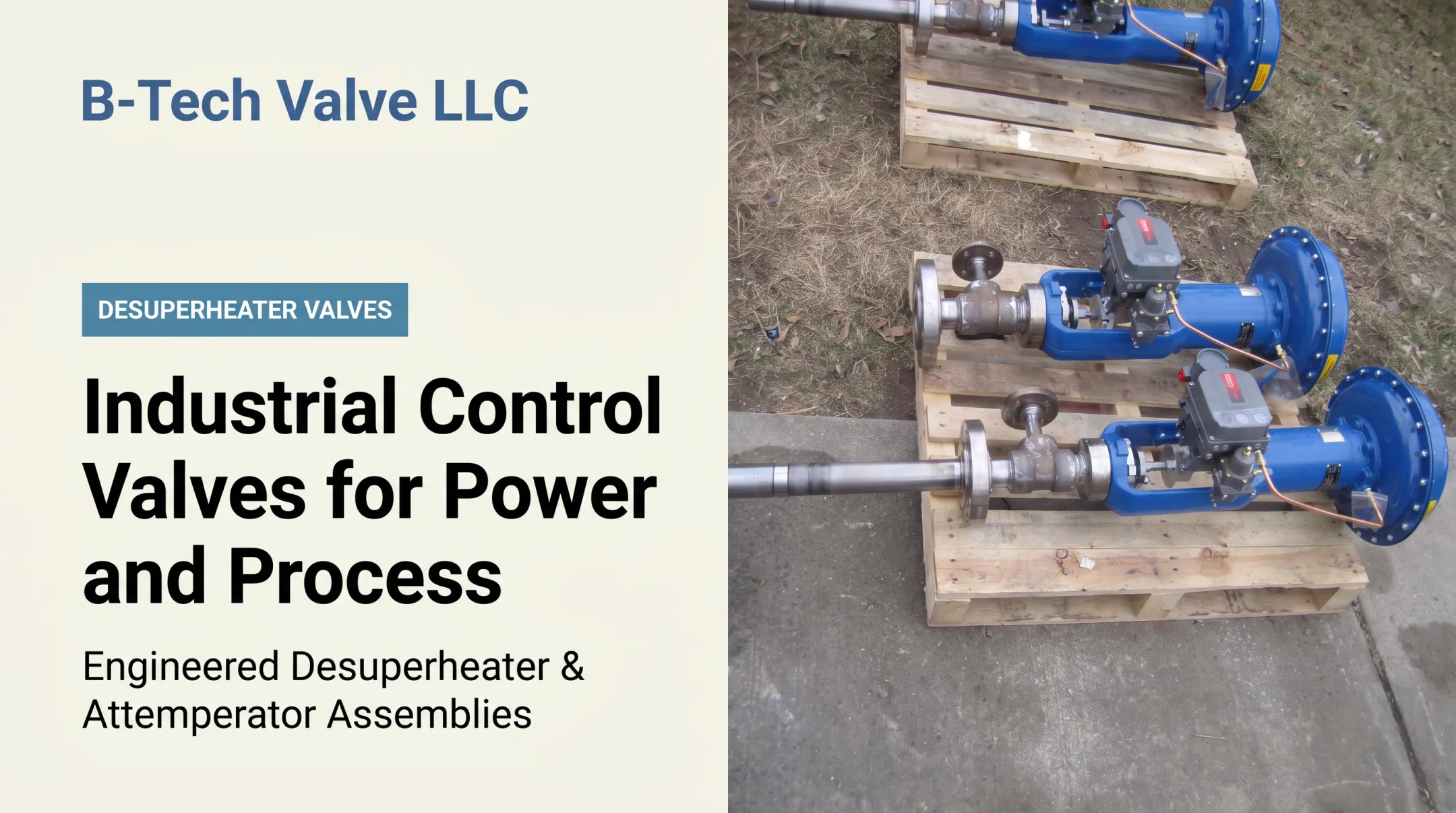
Application note: Engineers selecting trim for a steam desuperheater or attemperator should provide line size, pressure, temperature, flow requirements, fluid conditions, and operating mode so the manufacturer can confirm the right configuration.
B-Tech Valve designs its LPD line for 6-inch-and-larger steam piping, combining an actuated, variable-nozzle control valve with the desuperheater in one assembly. Its SPAD line is a fixed-nozzle spray-ring design for 4-inch-and-smaller lines. Both are built in ASME B16.34 pressure classes 150 through 2700 up to 1,200°F.

Because the company stocks its products and parts, replacement trim doesn't get stuck waiting on an overseas supply chain during an outage.
What to Check Before Finalising Valve Trim
What to Check Before Finalizing Valve Trim
Before signing off on a trim spec, run through this checklist:
- Confirm current process conditions – don't select trim based solely on valve size, pressure class, or a legacy purchase order
- Separate flow characteristic from material designation – quick-opening, linear, or equal-percentage is not the same as an API trim number; verify both independently
- Check full-assembly compatibility – plug, seat, cage, stem, guides, and seals must all tolerate the same temperature, pressure, corrosion, and galling risks
- Verify shutoff and control requirements – required leakage class, control range, cavitation/noise limits, actuator capability, and inspection access
- Confirm standards and spare-part availability – applicable manufacturer or industry standards, plus realistic replacement-part lead times
For unusual service, high-energy steam, flashing conditions, abrasive media, severe corrosion, or frequent cycling, loop in a valve or application engineer. A generic trim chart won't catch the edge cases that cause early failures.
Conclusion
Valve trim is the internal assembly that actually does the work, controlling, guiding, and sealing the process flow. In cage-guided designs, the plug, seat, and cage each play a distinct but interdependent role, and getting one wrong undermines the other two.
Reliable trim selection comes down to matching geometry, materials, and construction to real process conditions and the valve's intended duty (isolation or throttling), not to habit or convenience.
Before finalizing a replacement or new-project trim spec, verify it against current manufacturer documentation and, where conditions are demanding or unusual, consult an application engineer who can catch what a standard chart might miss.
Frequently Asked Questions
What is a trim on a valve?
Valve trim refers to the functional internal parts exposed to process fluid or involved in flow control and sealing, such as the stem, plug, and seat. The exact component list varies depending on the valve type.
What is the trim number in valves?
A trim number generally identifies a specified combination of internal materials, including the stem, closure member, and seating surfaces. It's distinct from a plug's flow characteristic, like linear or equal-percentage.
What does "valve only trim kit" mean?
A valve-only trim kit typically contains replacement internal components, such as the plug, seat, and related parts, without the full valve body, actuator, or accessories. Always confirm exact kit contents against your specific valve model.
What are the main components of valve trim?
Common trim components include the stem, plug or closure member, and seat or seating surfaces. Where fitted, trim also includes the cage, guides, bushings, and backseat, depending on valve type.
What material is used for a trim 10 valve?
The answer depends on the governing standard and valve specification rather than a single universal material. Check the current API 602 standard or the manufacturer's specification sheet for the exact trim designation before ordering.